
Do Panels Work North Facing? UK Solar Answer
3 November 2026 | By RJ Hill Electrical
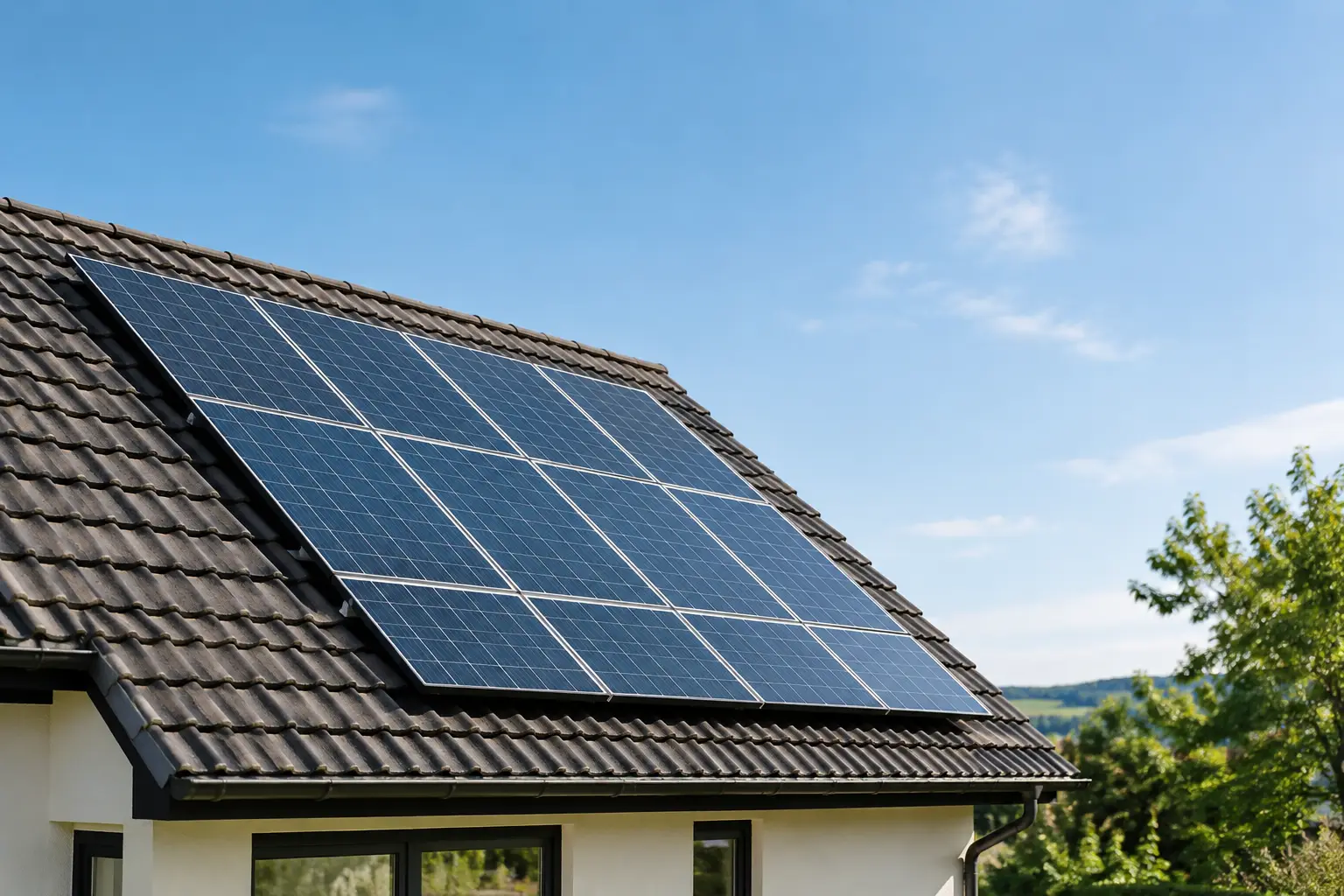
A north-facing roof is not an automatic no for solar. When homeowners ask, “do panels work north facing?”, the honest answer is yes - but the system needs more careful design, and the financial return may differ from a south-facing installation.
In the UK, solar panels generate electricity from daylight, not direct sunshine alone. A north-facing array will still produce energy, particularly through spring and summer, but it receives less useful sunlight across a typical year than a comparable south-facing roof. Whether it is worthwhile comes down to roof pitch, shading, available space, electricity use and the wider system design.
Do panels work north facing in the UK?
They work, but they generally produce less electricity than panels facing south. South-facing panels are usually the strongest option in the northern hemisphere because they receive more direct sunlight through the middle of the day, when solar irradiance is highest.
A north-facing roof receives more indirect light and tends to perform best early and late in the day during summer. In winter, when the sun sits lower in the southern sky, output can be considerably lower. For many UK properties, a north-facing system may produce around 50% to 70% of the annual generation of an equivalent south-facing system. The exact figure can be higher on a shallow-pitched roof and lower on a steep roof.
That does not mean every north-facing roof should be ruled out. A large, unshaded, shallow north-facing roof in Lincolnshire, Norfolk or the surrounding counties can still generate a useful amount of electricity. The key is to assess expected generation against the cost of installation and the amount of power the property can use or store.
Roof pitch changes the answer
Orientation matters, but pitch is just as significant. A roof that faces north at a shallow angle is closer to horizontal, allowing it to capture more light from across the sky. A low-pitched north-facing roof can therefore be a reasonable solar surface, especially where there is little or no shading.
A steep north-facing roof is more challenging. Its panels point away from the strongest sunlight, reducing annual yield and making the investment less attractive in many cases. There is no single rule that applies to every property, which is why a proper site survey and generation forecast are essential before committing to an installation.
Flat roofs offer another option. Panels can often be mounted on frames facing south, east-west, or at an angle selected to balance output, space and wind loading. This can turn a roof with an unhelpful existing orientation into a strong solar opportunity, subject to the structure and planning considerations.
When north-facing solar can still make sense
The right question is not simply whether panels will generate electricity. It is whether they will reduce your imported electricity enough to provide worthwhile long-term savings.
A north-facing installation may be suitable where the roof is large, shallow and clear of shade; where electricity demand is high during daylight hours; or where there are no viable south, east or west roof areas. It can also make sense for commercial buildings that use power consistently throughout the day, particularly when the roof area is substantial and the business can consume a high proportion of the generation on site.
For households, daytime demand can improve the value of the system. Running appliances while panels are producing, charging an electric vehicle at appropriate times, or using a heat pump and smart controls can all help reduce the amount of electricity bought from the grid. Export payments can provide additional income for surplus generation, but self-consumed solar electricity is normally where the greatest saving is made.
East-west roofs are often a better alternative
If a property has east- and west-facing roof slopes as well as a north-facing section, the east-west option is often more productive overall. East-facing panels generate earlier in the morning, while west-facing panels continue later into the afternoon and evening.
Although an east-west system may not reach the same peak output as a south-facing array, its generation profile can match how many homes and businesses use electricity. It spreads production across more of the day, which may increase self-consumption and reduce reliance on the grid when people are at home or a business is operating.
A well-designed east-west system can therefore offer better value than filling a steep north-facing roof simply to maximise the number of panels installed. The best layout is the one that provides useful generation, safely fits the property and delivers a sensible return.
Shading can matter more than direction
A perfectly south-facing roof is not necessarily the best roof for solar if it is regularly shaded by trees, chimneys, neighbouring buildings or roof features. Likewise, a north-facing roof with an uninterrupted view of the sky may perform better than expected when compared with a heavily shaded alternative.
Even partial shade can affect generation, especially when panels are connected in strings. Modern system design can reduce the impact with sensible panel layout, optimisers or microinverters where appropriate, but these are not a cure for poor site conditions. They add cost and should be selected because the design calls for them, not as a default extra.
A professional survey should consider shading across the year, not just how the roof looks on a sunny day. Trees that appear harmless in summer can cast longer shadows during the lower winter sun, while future building work or tree growth may also affect performance.
Can a battery make north-facing panels worthwhile?
Battery storage does not make a north-facing array generate more electricity. What it can do is help you use more of the generation you already have.
Without a battery, unused solar power is exported to the grid. With battery storage, surplus electricity can be held for use later in the evening, when household demand often rises and solar generation has fallen. This can improve self-consumption, reduce grid imports and provide greater control over energy use.
For some properties, a battery also supports off-peak tariff charging. It can charge at lower overnight rates and supply the home at more expensive times, subject to the tariff, battery capacity and system settings. That benefit is separate from solar generation, but it can strengthen the case for an integrated solar and storage system where roof output is not ideal.
The right battery size depends on your electricity use, expected solar generation and tariff. Oversizing storage can increase the initial cost without delivering proportional savings, particularly for a smaller north-facing array.
How to assess whether your roof is viable
A worthwhile assessment starts with accurate details: roof direction and pitch, usable area, roof condition, shading, annual electricity consumption and when you use power. If you are considering an EV charger, heat pump, electric heating or business expansion, these future loads should be included too.
The installation should then be designed around realistic generation figures rather than headline panel capacity. A larger system is not always the best-value system if a significant portion of the electricity is produced when it cannot be used, stored or exported at a worthwhile rate.
For eligible grid-connected systems, an MCS-standard installation is particularly important. It supports quality assurance and is normally required for access to Smart Export Guarantee payments. Your installer should also account for electrical safety, roof integrity, grid connection requirements and the practical routing of cabling and equipment.
The practical answer for north-facing roofs
North-facing panels are rarely the first choice, but they are not automatically wasted space. A shallow, unshaded roof with enough area, strong daytime electricity use and a carefully sized system may still deliver meaningful savings over its lifetime. A steep roof with shade and limited space is less likely to offer a compelling return.
The most useful next step is a site-specific design that compares your available roof surfaces, expected annual generation and likely bill savings. Good solar decisions are made from the property’s real conditions, not from orientation alone.