Battery Storage Systems for Homes Explained
5 July 2026 | By RJ Hill Electrical
Your solar panels can be doing exactly what they should - generating plenty of electricity through the middle of the day - while your home still buys power from the grid at tea time. That gap is why battery storage systems for homes have become such a practical upgrade for UK households.
If you already have solar, or you are planning a new installation, battery storage gives you more control over when you use the energy you generate. Instead of exporting surplus electricity in daylight hours and then importing it back later at a higher rate, you store what you do not use and draw on it when demand rises in the evening. For many homeowners, that means lower bills, better use of their solar investment, and more resilience when energy prices move against them.
How battery storage systems for homes work
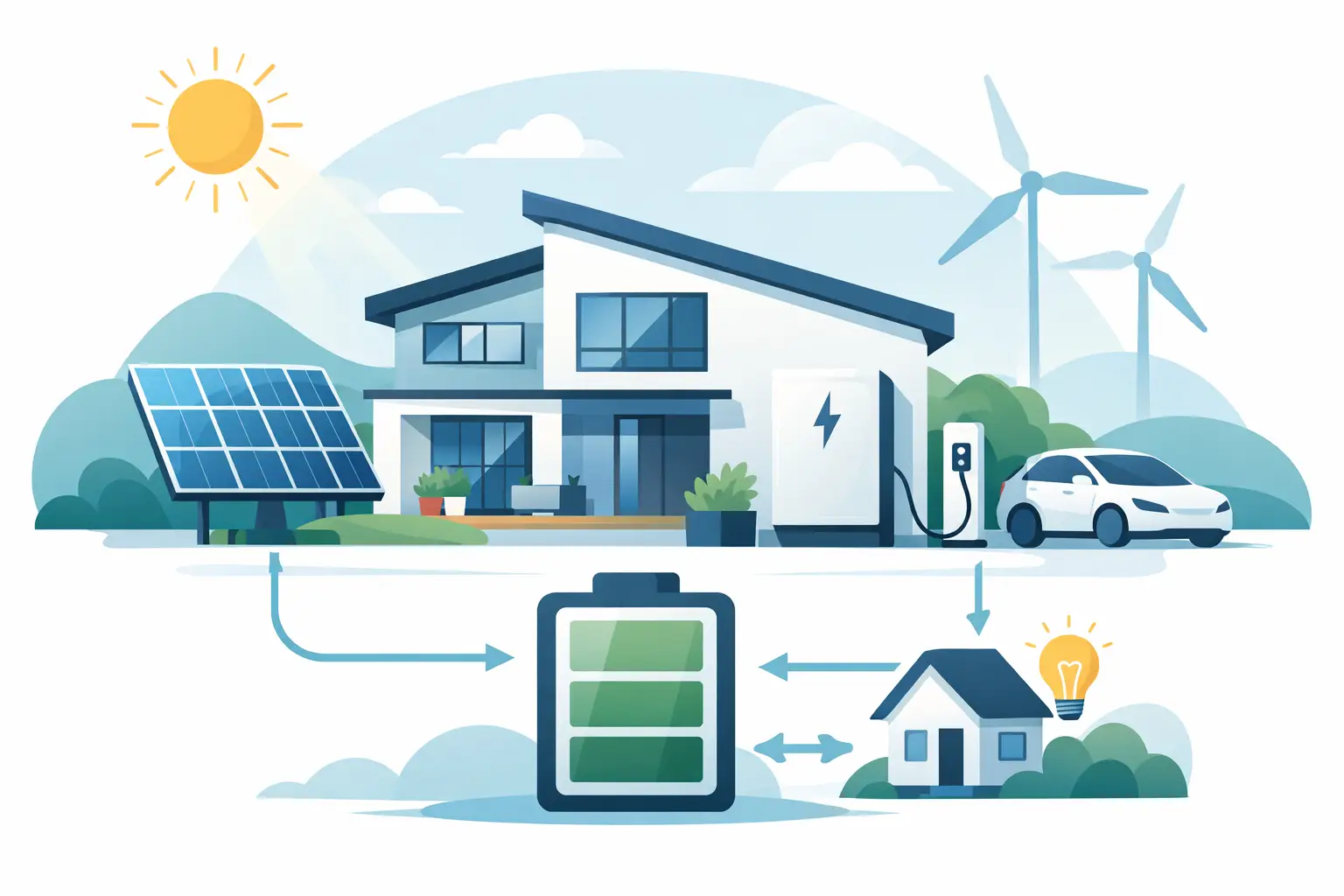
A home battery stores electricity for later use. In most domestic setups, the battery charges from solar panels during the day when generation is strongest and household demand is lower. Later, when the sun drops and usage increases, the battery discharges to run lights, appliances and other household loads.
That is the basic principle, but the real value comes from how the system is designed. A well-specified battery setup should be matched to your property, your energy habits and your wider electrical system. The right battery capacity for a four-bedroom family home with an EV is very different from what suits a smaller property with low evening demand.
Some systems can also charge from the grid during off-peak periods, then supply the property during more expensive tariff windows. That can improve savings further, especially where time-of-use tariffs are available. Whether that makes financial sense depends on your tariff, how much electricity you use, and whether your battery is being paired with solar or working on its own.
Why homeowners are choosing battery storage
The main reason is straightforward: people want to reduce electricity bills. A battery helps you hold onto more of the energy you generate rather than sending it away and buying power back later. That improves self-consumption and can shorten the payback on a solar installation.
There is also the question of energy security. Grid electricity is still essential for most homes, but many customers want less exposure to rising prices and less dependence on imported power at peak times. Battery storage does not make every property fully off-grid, but it can move you towards greater energy independence.
For some households, the appeal is practical rather than environmental. If you work from home, charge an electric vehicle, or simply have high evening usage, the timing of electricity use matters. A battery helps shift energy to the point when it is most valuable to you.
Are battery storage systems for homes worth it?
In many cases, yes - but not in exactly the same way for every property.
If you already have solar panels and regularly export spare electricity during the day, adding a battery often makes immediate sense. You are already generating energy, so the next step is using more of it yourself. If you are installing solar from scratch, adding battery storage at the same time can be cost-effective because the system can be designed as one complete package.
If you do not have solar, a battery can still offer benefits through tariff optimisation, but the financial case is usually more sensitive to electricity prices and usage patterns. The numbers need to be looked at properly rather than assumed.
There are trade-offs. Batteries are a significant investment, and the cheapest option is not always the best value. A poorly sized system may leave savings on the table, while an oversized one can increase upfront cost without enough extra benefit. The aim is not to fit the biggest battery available. It is to fit the right one.
What size battery do you need?
Battery sizing should reflect how and when you use electricity, not just the size of your roof or the number of panels being installed.
A household that uses most of its electricity in the evening may benefit from a larger battery than a home where people are in throughout the day and can use solar generation as it happens. If you have an EV, electric heating, or high overnight demand, those factors also affect the design.
As a general rule, installers will look at your annual consumption, your typical daily load, the output of any solar PV system, and how much surplus energy is available for storage. They should also consider whether you want backup capability, future expansion, or integration with EV charging and other energy technologies.
This is where experience matters. A battery system is not just a box on the wall. It is part of the wider electrical setup of the property, and getting the design right has a direct effect on performance, savings and long-term reliability.
What affects cost?
The biggest factor is battery capacity, but it is not the only one. The inverter arrangement, whether the battery is being retrofitted or installed with new solar, the complexity of the existing electrical system, and any backup or off-grid features all influence price.
Installation quality matters as well. Proper commissioning, safe integration with your consumer unit and generation equipment, and clear setup of the control software all affect how well the system works once it is in service. A lower quote is not much value if the system is badly configured or future support is difficult to get.
For UK homeowners, the right question is not simply, “How much is a battery?” It is, “What will this system save, how well will it fit my home, and who will support it after installation?” That leads to better decisions than comparing capacity figures alone.
Battery storage with solar, EV charging and backup power
Battery storage works best when it is planned as part of a joined-up energy system.
If you already have solar PV, a battery helps you keep more of what you generate. If you are adding an EV charger, smart charging can be coordinated with solar generation and stored energy to improve running costs. If resilience is a priority, some systems can provide backup power to selected circuits during an outage, though not every battery offers this as standard.
That is why many customers now look at the whole picture rather than one product at a time. Solar, battery storage and EV charging can complement each other well, but only if they are designed to work together. Installing one element without considering the others can limit performance later on.
Choosing the right installer
A battery system should be installed by a contractor who understands both electrical infrastructure and renewable energy integration. That means more than mounting equipment and switching it on. It means assessing the property properly, explaining realistic savings, and making sure the system is compliant, safe and set up for long-term use.
Look for an installer who is clear about expected performance, not one who overpromises. Good advice usually includes a few honest qualifications. Savings depend on usage. Battery performance depends on system design. Backup functionality depends on product specification. Those are not warning signs. They are signs you are getting practical guidance.
For homeowners who want one provider to handle design, installation and aftercare, working with an experienced company such as RJ Hill Electrical can make the process simpler and more reliable. That joined-up approach is especially valuable where battery storage is being combined with solar PV, EV charging or other electrical upgrades.
Is now the right time to install?
For many households, yes. Energy costs remain a concern, and the value of using more of your own generated electricity is clear. Battery technology is also now established enough that customers are no longer looking at an untested option. They are looking at a proven way to improve the return from solar and reduce reliance on the grid.
That said, timing still depends on your property and plans. If you are already considering solar, it makes sense to assess battery storage at the same time. If you have solar in place and you are exporting a lot of electricity in the daytime, a retrofit battery may be the next logical step.
The best place to start is with your actual energy use, not a generic estimate. A well-designed battery system should suit the way you live, help reduce avoidable electricity spend, and support a more resilient home over the long term. When it is specified properly, battery storage is not just another add-on - it is a practical upgrade that puts more of your energy to work for you.