How to Assess Roof Shading for a Solar PV System
20 September 2026 | By RJ Hill Electrical
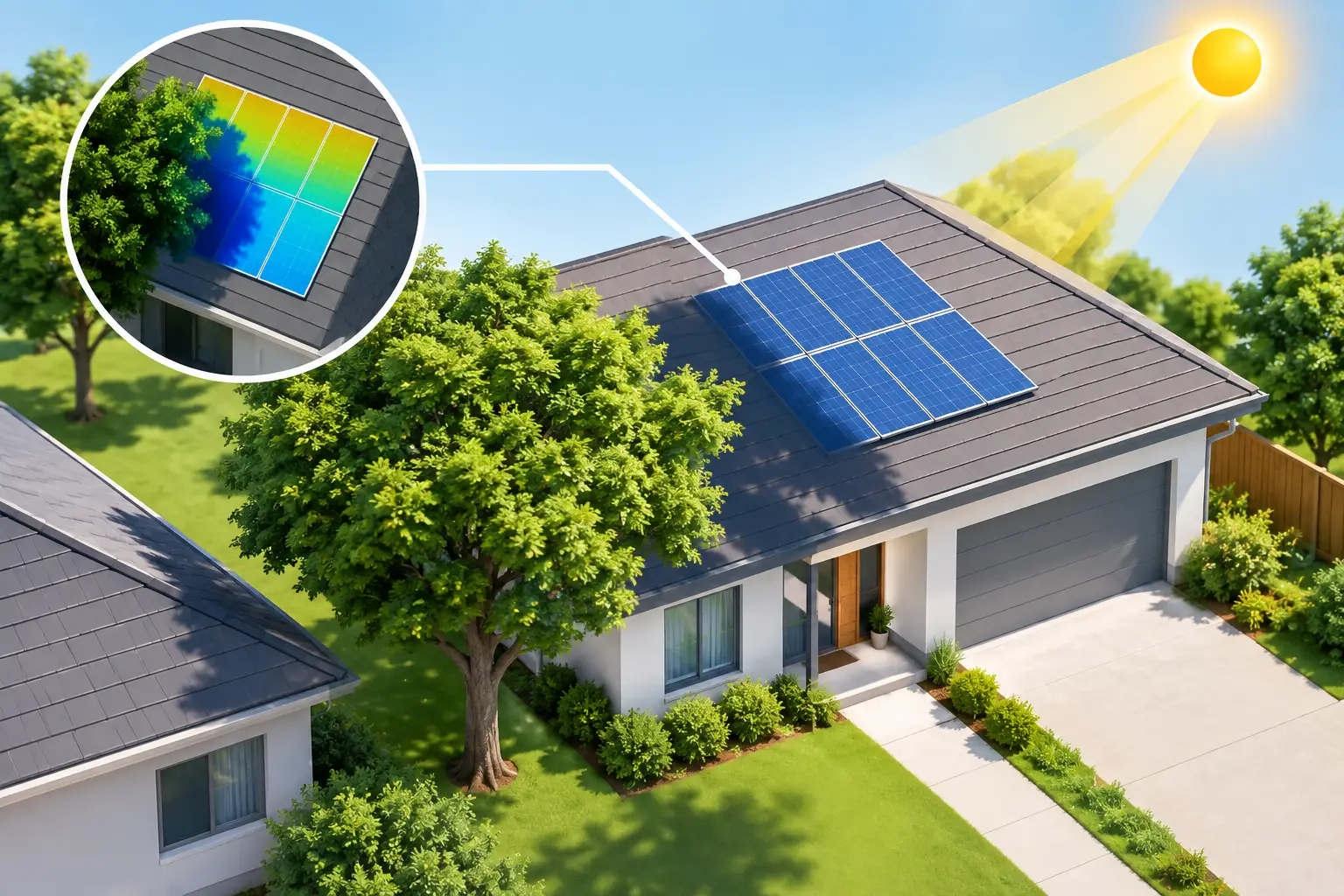
A roof can look ideal for solar from the driveway and still lose a meaningful amount of generation to a single chimney, mature tree or neighbouring property. To assess roof shading properly, you need to consider the whole year, not only whether the roof is sunny when you happen to look at it. This is a vital part of designing a Solar PV system that produces dependable savings rather than an optimistic estimate.
For homes and businesses, shading does not automatically rule out solar. It does mean the design needs more care. The right panel layout, inverter arrangement and, where appropriate, battery storage can protect the value of the investment. The starting point is an accurate survey.
Why roof shading matters to Solar PV performance
Solar panels generate electricity when daylight reaches their cells, but direct shade can reduce output more sharply than many property owners expect. A small obstruction may shade only part of one panel, yet the effect can extend beyond that panel depending on how the array is wired and the equipment selected.
The impact also depends on timing. Shade across a south-facing roof at midday can have a greater effect on annual generation than shade late in the evening, when solar production is already lower. Equally, an east-facing roof is most valuable in the morning and a west-facing roof later in the day. A shading assessment should therefore look at where shade falls, when it falls and how often it occurs.
This matters when comparing quotations. A system should be sized and specified around the usable solar resource on your property, your electricity consumption and your plans for the future, such as an electric vehicle, heat pump or battery. More panels are not always the answer if some positions are regularly shaded.
What can cast shade on your roof?
The most obvious sources are nearby trees, chimneys and dormer windows. However, a complete assessment also accounts for neighbouring houses, outbuildings, telegraph poles, satellite dishes, roof vents and raised sections of the roof itself. On commercial premises, plant equipment, parapet walls and adjacent units can be significant.
Trees require particular care because their effect changes through the seasons. A deciduous tree may allow more light through in winter, but its branches can still create partial shade. In spring and summer, leaf cover may affect the periods when a Solar PV system would otherwise produce strongly. Evergreen trees tend to create a more consistent obstruction throughout the year.
Do not assume that an object to the north is irrelevant. In the UK, the sun sits lower in the southern sky, particularly in winter, but early and late sunlight comes from the east and west. An obstruction can affect a particular roof slope even if it does not appear to block the midday sun.
How professionals assess roof shading
A professional site survey combines physical measurements with solar design software. The roof pitch, orientation, available area and positions of obstructions are recorded. The surveyor will also consider access, roof condition, cable routes and the proposed location for the inverter and any battery system, because a good solar design has to work as a complete electrical installation.
Specialist tools can map the skyline as seen from the roof and model the sun’s path across the year. This produces a more reliable picture than a photograph taken on one clear day. The resulting design can estimate the loss caused by near shading, such as a chimney, and more distant shading from trees or buildings.
For an MCS-standard installation, shading is not a minor detail added after the design has been agreed. It is part of producing realistic generation calculations and selecting equipment that suits the site. At RJ Hill Electrical, this survey-led approach helps ensure the proposed system is based on the property as it is, rather than assumptions about its potential.
Why a visual check is not enough
Standing in the garden at noon may show a clear roofline, but it cannot tell you what happens at 9am in October or 3pm in January. The sun’s height and direction change daily and seasonally. Winter shadows are longer, while summer sun can be blocked by foliage that is not present earlier in the year.
A visual check can identify obvious concerns, and it is useful to mention them when requesting a quotation. It should not replace a roof-level assessment. Safety is also a factor. There is no need for a householder to climb onto a roof to investigate shading.
Designing around shade where possible
Once the shading pattern is understood, there are several ways to improve the outcome. The best option depends on the amount of clear roof space, the type of shade and the property’s consumption profile.
Panels can sometimes be moved away from the affected area, even if that means installing fewer modules. A smaller array in clear sunlight may outperform a larger array that includes panels with frequent obstruction. Splitting panels across different roof faces can also be worthwhile, especially for households that use more electricity in the morning and evening rather than only at midday.
Where partial or intermittent shade affects only selected panels, module-level power electronics may be considered. Optimisers or microinverters can allow individual panels to operate more independently than a conventional string arrangement. They can be effective in the right circumstances, but they add cost and equipment to the system. They are not a substitute for placing panels in the clearest viable positions.
Battery storage can make better use of the electricity a system does generate by storing surplus solar for later use. It will not recover generation lost to shade. This distinction is important when deciding whether to spend budget on extra panels, shade-management equipment or storage. The most sensible route is usually to first maximise reliable solar production, then match battery capacity to household or business demand.
Can trees be trimmed or removed?
Tree work may improve solar access, but it needs to be approached responsibly. Check ownership, planning restrictions and whether the tree is protected before arranging any work. A neighbour’s tree cannot simply be cut back without permission, and poor pruning can damage a tree or create future safety issues.
Even where trimming is possible, it may not be the best or only solution. The tree could grow back, and a change to the landscape should be weighed against privacy, wildlife and appearance. A well-designed system should not depend on an unrealistic assumption that all nearby shade will disappear.
Questions to ask before approving a solar design
When reviewing a proposal, ask how shading has been assessed and whether the generation estimate includes its effect. A clear answer should explain the main obstructions identified and the steps taken in the layout or electrical design to reduce losses.
It is also sensible to ask why a particular inverter configuration has been selected, particularly where panels face different directions or receive different levels of shade. If optimisers or microinverters are proposed, ask what problem they solve on your roof and how that benefit compares with the additional cost.
For businesses, the assessment should also be set against daytime load. A slightly shaded array may still be commercially attractive if most of its production is used on site, reducing electricity bought from the grid. For households, an east-west arrangement may deliver useful generation across more of the day, even where its headline annual output differs from a simple south-facing layout.
When shading makes solar less suitable
There are roofs where persistent, heavy shade makes a conventional Solar PV installation difficult to justify. Dense evergreen cover immediately to the south, tall close buildings or major obstructions across most of the usable roof can reduce production significantly. In these cases, honest advice is more valuable than forcing a system onto a poor site.
That said, the answer may be a revised design rather than no solar at all. A clear garage, outbuilding or alternative roof elevation could provide a better location. Some businesses may have usable canopy or ground-mounted options, subject to space, permissions and installation requirements. Each site needs to be assessed on its own merits.
A well-planned solar system starts with an honest view of the roof, including the shadows that move across it. Arrange a professional survey before making decisions about panel numbers or expected savings, and you will have a stronger basis for a system that performs reliably for years to come.