Best Roofs for Solar Panels in the UK
24 September 2026 | By RJ Hill Electrical
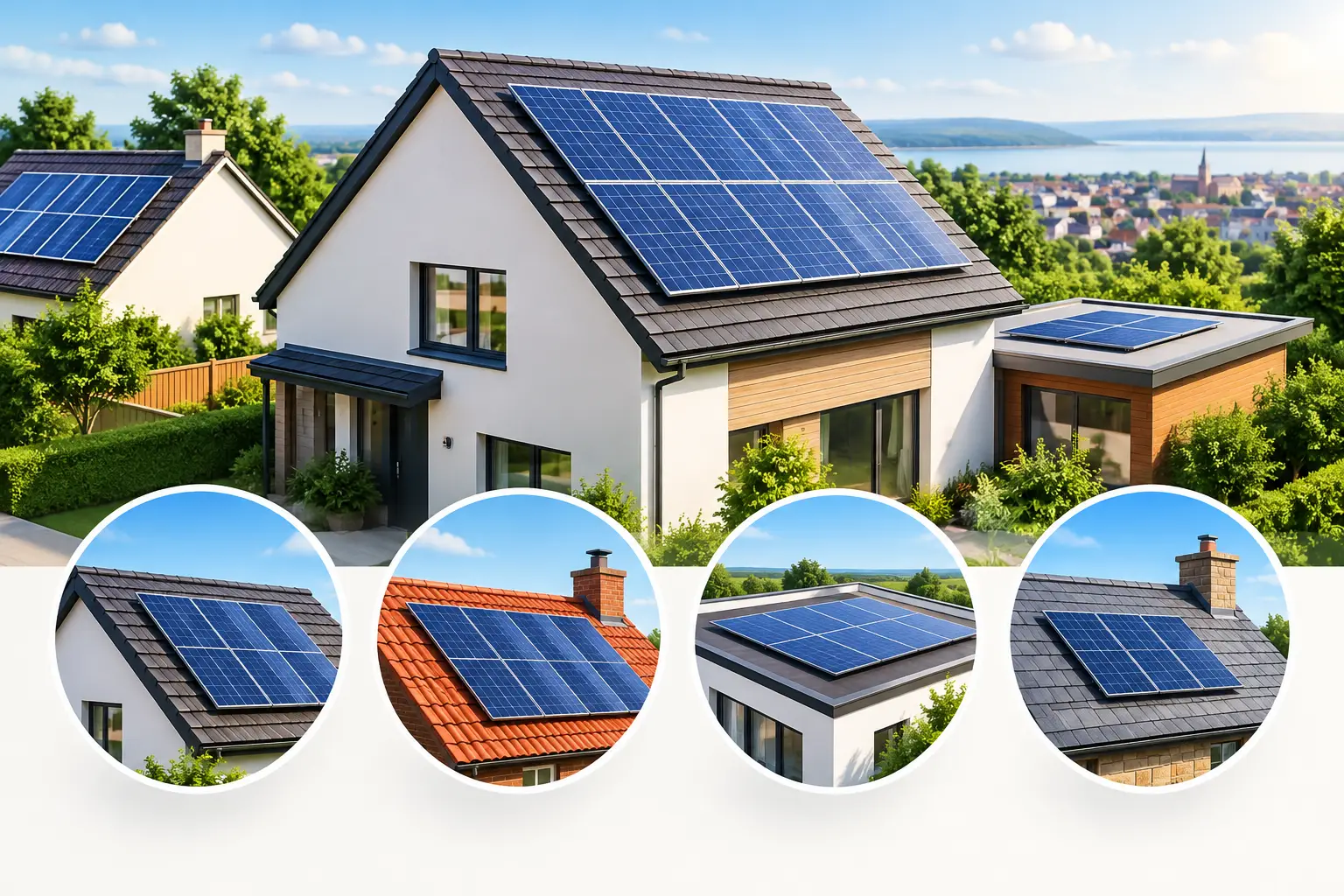
A south-facing roof with clear exposure can look ideal for Solar PV, but the best roofs for solar panels are not defined by direction alone. Roof condition, available space, shading, pitch and the property’s electricity use all affect the system that will deliver worthwhile savings. A well-designed installation works with the building rather than forcing a standard panel layout onto it.
For homeowners and businesses, the aim is simple: generate as much usable electricity as possible over the life of the system, while protecting the roof and keeping future maintenance straightforward. That starts with an honest assessment of the roof before panel numbers or predicted returns are discussed.
What Makes the Best Roofs for Solar Panels?
The strongest candidate is usually a structurally sound roof with a reasonable remaining lifespan, limited shade and enough clear area to accommodate panels safely. In the UK, a south-facing roof is often the most productive for annual generation, but east- and west-facing roofs can be highly effective too.
An east-west arrangement spreads production across the day. This can suit households that use electricity in the morning and evening, or businesses with demand throughout working hours. If electricity is generated when it is needed, less has to be imported from the grid. Adding battery storage can increase the amount of solar energy used on site, particularly where midday generation would otherwise be exported.
Roof pitch also matters, although it is rarely a reason to rule solar out. A pitch of roughly 30 to 40 degrees can perform very well in the UK, especially on a south-facing roof. Shallower and steeper roofs may produce slightly differently across the year, but a professional design accounts for this. Orientation, panel layout and shading often have a greater effect than a few degrees of roof angle.
South-facing roofs
South-facing roofs remain a strong option because they receive the most direct sun across the middle of the day. They are particularly suitable for properties with regular daytime electricity consumption, such as home workers, electrically heated hot water systems, workshops and many commercial premises.
The limitation is timing. If a household is empty during the day and uses most of its electricity after 5pm, a south-only array may generate heavily when demand is lower. A battery, smart controls or an east-west split may offer better overall value in that situation.
East- and west-facing roofs
East-facing panels begin producing earlier, while west-facing panels hold generation later into the afternoon. Together, they can give a broader and more useful generation profile than a single south-facing array. They may have a lower peak output, but that does not automatically mean lower savings.
This layout is a practical choice for families, landlords and businesses where electricity demand is spread across the day. It can also allow more of a large roof to be used, provided the structure and electrical design are suitable.
Roof Materials That Work Well With Solar
Most common UK roof types can support Solar PV when they are in sound condition and fitted using the correct mounting method. The quality of the survey and installation is more important than choosing one material over another.
Concrete and clay tiled roofs are among the most common solar installations. Individual tiles are lifted so roof hooks can be fixed into the rafters, then the tiles are carefully reinstated around the mounting system. The work must be precise to maintain weatherproofing and avoid cracked tiles. Older, brittle tiles may require replacement tiles to be sourced before installation.
Slate roofs can also be suitable, but they demand additional care. Natural slate is more fragile than concrete tile and can be costly to replace if damaged. An experienced installer will assess its condition, the fixing method and access requirements before recommending an array. Solar is entirely possible on slate, but workmanship should never be compromised to reduce installation time.
Metal roofs are often excellent for solar, particularly on agricultural, industrial and commercial buildings. Standing-seam metal roofs can sometimes use clamps that avoid roof penetrations, while profiled sheet roofs use purpose-designed fixings into the structural members. Their large, uncluttered areas can make them ideal for larger systems.
Flat roofs offer flexibility because frames can set the panels at an appropriate angle and orientation. This makes it possible to use a south-facing layout even where the building itself does not face south. However, spacing between rows is essential to prevent one row shading another, and the roof must be assessed for loading, waterproofing and wind resistance. Ballasted systems add weight, while mechanically fixed systems require particular attention to the roof membrane and structure.
Check the Roof Before You Fit Panels
Solar panels commonly have a working life of 25 years or more. Installing them on a roof that needs recovering in the next few years can create avoidable cost and disruption, as the array may need to be removed and refitted for roofing work.
A proper survey should consider the roof covering, rafters or trusses, fixings, signs of water ingress and any existing repairs. It should also look at access, cable routes and the condition of the consumer unit. Solar is an electrical installation as well as a roofing project, so the system needs to be designed as a whole.
If repairs or a replacement are already planned, it often makes financial sense to complete that work first. For some projects, in-roof solar panels may be worth considering during a re-roof. These sit closer to the roofline than conventional panels, creating a more integrated appearance. They are not automatically the best technical or financial choice, but they can be attractive where roof renovation is already taking place.
Structural loading and wind exposure
Panels, rails and fixings add weight to the roof, and wind uplift can place significant forces on an array during severe weather. This is especially relevant for exposed properties, coastal locations, tall buildings and flat roofs. A competent design uses the roof structure, local wind conditions and panel position to determine the correct mounting arrangement.
Do not rely on a visual check from ground level. The roof may appear sound while concealed issues affect its suitability. A site survey provides the information needed to specify safe fixings and protect the building fabric.
Shading Can Change the Economics
A small amount of shade can have a disproportionate effect on generation. Chimneys, dormer windows, neighbouring buildings, trees, aerials and roof vents can all cast shadows at different times of year. Winter sun sits lower in the sky, so a roof that looks clear in summer may be shaded for part of the day in colder months.
This does not mean solar is unsuitable. It means the system should be designed around the shade. Panel-level optimisation or microinverters may be appropriate for complex roof layouts, while a simpler string inverter system can be efficient and cost-effective on an unobstructed roof. The right answer depends on the site, not on a one-size-fits-all equipment package.
Trees deserve a balanced approach. Pruning may improve solar access, but it must be carried out responsibly and within any relevant planning or conservation restrictions. It is better to model likely shade accurately than to make optimistic assumptions about future tree growth.
Roofs That Need Extra Attention
Some roofs need further investigation before Solar PV can be considered. That is not a rejection of the project - it is the right way to manage risk and cost.
Asbestos cement roofing should not be drilled, cut or disturbed as part of a standard installation. Specialist assessment and appropriate remediation may be required before solar can proceed. Likewise, roofs with visible sagging, persistent leaks, deteriorating felt or widespread broken coverings should be repaired before any mounting system is fitted.
Thatched roofs are generally not appropriate for conventional rooftop solar due to fire safety, fixing and insurance considerations. Ground-mounted solar, outbuildings or another suitable roof may provide an alternative where available space allows.
Listed buildings and properties in conservation areas can have additional planning considerations, particularly where panels face a highway or affect the building’s appearance. Early checks avoid delays and ensure the installation is properly planned.
Match the Array to How You Use Energy
The best roof is only part of the decision. A smaller array on an unshaded east-west roof may deliver better practical savings than a larger south-facing array that produces excess electricity at midday. Your electricity consumption, export arrangements, heating plans and EV charging should all influence the design.
For example, an EV charger can use surplus solar during the day, while battery storage can retain energy for use after sunset. Businesses may benefit from solar because their demand often aligns with daytime generation. Homes with heat pumps, electric cooking or growing EV use may also have a strong case for maximising usable roof area.
An MCS-accredited installer should provide clear generation estimates, explain assumptions and specify equipment suited to the property. At RJ Hill Electrical, the focus is on designing Solar PV and storage systems around real energy use, supported by the electrical expertise needed for a safe, dependable installation.
The right roof does not have to be perfect. It needs to be assessed properly, prepared where necessary and paired with a system designed for the way you live or work. That is how solar becomes a long-term investment in lower bills and greater energy independence.