Off Grid Power: Is It Right for Your Property?
10 October 2026 | By RJ Hill Electrical
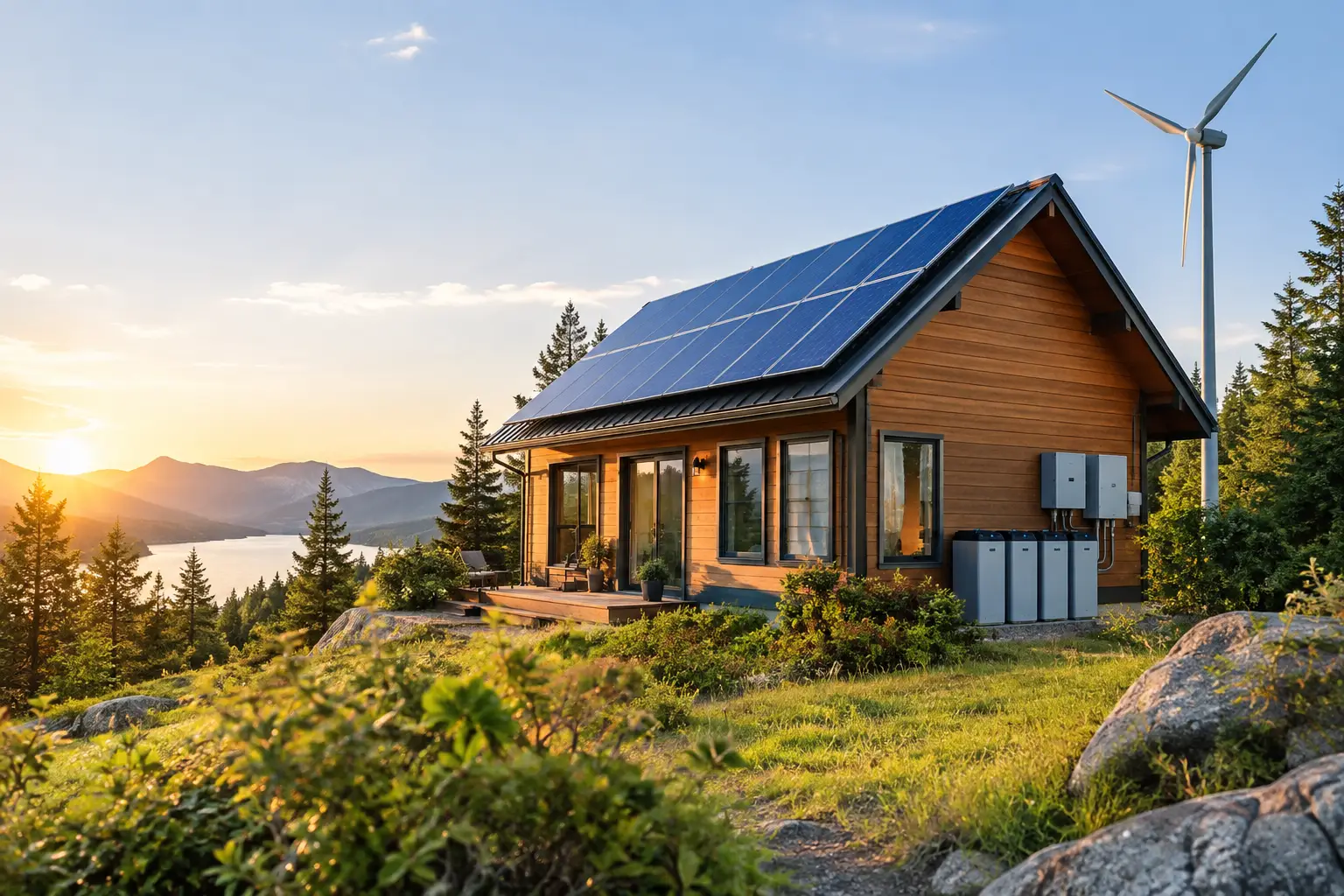
A genuinely off grid property does not simply have solar panels on the roof. It has to produce, store and manage enough electricity to meet demand every day of the year, including dark winter weeks when solar generation is low. For the right home, farm, workshop or remote business, it can provide valuable energy independence. For others, a grid-connected solar and battery system delivers better value with fewer compromises.
The difference comes down to careful design. An off grid system must be built around how a property actually uses electricity, not just the size of its roof or the capacity of a battery.
What does off grid mean?
An off grid electrical system operates without a connection to the public electricity network. Power is usually generated by solar PV, stored in batteries and supplied through an inverter that converts stored DC electricity into the AC electricity used by standard appliances and equipment.
Most UK off grid installations also need a reliable backup source. This may be a generator, particularly where the property has high loads or needs to remain operational through extended periods of poor weather. Wind generation can also be considered in suitable exposed locations, but its value depends heavily on the site, planning position and local wind conditions.
This is different from a standard solar PV installation. A grid-connected system can export surplus electricity and draw power from the network whenever panels are not producing enough. A battery can reduce imported electricity and provide limited backup where designed to do so, but the grid remains the safety net.
Why properties choose off grid power
The most obvious reason is that some properties are expensive or impractical to connect to the mains. A remote dwelling, rural workshop, agricultural building, holiday accommodation or small commercial site may face substantial costs for new cabling, trenching and network work. In that situation, an independently designed power system may be the more sensible long-term option.
Other owners choose off grid living because they want greater control over their energy supply. Electricity prices and network disruptions are outside a property owner's control. Producing and storing more of your own energy can reduce that exposure, provided the system has been sized realistically.
There is also an environmental case. Solar generation and battery storage can reduce reliance on fossil-fuelled generation, especially when electricity use is matched to the hours of available generation. However, an off grid system is not automatically lower carbon if it relies heavily on a generator. The aim should be to minimise generator running through efficient design, sensible energy use and sufficient renewable capacity.
The equipment an off grid system needs
Every installation is different, but a dependable system usually combines several parts that must work together properly.
Solar PV is normally the main generation source. Panel capacity needs to reflect annual demand, winter performance, roof orientation, shading and available space. Designing only for summer output is a common and costly mistake. A system that looks generous in July may struggle in December.
Battery storage holds surplus solar generation for use after sunset or when production drops. Battery capacity determines how long the property can run without new generation, often called autonomy. More storage can improve resilience, but batteries are not a substitute for enough generation. If there is little solar input for several days, a larger battery will eventually need recharging too.
The inverter and control equipment are the operational centre of the system. They supply usable electricity, manage charging and protect batteries from unsuitable operating conditions. A well-designed setup can prioritise solar charging, manage generator input and prevent non-essential loads from draining stored energy.
Many properties also require backup generation. A generator is not a sign that a system has failed. Used strategically, it protects supply during prolonged low-solar periods and can avoid the unnecessary cost of vastly oversizing solar panels and batteries for a few difficult weeks each year.
Finally, the electrical installation itself matters. Consumer units, circuits, earthing, surge protection and isolation must be designed for the system and the building's use. This is not a job for piecing together individual components without a full electrical design.
Start with demand, not solar panels
The most useful first step is an energy assessment. A system can only be sized well when the expected loads are understood. This means looking beyond an annual electricity bill, particularly for a new build or a property that has never had a mains connection.
Daily energy use is measured in kilowatt-hours, while peak demand is measured in kilowatts. Both figures matter. A property may use relatively little energy over a day but still need a powerful inverter if it runs equipment such as pumps, compressors, machinery or electric cooking appliances at the same time.
Heating is often the deciding factor. Resistive electric heaters, immersion heaters and electric showers use substantial power and can make full off grid operation expensive to achieve. Heat pumps can be highly efficient, but they still need careful planning around winter demand. In many cases, a mixed approach using efficient insulation, alternative space or water heating and controlled electrical loads is more practical.
It is also worth separating essential from non-essential circuits. Refrigeration, lighting, communications, alarms and selected sockets may need continuous supply. High-demand equipment may be scheduled for periods of strong solar generation or limited when battery levels are low. This approach improves resilience without compromising normal day-to-day use.
The UK winter is the real design test
Summer generation figures can be impressive, but winter determines whether an off grid installation is truly dependable in the UK. Shorter days, low sun angles, cloud cover and occasional snow can significantly reduce output at the time electricity demand is often highest.
That does not mean off grid power is unsuitable for Britain. It means the design has to acknowledge seasonal variation. There are usually three ways to address winter performance: increase solar capacity, increase battery storage, or include backup generation. The best balance depends on the property's priorities, budget, available space and tolerance for managing energy use.
For a remote home used all year, reliable backup generation may be the most cost-effective choice. For a seasonal building with modest demand, solar and battery storage may cover the majority of use without the same level of backup. A workshop that operates mainly in daylight may be easier to support than a family home with high evening consumption.
Off grid versus grid-connected solar and batteries
A full off grid system is not always the best route to energy independence. If the grid is already available, a solar PV and battery storage installation can often reduce imported electricity significantly while retaining mains supply for periods of high demand and poor weather.
This hybrid approach can be particularly attractive for households with electric vehicles, heat pumps or growing electricity use. It allows the property to use solar power directly, charge batteries from surplus generation and draw from the grid only when required. It can also be designed with backup capability for selected circuits, depending on the equipment and system specification.
The trade-off is straightforward. Staying grid connected means ongoing standing charges and some exposure to electricity prices. Going fully off grid removes dependence on the network but requires greater investment, more planning and an acceptance that energy use may need to be managed at certain times of year.
Installation quality and aftercare matter
An off grid system is a long-term electrical infrastructure project, not a collection of products. Correct cable sizing, battery protection, ventilation where required, generator integration, earthing arrangements and monitoring all affect safety, performance and service life.
Professional installation also gives the owner a clear point of contact if requirements change. A new EV, additional accommodation, workshop equipment or a switch to electric heating can alter demand considerably. A system should be capable of being reviewed and, where practical, expanded without starting again from scratch.
Monitoring is equally valuable. It shows solar generation, battery state of charge, consumption patterns and generator use. Over time, that information helps identify avoidable loads and confirms whether the system is meeting expectations. It also makes maintenance more proactive rather than reactive.
RJ Hill Electrical designs renewable and electrical systems around the way each property is used, with the experience to assess whether full independence, battery-backed solar or a phased upgrade is the right commercial decision.
Planning an off grid project
Before committing to equipment, establish the property's expected electricity demand, its year-round occupancy, the loads that are essential, available space for solar and batteries, and whether backup generation is acceptable. Planning restrictions, access for installation and future expansion should also be considered early.
The strongest off grid systems are not necessarily the largest. They are the systems that match generation, storage and consumption sensibly, remain safe to operate and provide dependable power when it matters most. A detailed survey and honest discussion about winter use will always be more useful than a headline panel or battery figure.