Electrical Load Assessments Before Solar Upgrades
26 August 2026 | By RJ Hill Electrical
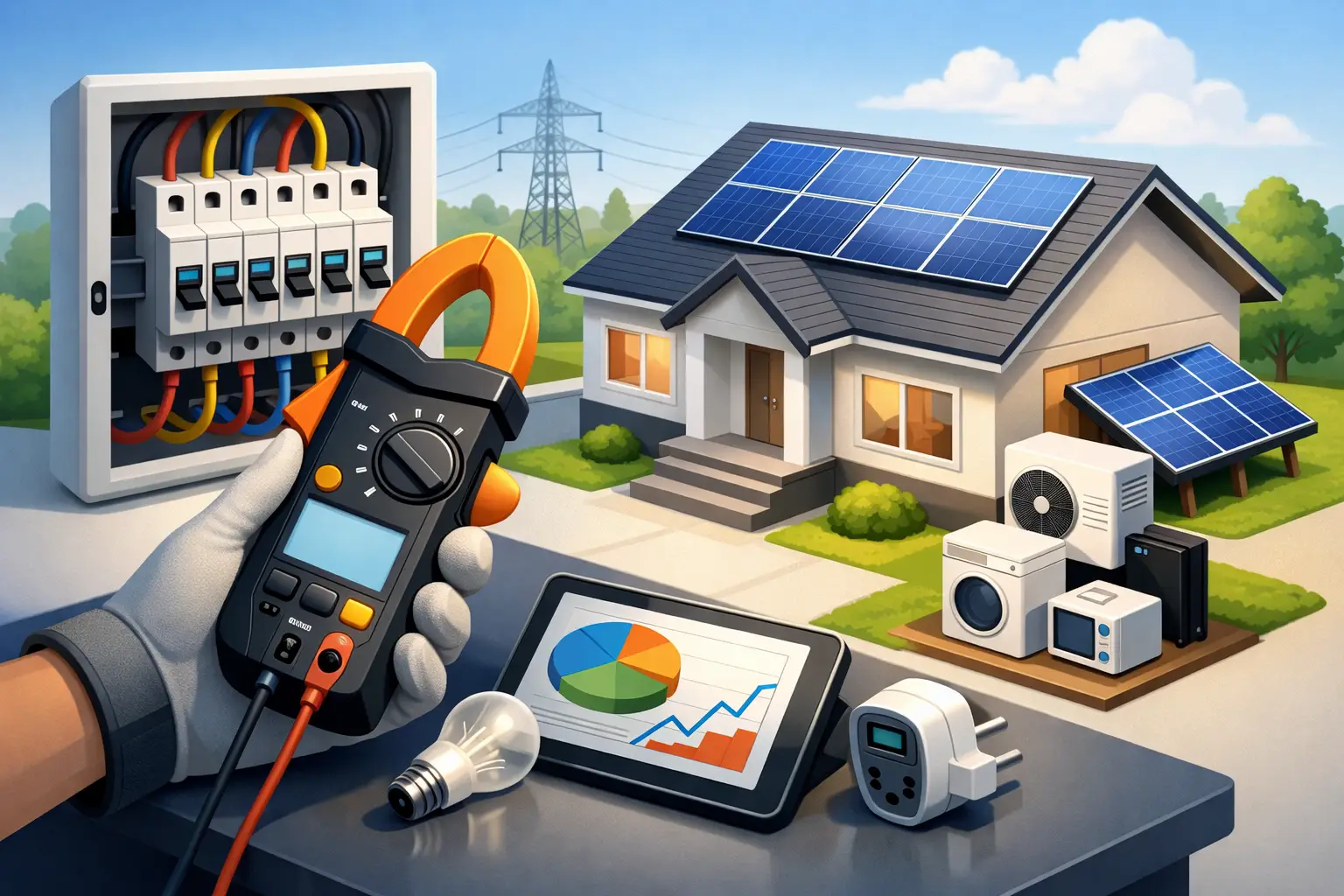
A new EV charger, battery or solar PV system can reduce reliance on the grid, but only when the property’s existing electrical installation is ready to support it. Electrical load assessments provide the evidence needed to design an upgrade safely, avoid unnecessary disruption and make sure each part of the system works as intended.
For homes and businesses across Lincolnshire, Norfolk, Cambridgeshire, Rutland and Leicestershire, this is often the difference between a straightforward installation and unexpected work to the consumer unit, cabling or supply arrangement. It is not simply a box-ticking exercise. It is the starting point for a system that delivers dependable savings and greater energy independence.
What is an electrical load assessment?
An electrical load assessment looks at how much electricity a property uses, when it uses it and how that demand is distributed across the installation. It considers existing circuits and equipment alongside any planned additions, such as solar PV, battery storage, heat pumps, electric vehicle charging or new commercial machinery.
The aim is not to add together the rating shown on every appliance and assume they will all run at once. A well-designed assessment considers realistic demand, diversity and the way a property is actually used. A family home with an EV charger and induction hob has a different demand profile from a workshop that operates machinery throughout the working day.
The assessment also checks whether the physical installation is suitable. That can include the main fuse rating, incoming supply, meter arrangement, consumer unit capacity, protective devices, cable sizes, earthing and bonding. Older properties may have a sound installation but limited spare capacity. Others may need improvements before a renewable energy system or high-load appliance can be connected safely.
Why electrical load assessments matter for energy upgrades
Solar, batteries and EV chargers are often discussed as separate purchases. In practice, they form part of one electrical system. Their performance depends on sensible design, correct protection and a supply that can handle the intended operating conditions.
A solar PV array generates electricity during daylight hours, while a battery may charge from surplus solar generation or cheaper off-peak electricity. An EV charger can add a substantial load, particularly if charging begins when cooking, heating or business equipment is already in use. Without an accurate picture of demand, the installation may require load management, a smaller charging rate or a supply upgrade.
For many properties, the answer is not simply a larger main fuse. Smart control can be a cost-effective alternative. A compatible EV charger can reduce its output when the property demand rises, then increase charging again when capacity is available. Battery settings can also be designed around household consumption, solar generation and tariff periods. The right solution depends on the building, usage patterns and the customer’s priorities.
For commercial sites, the stakes can be higher. A new bank of workplace chargers, additional refrigeration or expanded production capacity may alter the site’s maximum demand significantly. An assessment gives decision-makers a clear basis for phasing work, planning future capacity and avoiding costly alterations after equipment has been installed.
Safety, compliance and long-term reliability
Electrical upgrades must be designed and installed in line with the requirements that apply to the work. A load assessment helps identify whether existing protective devices, cable routes and distribution equipment remain suitable once new generation or demand is introduced.
It also supports a more reliable installation. Overloaded circuits, unsuitable consumer units and poor circuit segregation can lead to nuisance tripping, reduced charging performance and difficult fault-finding. Addressing these issues during the design stage is usually simpler and more economical than revisiting them after commissioning.
Where solar PV or battery storage is being connected to the grid, the local Distribution Network Operator also has a role. Depending on the system size and arrangement, the installation may require notification or approval under the relevant G98 or G99 process. An electrical assessment helps ensure the proposed design is accurate before this stage. It does not replace the DNO process, but it makes that process more straightforward.
What happens during an electrical load assessment?
A professional assessment begins with a site survey and a conversation about how the property is used. For a homeowner, that may cover heating, cooking, electric showers, planned EV ownership and times of high electricity use. For a business, it may include operating hours, machinery, refrigeration, future expansion and critical equipment that must remain powered during an outage.
The electrician will inspect the existing installation and record the key details needed for design. This includes the supply characteristics, consumer unit or distribution board, circuit arrangements, earthing provisions and available space for new equipment. Where appropriate, electricity consumption data may be reviewed to understand typical and peak demand.
The proposed equipment is then considered as part of the whole system. A solar installation needs suitable connection points and isolation. Battery storage needs a safe location, appropriate protection and careful design where backup power is required. EV charging needs an appropriate circuit and may need dynamic load balancing. Each decision affects the others.
The result should be a clear recommendation rather than a generic package. It may confirm that the installation has sufficient capacity, identify modest preparatory works or show that a larger change is needed before an upgrade can proceed. A good assessment also leaves room for future plans, so a customer does not pay for work that limits the next stage of their energy project.
Common issues found before solar, batteries and EV charging
Many properties are better prepared than owners expect. However, electrical load assessments regularly uncover issues that deserve attention before new technology is fitted.
A full or outdated consumer unit is common. There may be no practical way to add the required protective devices, or the board may no longer be appropriate for the planned work. Replacing it can improve safety and provide a cleaner foundation for solar, battery and EV circuits, but it should be specified on the condition of the existing installation rather than assumed as standard.
Limited incoming supply capacity is another consideration. This does not always prevent an installation. A smaller EV charging rate, timed charging or dynamic load control may be the sensible choice. Where demand cannot be managed sufficiently, the electricity network operator may need to be involved in a supply upgrade.
Older earthing arrangements, inadequate bonding or undersized cabling may also need correction. These are not visible benefits in the same way as a new battery or charger, but they are fundamental to safe, compliant operation. The same applies to poorly documented alterations made by previous owners or tenants.
Commercial sites can face a different challenge: their demand may be highly variable. A business that appears to have spare capacity overnight may be close to its limit during a busy production period. Monitoring and a careful review of operating patterns can be more useful than relying on a single reading taken during a quiet visit.
Designing for savings rather than just capacity
The purpose of an assessment is not to push every customer towards the largest possible supply or the biggest available battery. It is to match the system to the property and the outcome required.
A homeowner who is usually out during the day may benefit from a battery that stores solar generation for evening use. Another household may place greater value on charging an EV overnight on a time-of-use tariff. A small business may want solar to reduce daytime operating costs, while a farm or remote site may need battery capacity to improve resilience where the grid is less dependable.
These objectives affect the electrical design. Backup capability, for example, requires additional thought because not every circuit should necessarily be supported during a power cut. Prioritising essential loads, such as lighting, refrigeration, internet equipment or selected sockets, can control cost while providing useful resilience.
The most effective design is usually the one that balances installation cost, expected savings, available capacity and future needs. An assessment makes those trade-offs visible early, when they can be managed properly.
When should you arrange an assessment?
Arrange an assessment before committing to solar PV, battery storage, an EV charger, a heat pump or a significant electrical extension. It is especially worthwhile when the property has an older consumer unit, electric heating, an electric shower, three-phase equipment, frequent tripping or plans to add several technologies over time.
It can also be useful after buying a property or taking on a commercial premises, particularly where the electrical history is unclear. Knowing the limits of the installation gives you a practical plan for improvements rather than reacting when a new system cannot be connected as expected.
RJ Hill Electrical combines more than 20 years of electrical experience with specialist renewable energy installation, helping customers make informed choices before work begins. A properly assessed system gives you a stronger route to lower bills, practical energy resilience and an upgrade that is ready for how you will use electricity next.