Can Solar Charge Electric Cars in the UK?
9 November 2026 | By RJ Hill Electrical
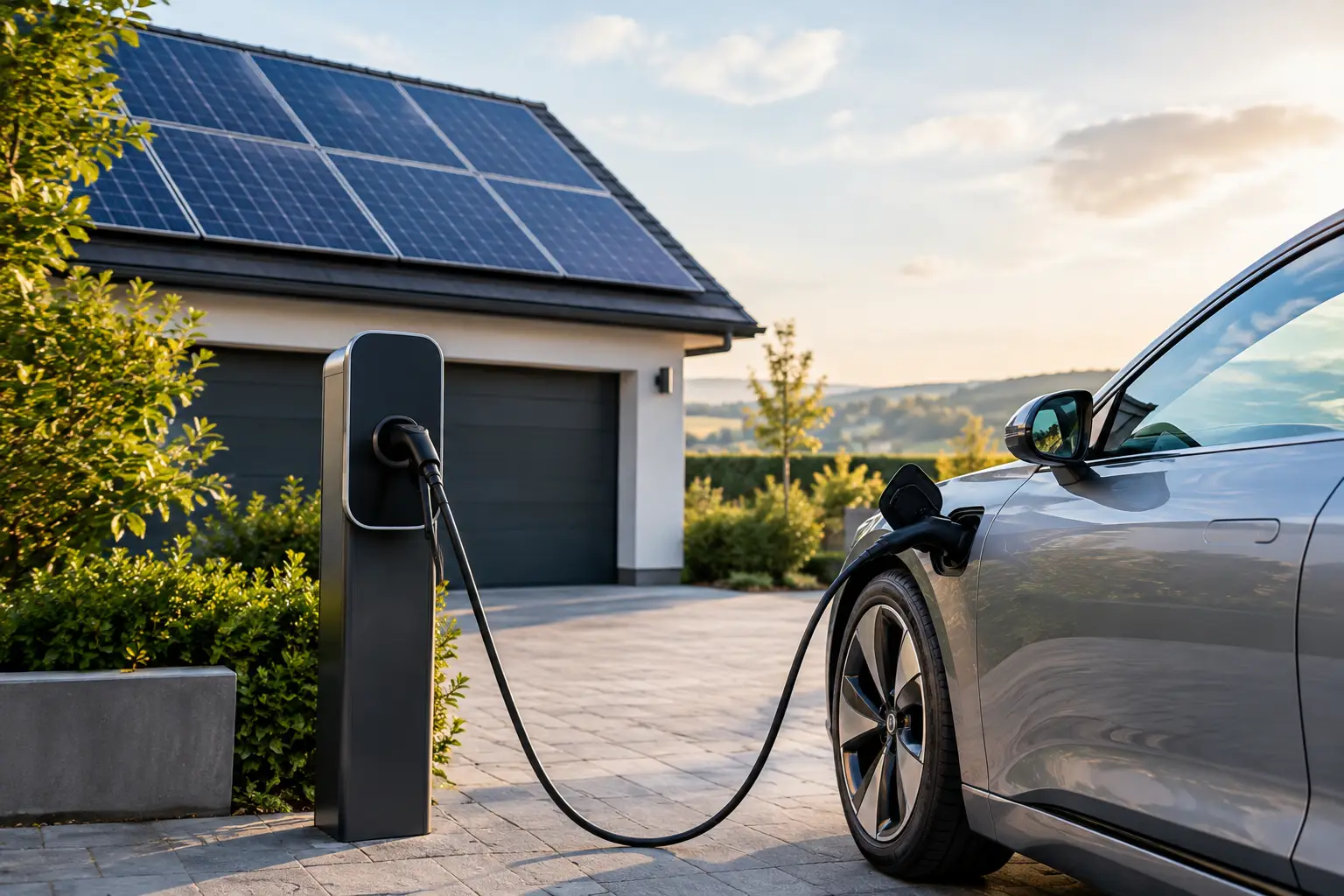
A car arriving home in the afternoon, a roof producing surplus electricity and a charger ready to respond is a practical route to lower motoring costs. But can solar charge electric cars reliably in the UK? Yes, it can. The best results come from designing the Solar PV, EV charger and, where appropriate, battery storage system to work together rather than treating them as separate upgrades.
Solar charging will not always provide every mile you drive, particularly through winter or when the car is away during daylight hours. It can, however, make a meaningful reduction to the cost of charging at home or at a business premises while increasing the value you get from your own generation.
Can Solar Charge Electric Cars Directly?
Solar panels produce DC electricity, while most home EV chargers supply AC electricity to the vehicle. Your solar inverter converts the power generated by the panels into usable electricity for the property. A compatible EV charger can then monitor whether there is surplus solar available and adjust the charging rate accordingly.
In simple terms, the priority is normally your building's electricity demand. If the panels are generating more than the property is using, a smart charger can direct some or all of that surplus towards the car instead of exporting it to the grid. This is often called solar matching, solar diversion or surplus solar charging.
A typical domestic Solar PV system may generate more power than a household needs around the middle of a bright day. If an EV is plugged in at that point, the charger can use the spare generation. If clouds pass over or household demand rises because someone switches on an oven, kettle or heat pump, the charger can reduce its output automatically. This avoids drawing unnecessary power from the grid where the charger and energy controls support this function.
The car does not need sunshine at the precise moment it is connected, but direct solar charging is most effective when it is parked at home or work during daylight hours. That suits some households well, especially people working from home, shift workers and businesses with vehicles parked on site during the day. For others, a different charging strategy may deliver better value.
What Determines How Much Solar Charging You Can Do?
The answer depends on your solar generation, driving mileage, charging habits and the electrical capacity of the property. It is not simply a case of fitting as many panels as possible.
A common home charger is rated at 7 kW. A standard domestic solar system may produce far less than this for much of the day, particularly in the morning, evening and winter. That does not prevent solar charging. A good smart charger can charge more slowly to follow available surplus, then increase power when generation improves.
For context, an electric car might use around 0.25 to 0.35 kWh per mile, depending on the vehicle, weather and driving conditions. A 20-mile journey may therefore require roughly 5 to 7 kWh. On a favourable summer day, a well-sized system can make a useful contribution to that energy requirement. On darker winter days, solar output may be modest, so grid electricity will make up more of the charge.
Roof orientation, shading and panel capacity also matter. South-facing roofs generally produce the strongest midday generation, while east and west-facing arrays can spread production across more of the day. For a household that charges an EV after returning from work, west-facing generation may be especially useful. A proper survey should consider the roof, the existing consumer unit, the proposed charger location and the household's normal electricity use.
Solar Charging Without a Home Battery
You do not need a battery to charge an electric car from solar. In fact, the EV battery is already a large energy store. If the vehicle is connected while the panels are producing surplus electricity, a smart EV charger can use that energy directly.
This is usually the most efficient route because the electricity moves from the solar system to the vehicle without being stored and released again through a separate battery. It can also be a sensible starting point for homeowners who want to manage upfront cost.
The limitation is timing. If your car is usually away from the property between 8am and 6pm, you may miss much of the available generation. You can still benefit from Solar PV because it reduces daytime household electricity purchases, but less of that solar energy will reach the vehicle directly.
A timed overnight charge on a lower electricity tariff may then be the more economical choice on many days. The most cost-effective setup is often a combination: use surplus solar whenever the vehicle is available, then schedule charging at cheaper off-peak times when it is not.
Where Battery Storage Fits In
Battery storage can retain surplus solar for use later in the evening, overnight or during periods of lower generation. It can increase self-consumption and help reduce reliance on peak-rate imported electricity. However, it is not automatically the best way to charge an EV.
A home battery is much smaller than an EV battery, and charging a car from it can empty the stored energy quickly. For example, a 10 kWh home battery may cover only part of an EV charge, while that same stored electricity might otherwise support evening cooking, lighting and household demand. There are also small conversion losses each time electricity is stored and discharged.
Battery storage makes most sense when it is part of a wider plan for the property. It can support evening energy use, make better use of solar generation, work alongside tariff-based charging and provide backup capability where a suitable system is specified. For businesses, storage can also help manage site demand, although the design needs to account for the scale of vehicle charging and operational loads.
Choosing the Right EV Charger for Solar PV
Not every EV charger has the same solar capability. A basic charger will charge the car perfectly well, but it may not react to surplus generation. A solar-aware smart charger can monitor import and export at the property and vary charging to favour your own solar electricity.
When selecting a charger, look beyond the headline charging speed. The key question is whether it can integrate with your Solar PV system and the way you use the property. Useful features include adjustable charge rates, scheduled charging, load balancing and accurate energy monitoring. Load balancing is particularly important where the property has significant electrical demand, as it can help protect the supply from being overloaded when the charger, cooking appliances, heating and other equipment are operating.
For commercial sites, the requirements can be more involved. Multiple chargers, three-phase supplies, building loads and fleet schedules all affect the design. A site may need managed charging that prioritises vehicles according to departure times, available generation or tariff periods. The aim is not just to install chargers, but to make sure the electrical infrastructure supports them safely and economically.
Is Solar EV Charging Worth It in Winter?
Yes, provided expectations are realistic. Solar generation in the UK is seasonal. Summer brings longer days and higher output, while winter generation is lower and can be affected by cloud cover, shading and weather. A Solar PV system should be assessed on annual performance, not its output on a single January afternoon.
During brighter months, surplus solar can provide a substantial amount of low-cost vehicle charging for the right usage pattern. In winter, the system will still contribute to household demand and may add some energy to the car, but off-peak grid charging is likely to remain part of the plan. Smart controls allow you to use both sources sensibly without needing to manage every charge manually.
The financial benefit is also broader than the car. Solar panels reduce the electricity you need to buy for the whole property. When charging is planned around solar generation and favourable tariffs, the combined savings can be stronger than focusing on either measure in isolation.
A Practical System Starts With Your Routine
The right design begins with a few everyday questions. How many miles do you drive each week? Is the car at home during the day? Do you already have solar panels, or are you planning a full installation? What is your current electricity consumption, and are you considering a heat pump, electric cooking or additional EVs in the future?
An experienced installer can use those answers to specify the appropriate Solar PV capacity, charger type, battery storage option and electrical upgrades. This prevents the common mistake of choosing equipment in isolation, then finding it does not deliver the expected savings or flexibility.
RJ Hill Electrical designs integrated solar, battery and EV charging systems for homes and businesses across Lincolnshire, Norfolk, Cambridgeshire, Rutland and Leicestershire. With more than 20 years of electrical experience and MCS-accredited solar installation capability, the focus is on a safe, properly matched system that supports lower bills over the long term.
If your car spends regular time on the drive or at your premises during daylight hours, solar charging can turn that parking time into a useful energy-saving opportunity. A tailored quotation will show what your roof, usage and charging routine could achieve before you commit to the installation.