Best EV Chargers for Home for UK Drivers
12 July 2026 | By RJ Hill Electrical
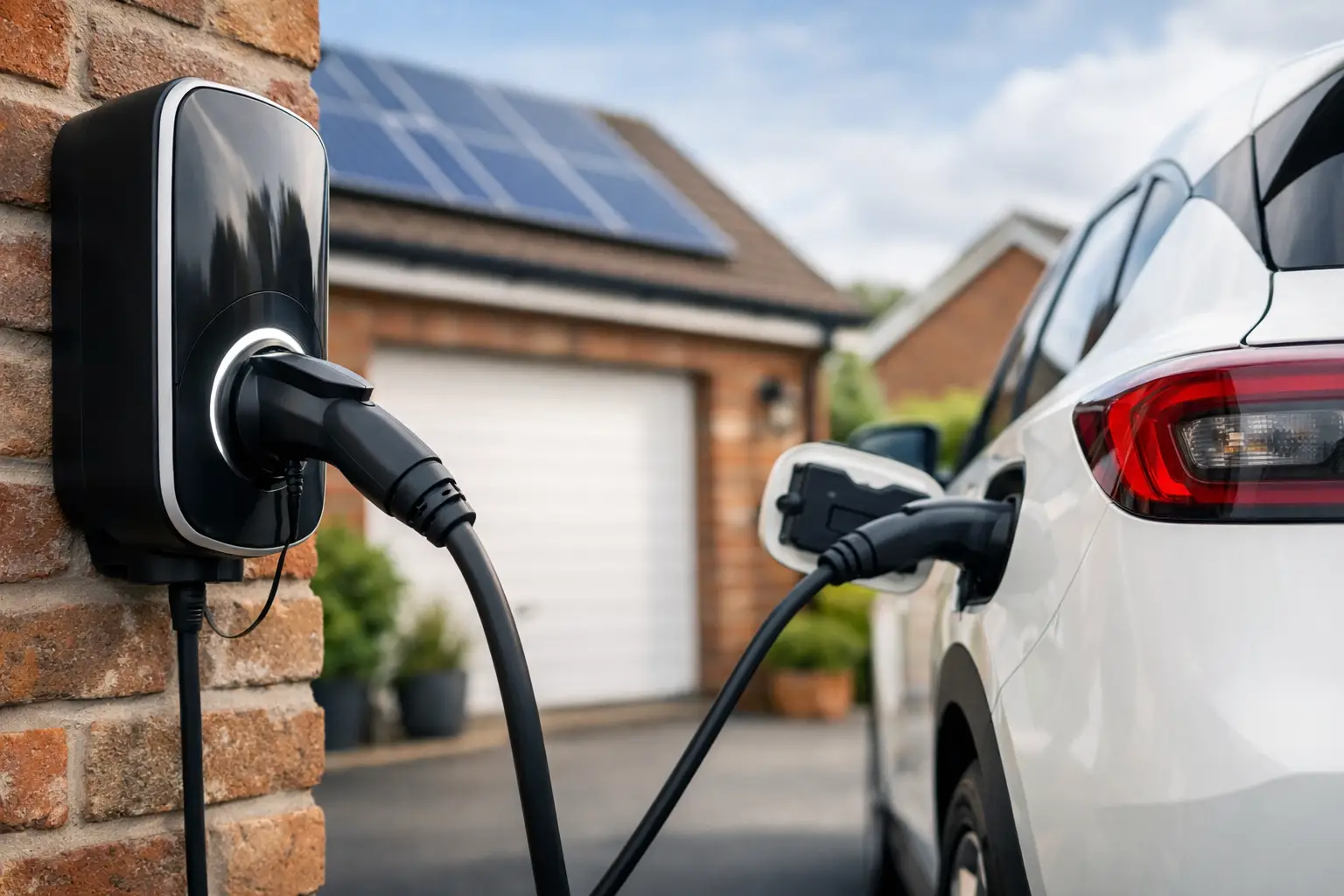
A home charger should make owning an electric vehicle cheaper and easier, not add another expensive appliance to manage. The best EV chargers for home are the ones that suit your car, parking arrangement, electricity supply and daily routine - while helping you charge at the lowest available rate.
For most UK households, a professionally installed 7kW smart charger is the practical starting point. It can replenish a typical EV overnight, works with off-peak electricity tariffs and can be configured around the demands of the property. The right make and model, however, depends on whether solar generation, tariff savings, cable convenience or a discreet finish matters most.
What makes the best EV chargers for home?
The headline charging speed is only part of the decision. A 7kW charger is usually ideal for a domestic single-phase supply, adding roughly 25 to 30 miles of range per hour, depending on the vehicle. That means a car arriving home in the evening can normally be ready by morning.
A 22kW charger can be appropriate at properties with a three-phase supply, but it is not automatically the better choice. Many homes do not have three-phase power, and many electric cars cannot accept 22kW AC charging. It is worth checking both before paying for additional electrical work.
Smart functionality is equally valuable. A good charger can schedule charging for cheaper overnight periods, respond to changing tariff prices and avoid overloading the property's electrical supply. This is particularly useful where an EV charger sits alongside an electric shower, heat pump, induction hob, battery storage or workshop equipment.
For homeowners with Solar PV, solar compatibility can be a major deciding factor. Some chargers can prioritise surplus solar electricity that would otherwise be exported to the grid. This can reduce the cost of daytime charging, although it depends on the weather, household demand and when the car is parked at home. Solar-only charging may be slower, so many households choose a mode that combines solar surplus with grid power when needed.
The leading home charger options in the UK
There is no single charger that is best for every property. These are established options commonly considered by UK EV owners, each with a different strength.
Ohme Home Pro and ePod
Ohme chargers are particularly well suited to drivers on smart electricity tariffs. Their tariff-aware scheduling can help the vehicle charge when electricity is cheaper, subject to the tariff and the vehicle settings. The Home Pro is tethered, with an integrated cable and screen, while the ePod is a compact untethered option for homeowners who prefer a cleaner-looking installation or already carry a cable in the car.
Ohme can be a strong choice where overnight charging costs are the main priority. As with any smart charger, the expected saving relies on selecting a suitable tariff and setting realistic charging schedules.
myenergi zappi
The zappi is a popular option for homes with Solar PV or wind generation. Its main attraction is the ability to use surplus generation for EV charging, with adjustable settings to balance solar use, household demand and charging speed.
This makes it a sensible consideration for households aiming to use more of the electricity they generate. It is also useful for those planning a wider energy system with battery storage and energy monitoring. However, a solar-focused charger will not create free charging on a dark winter afternoon. The system should be designed around the property's generation profile, car usage and tariff rather than solar output alone.
Hypervolt Home 3 Pro
Hypervolt's Home 3 Pro combines a tidy design with practical smart-charging features. It is a tethered charger, which means the cable is ready to use when you arrive home, and it offers scheduling and app control for day-to-day management.
It can suit homeowners who want a straightforward, well-finished unit that does not dominate the front of the house. The tethered cable is convenient, but it needs to be considered carefully where the charger is visible from the street or where cable storage space is limited.
Andersen A2 and A3
Andersen chargers are aimed at homeowners who place a high value on appearance and cable concealment. Their units are available in a range of finishes, and the cable can be stored within the enclosure when not in use.
They are often chosen for prominent driveways, period homes and higher-specification renovations where a standard plastic charger would look out of place. The trade-off is cost: a premium finish may be worthwhile, but it should not take priority over the electrical capacity and smart controls the property needs.
Easee Charge Lite
Easee Charge Lite is a compact untethered option with smart functionality and a small physical footprint. It can be a good fit where the homeowner wants to use their own charging cable, keep the wall installation discreet or install more than one unit at a property.
Untethered charging provides flexibility, particularly for households with different EVs, but it does mean taking the cable in and out of the vehicle. For some drivers that is insignificant; for others, especially in poor weather, a tethered charger is the better everyday choice.
Tethered or untethered: choose for daily use
A tethered charger has a fixed cable. It is quick to use, usually easier in the rain and convenient if the same vehicle is charged most of the time. The cable must be long enough to reach the car's charge port without crossing a path, stretching around a vehicle or creating a trip hazard.
An untethered charger has a socket, so you plug in your own Type 2 cable. It looks neater when not in use and lets you replace the cable separately if it is damaged. It may also suit a household with more than one EV. The practical question is simple: will you be happy retrieving and storing a cable every time you charge?
Installation matters as much as the charger
Even the best charger will not perform properly if the installation has been treated as an afterthought. A competent installer will assess the consumer unit, earthing arrangement, cable route, charger location and the available electrical capacity before recommending a unit.
Load management is often essential in modern all-electric homes. It monitors overall demand and can reduce EV charging temporarily if the property is using substantial power elsewhere. This protects the main supply and can avoid the cost and disruption of an unnecessary supply upgrade.
The installation should also account for cable protection, outdoor weather exposure, safe access and any required notification to the Distribution Network Operator. For flats, shared parking or commercial premises, the route from the electrical intake to the parking bay can be more significant than the charger itself. Early site assessment helps identify these issues before work begins.
Matching your charger to solar and battery storage
If you have Solar PV, the most cost-effective approach may not be to charge solely from excess solar. In summer, surplus generation can make daytime charging highly attractive. In winter, a cheap overnight tariff may deliver better value and leave available solar electricity for household use during the day.
Battery storage adds another decision. Charging a car from a home battery can be useful in certain circumstances, but repeatedly moving electricity from solar to battery and then from battery to car introduces conversion losses. A properly designed system will consider tariff timings, battery capacity, export rates and the household's peak demand rather than assuming every generated unit should go into the EV.
This is why integrated design matters. A charger should complement your Solar PV, battery and wider electrical installation, not compete with them for available power.
A practical way to choose
Start with how far you normally drive between charges and when the car is at home. Then confirm your supply type, preferred tariff and whether solar or battery storage is part of the plan. Finally, decide whether convenience or visual appearance points you towards a tethered or untethered unit.
For most homes, a 7kW smart charger with load management is the right balance of speed, safety and value. If solar self-consumption is a priority, choose a unit and control strategy designed around that objective. If your driveway is highly visible, a more discreet or premium-finish charger may justify the additional spend.
A proper survey turns these choices into a system that works for the way you live. RJ Hill Electrical can assess the property, recommend a suitable charger and ensure the installation is ready for future solar, battery or wider electrical upgrades.