Backup Generators: What UK Properties Need
17 October 2026 | By RJ Hill Electrical
A power cut is rarely just an inconvenience. For a home, it can mean lost heating controls, a defrosting freezer and no way to charge essential devices. For a business, it may mean closed tills, interrupted IT systems, spoiled stock or security equipment going offline. Backup generators provide an independent source of electricity when the grid fails, but the right solution depends on what you genuinely need to keep running and for how long.
A generator should not be chosen simply by its headline power rating. Fuel type, noise, starting method, safe connection, maintenance and the circuits you want to protect all affect whether it will deliver dependable power when it matters.
What backup generators can power
A backup generator converts fuel into electricity, allowing selected appliances or a larger portion of a property to operate during an outage. Smaller portable units are often used for temporary, manual backup. Permanently installed standby generators can start automatically when they detect a grid failure and transfer the supply to protected circuits.
The first decision is not the generator itself. It is deciding which loads are essential. In a typical home, that might include lighting, broadband, refrigeration, heating controls, a few socket circuits and a home office. A farm, workshop or small business may need more: refrigeration, alarms, gates, network equipment, pumps, essential machinery or point-of-sale systems.
Trying to run every appliance as normal can make a system unnecessarily expensive. High-demand loads such as electric showers, induction hobs, ovens, immersion heaters and large air conditioning systems can quickly push up the generator size required. In many cases, a properly designed essential-loads board gives better resilience for less cost.
Starting loads matter as much as running loads
Many electrical items need a short burst of extra power when starting. Pumps, compressors, refrigeration units and motors are common examples. A generator that appears large enough based on normal running demand may still struggle when several of these loads start together.
This is why generator sizing should be based on a proper load assessment rather than a rough calculation from appliance labels. It is also sensible to allow a margin for future requirements, particularly where a property may add refrigeration, automated gates, workshop equipment or electric vehicle charging later.
Portable or standby backup generators?
Portable generators are usually the lower-cost entry point. They can be useful for occasional outages, remote work or temporary power requirements, provided they are used correctly. Most need to be positioned outside, started manually and refuelled by hand. They are not designed to sit in a garage, shed or enclosed space while running.
A portable unit can power appliances directly through suitable extension equipment, but this is not always the most practical or safest long-term arrangement. If it is intended to supply part of a building's fixed wiring, it needs a correctly installed generator inlet and changeover arrangement. It must never be connected through a standard socket or improvised connection. Back-feeding electricity into the network creates serious risks for people working on the supply and can damage equipment.
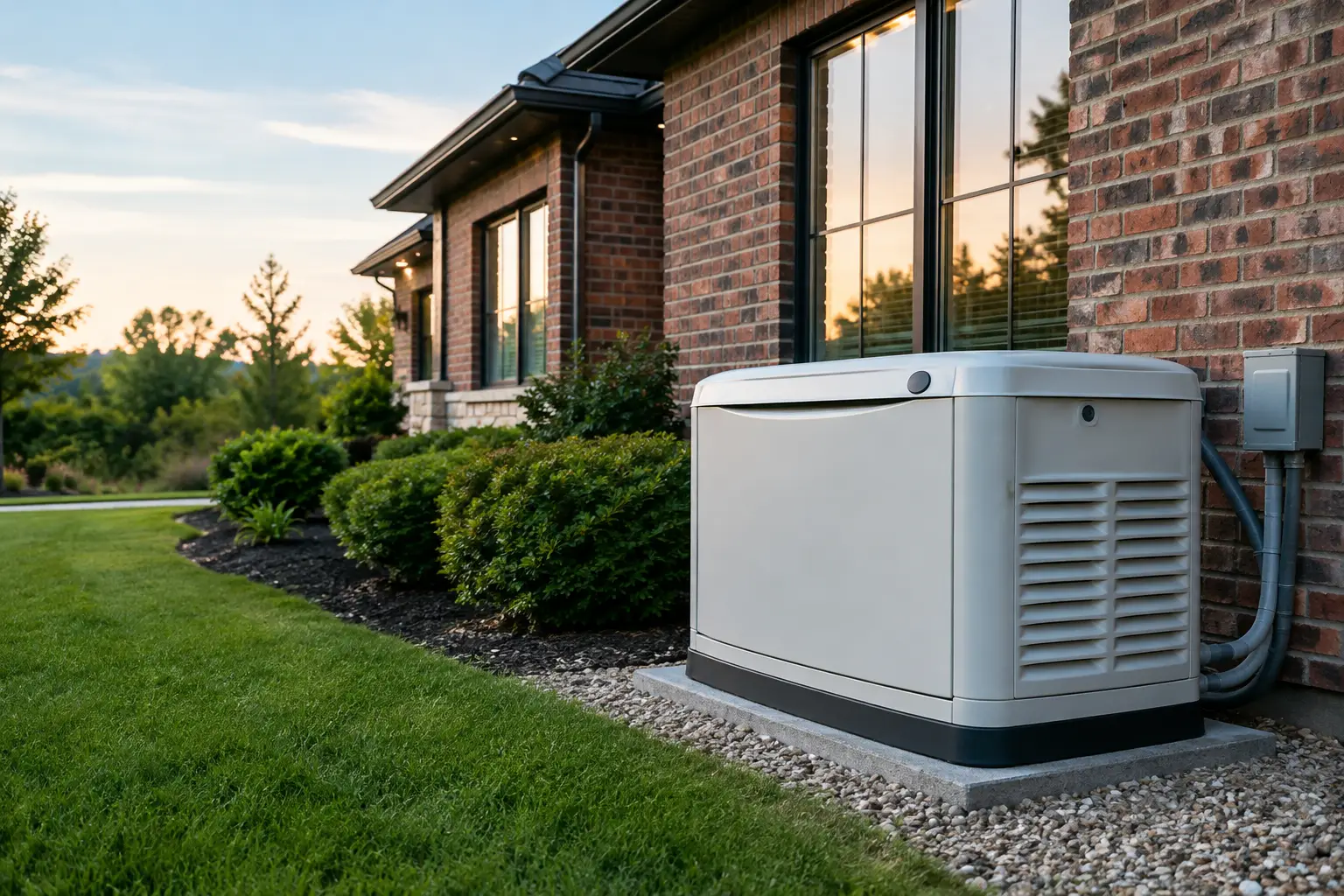
Standby generators are fixed systems, usually installed outside in a weather-protected enclosure. They can be configured with an automatic transfer switch so that, when the mains supply fails, the system starts and supplies agreed circuits without someone needing to be present. This is often the better choice for businesses with critical operations, homes where occupants may need dependable continuity of supply, or properties vulnerable to longer rural outages.
The trade-off is greater upfront cost, more planning around location and noise, and an ongoing maintenance commitment. A standby generator is a piece of safety-critical electrical equipment, not a fit-and-forget purchase.
Choosing the right fuel for a generator
Most domestic and light-commercial generators run on petrol, diesel, LPG or, in some cases, natural gas. Each has a place, and the best option depends on expected running hours, fuel storage, emissions, site conditions and how frequently the system will be used.
Petrol generators are widely available and often suit occasional portable use. Petrol has a limited storage life, however, and fuel management becomes a real consideration if the generator is expected to support a property through prolonged disruptions.
Diesel is often preferred for larger standby applications because it is well suited to sustained loads and commercial-duty equipment. It requires appropriate fuel storage, servicing and consideration of local environmental requirements.
LPG can be a practical option for properties already using it for heating or cooking, while natural gas may offer extended running capability where an appropriate supply is available. These options need careful design and qualified installation. The right answer is not always the cheapest fuel on the day - it is the supply that remains practical, safe and available during the type of outage you are planning for.
Safe installation is not optional
A generator installation must safely separate the generator supply from the electricity network. This is achieved through suitable changeover equipment or an automatic transfer switch, installed and tested as part of the electrical design. Earthing arrangements, fault protection, cable sizing, generator location and the way neutral conductors are managed all need to be considered.
Carbon monoxide is a major hazard. Generators must operate outdoors, well away from doors, windows, vents and neighbouring properties. They should never run indoors, in a garage, beneath an open shelter attached to the building, or in any poorly ventilated area. Noise, exhaust direction, security and protection from weather also matter, particularly in residential settings.
For a fixed system, an experienced electrician should assess the existing consumer unit, identify the essential circuits, design the transfer arrangement and test the completed installation. For homes and businesses across Lincolnshire, Norfolk, Cambridgeshire, Rutland and Leicestershire, local site conditions can make a significant difference to the practical design.
Generator maintenance protects your backup plan
A generator that has not been tested for several years is not reliable backup. Batteries can fail, fuel can degrade, filters can clog and mechanical components can seize. Automatic systems should be exercised regularly, while portable generators should be started and run under load in line with the manufacturer's guidance.
A useful maintenance plan normally includes checking the starting battery, oil level, filters, coolant where applicable, fuel condition and transfer equipment. Any faults should be addressed before the generator is needed, not during a winter storm or a widespread supply interruption.
Businesses should also document which circuits the generator supports and ensure key staff know what happens during an outage. A generator may keep the building powered, but staff still need to understand limits on electrical demand and any manual steps required.
Generator, battery storage or both?
Battery storage is increasingly attractive for households and businesses with solar PV. It can store cheaper or self-generated electricity, reduce reliance on peak-rate imported power and provide backup during an outage when designed with the correct backup capability.
Unlike a generator, a battery is silent in use, needs no fuel deliveries and can respond almost immediately to a grid failure. However, its runtime is limited by battery capacity and the loads being supported. A battery that comfortably covers lights, broadband, refrigeration and electronics may not sustain high-power heating or cooking loads for long.
There is another point that catches many property owners out: solar panels alone do not normally provide power during a grid outage. Standard solar PV systems shut down for safety when the grid fails. To use solar energy during an outage, the inverter and battery system need an appropriate backup or islanding design.
For short outages and everyday bill reduction, a solar and battery system may be the most useful investment. For long-duration outages, high loads or sites where continuity is critical, a generator can offer extended runtime as long as fuel is available. Some properties benefit from both: batteries handle normal evening use and short cuts, while a generator provides longer-term support and can recharge the battery when needed.
Plan for the outage you are most likely to face
The best backup system is the one matched to your actual risks. A homeowner who experiences occasional two-hour cuts has different needs from a rural business dependent on refrigeration, a property with a borehole pump, or a site that cannot afford IT and security systems to stop.
Start with a clear list of essential circuits, expected outage duration and any equipment that cannot be interrupted. From there, a qualified electrical assessment can establish whether backup generators, battery storage or a combined system will give the right balance of resilience, running cost and long-term value. A well-designed installation turns an uncertain power cut into a manageable event rather than an operational emergency.