Solar Inverter Reviews That Help You Choose
30 September 2026 | By RJ Hill Electrical
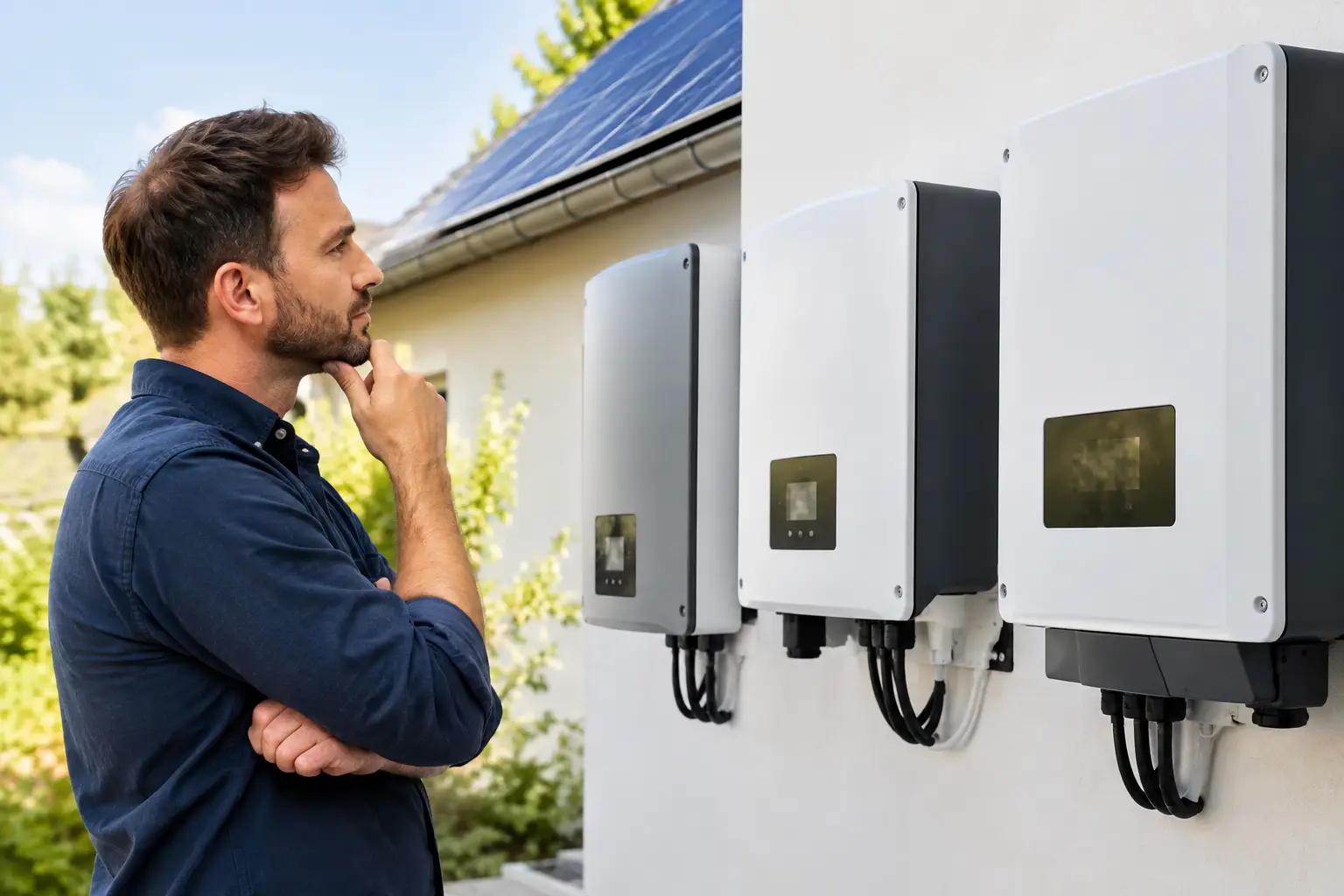
A solar panel system can only deliver value if the electricity it produces is used properly. That is why solar inverter reviews deserve more attention than a quick star rating or the lowest quoted price. The inverter is the working centre of a Solar PV system, converting DC electricity from the panels into usable AC power for your property. Its performance, capacity and compatibility can all influence how much of your generated energy you use, store and export.
For UK homeowners and businesses, the best choice is rarely about selecting the most expensive brand. It is about choosing an inverter that suits the roof, the expected generation, daily electricity demand and future plans for battery storage or EV charging.
What solar inverter reviews should really tell you
A useful review should explain how an inverter performs in a real system, not simply repeat a manufacturer specification. Peak efficiency figures can look very similar across quality products, often above 97 per cent, but the right model is determined by more than a headline number.
Start with the inverter's size. An inverter that is too small may limit output during the brightest periods. One that is unnecessarily large can add cost without delivering meaningful extra generation. Some degree of panel oversizing is common and can be sensible in the UK, where maximum output is infrequent and solar production varies across the year. The correct balance depends on roof orientation, shading, panel capacity and the connection available at the property.
Reviews are most useful when they identify whether a system has been designed around those conditions. A south-facing, unshaded roof with a straightforward daytime load has different requirements from an east-west roof supplying a home with a battery, heat pump and electric vehicle.
It is also worth separating product reliability from installation quality. Even a well-regarded inverter will not perform as intended if the strings are poorly designed, commissioning is incomplete or the system is not correctly configured for export limits and battery operation. A good installer will take responsibility for the whole system, rather than treating the inverter as an isolated box on the wall.
The main inverter types and where they fit
Most domestic and small commercial systems use a string inverter. Panels are connected in groups, known as strings, and the inverter manages the output from each string. This is a cost-effective, proven option for roofs with similar panel orientation and limited shade.
Where a roof has panels facing different directions, multiple maximum power point trackers, often called MPPTs, become important. These allow separate groups of panels to operate independently. Without suitable MPPT capacity, output from one roof section can restrict another.
Microinverters are fitted at individual panels rather than in a single central unit. They can be a good option for complex roofs, partial shading or installations where panel-level monitoring is a priority. The trade-off is a higher upfront cost and more equipment located on the roof. They are not automatically better for every property, but they can be the right answer where shading or roof layout makes a conventional string design less effective.
Power optimisers sit between these approaches. They are installed at selected panels or across an array to manage mismatch and shading while using a central inverter. Whether they are worthwhile depends on the shade pattern. A chimney casting a short shadow at one time of year is not the same as regular obstruction from trees or neighbouring buildings.
Hybrid inverters for battery-ready systems
A hybrid inverter can manage both solar generation and a compatible battery. For many new installations, this is an efficient way to keep the system ready for battery storage, even if the battery is added later. It can reduce the need for additional equipment and make monitoring simpler.
However, battery compatibility must be checked, not assumed. Some hybrid inverters work only with specific high-voltage batteries, while others offer a wider approved range. Battery capacity, charging rate, backup requirements and tariff strategy should all form part of the decision.
If a customer already has a Solar PV system with a standard string inverter, an AC-coupled battery may be more practical. This adds battery storage without replacing an inverter that is still working well. It may involve slightly different conversion losses, but it can be a sensible, cost-effective route depending on the existing equipment and the aims of the upgrade.
Efficiency matters, but daily use matters more
An inverter's efficiency affects how much solar energy reaches your appliances, battery or export meter. It matters, but small differences between quality models may have less effect on annual savings than system design and household behaviour.
For example, a family that uses more electricity in the evening may gain more from a properly sized battery and intelligent charging settings than from chasing a fraction of a percentage point in inverter efficiency. A small business operating through the day may benefit most from matching panel output to its daytime demand, reducing the amount of electricity bought from the grid.
Monitoring is therefore a practical feature, not just an extra. Clear generation and consumption data helps customers see when solar is being used, when the battery is charging and whether high-demand appliances could be run at more economical times. The best apps are easy to understand, but the installer should still explain what the figures mean and set realistic expectations for seasonal performance.
Questions to ask beyond inverter ratings
Before relying on solar inverter reviews, ask whether the reviewer had a system similar to yours. The following factors often have more value than a general score:
- Does the inverter have enough MPPT inputs for the roof layout?
- Is it compatible with the battery you want now or may add later?
- Can it support export limitation where this is required by the local network operator?
- Does it offer backup power, and if so, what circuits will remain live during a power cut?
- What are the warranty terms, and who handles support if a fault occurs?
Backup power is a particularly common source of confusion. Many solar systems automatically shut down during a grid outage for safety, even when the sun is shining. An inverter described as backup-capable may require additional equipment, a battery and a dedicated essential-loads board before it can keep selected circuits running. For a property where resilience is a priority, this should be designed into the system from the outset.
Similarly, a long product warranty is valuable only when there is a clear route to diagnosis and replacement. Ask who will deal with fault finding, whether remote monitoring is available and what labour costs may apply after installation. Ongoing service support is worth considering alongside the initial quotation.
Why installation standards protect inverter performance
A solar inverter operates within a wider electrical system. Cable sizing, isolation equipment, earthing arrangements, surge protection, consumer unit capacity and network connection requirements all affect safety and long-term performance.
For grid-connected Solar PV in the UK, the installation must meet the relevant electrical and network standards. Depending on the size and arrangement of the system, this may involve G98 or G99 notification or approval. An MCS-accredited installer can also ensure the system is documented correctly for relevant export payments and customer records.
At RJ Hill Electrical, system design starts with the property and the result the customer wants to achieve. That may be lower daytime running costs, a battery-ready installation, EV charging from surplus solar or greater resilience during outages. With more than 20 years of electrical experience, the focus is on specifying compatible equipment and installing it to perform as one complete system.
Choosing value rather than chasing a brand name
The strongest solar inverter reviews tend to agree on one point: value is not the same as the cheapest unit. A lower initial price can be attractive, but it should be weighed against monitoring, warranty support, battery options and the likely cost of changes later.
Equally, premium equipment is not always justified. A straightforward, unshaded roof with predictable daytime consumption may perform extremely well with a dependable string inverter and a carefully designed panel array. A more complex property may justify spending more on multiple MPPTs, optimisers, microinverters or an integrated battery solution.
A proper survey should turn these choices into clear recommendations, with the reasoning explained in plain language. You should know what the inverter is designed to do, what it cannot do without additional equipment and how it supports your expected savings.
The most useful next step is not to choose an inverter from a rating table. It is to assess your roof, electricity use and future plans together, then invest in a system that gives each kilowatt of solar generation the best chance of reducing what you buy from the grid.