Does Inverter Size Matter for Solar PV Systems?
19 August 2026 | By RJ Hill Electrical
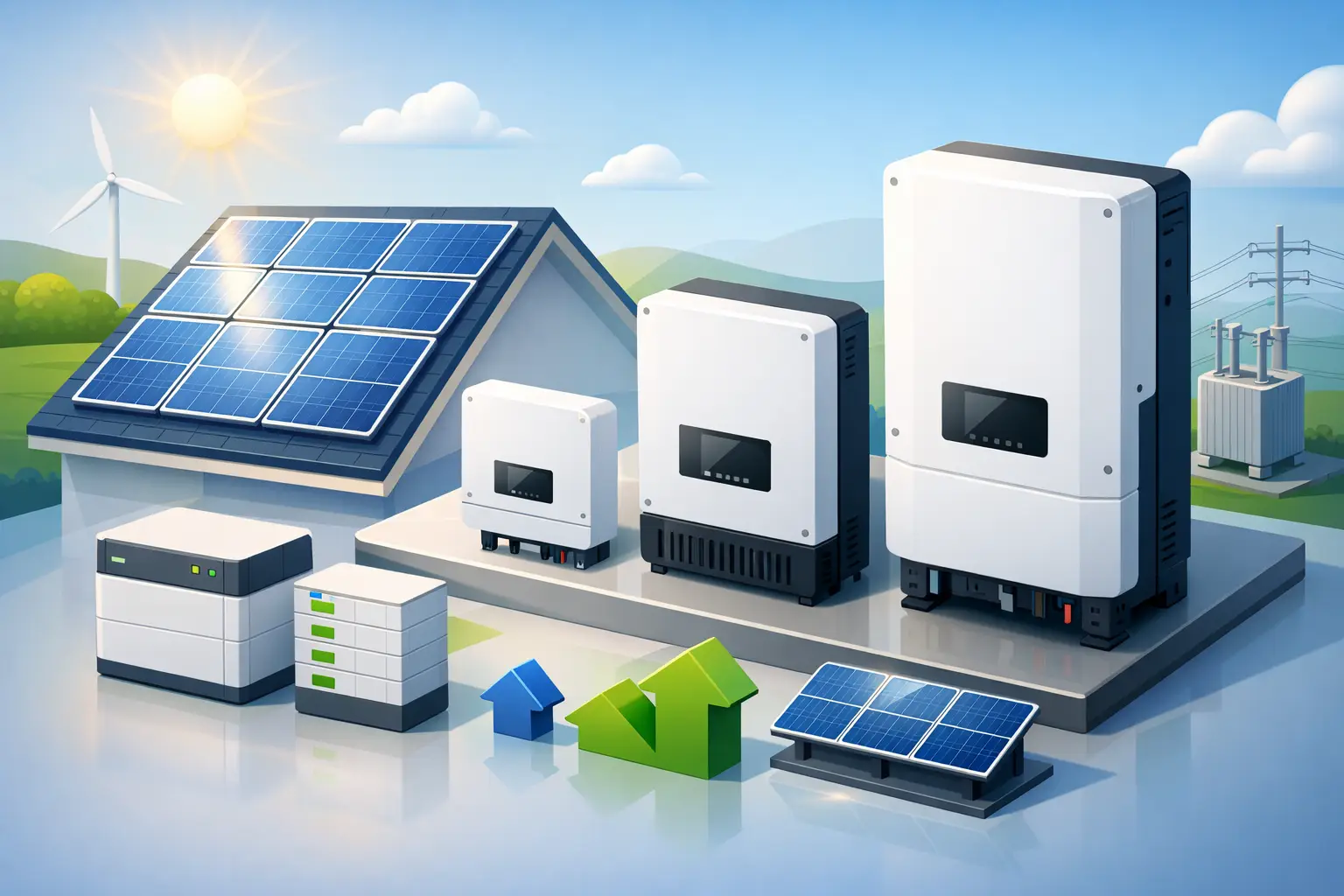
A 10-panel solar system can look excellent on paper, yet still fail to deliver what the owner expects if the inverter is poorly matched. So, does inverter size matter? Yes - but the largest inverter is not automatically the best choice. The right size is the one that works efficiently with your solar array, electricity use, battery plans and grid connection.
For UK homes and businesses, inverter selection affects daily generation, how much power can be used on site, battery performance and the practical value of any future EV charger. It is a design decision, not a box-ticking exercise.
What inverter size actually means
A solar inverter converts the direct current (DC) made by panels into alternating current (AC) that your property and the grid can use. Its size is normally expressed in kilowatts (kW). A 5kW inverter can supply up to 5kW of AC power under the right conditions.
This figure is different from the size of the solar array, which is measured in kilowatt peak (kWp). For example, a property may have 6kWp of panels paired with a 5kW inverter. That is not necessarily a mismatch. In fact, it is often a sensible design choice.
Panels only reach their rated output in strong, direct sunlight and cool conditions. In the UK, those peak moments are relatively limited. A modestly smaller inverter can operate efficiently for more of the year, while keeping equipment and connection costs under control.
Does inverter size matter for solar generation?
It does, particularly when the inverter is too small or too large for the array. If the panels can produce more than the inverter’s maximum AC output, the inverter will limit output at that point. This is known as clipping.
Clipping sounds wasteful, but a small amount can be commercially sensible. A 6kWp array may only exceed a 5kW inverter’s output during a handful of bright midday periods. For the rest of the year, especially in spring, autumn and winter, the array is unlikely to reach that limit. The additional annual generation gained by installing a much larger inverter may not justify the extra cost.
However, an inverter that is significantly undersized can clip too often. This becomes more relevant where a large south-facing array has little shading, or where a business has substantial daytime demand and wants to capture as much solar output as possible.
Oversizing the inverter brings a different trade-off. It may provide headroom for additional panels later, but it can cost more and may spend much of its working life operating well below its most productive range. The design should be based on realistic annual performance, not simply the highest possible peak figure.
Roof layout changes the calculation
A south-facing roof tends to generate a sharper peak around midday. East-west arrays spread production across the morning and afternoon, often producing a lower maximum output but more useful energy across the day. Shading, roof pitch, panel orientation and local conditions all influence the appropriate inverter-to-panel ratio.
This is why two properties with the same number of panels can need different inverter sizes. A proper design considers the site, not just a generic package price.
Matching the inverter to how you use electricity
Generation is only part of the picture. The better question is how much electricity your household or business uses, and when it is used.
A family that is out during the day may prioritise battery storage, timed appliance use and EV charging. A small business operating from 8am to 5pm may gain more value from maximising daytime solar output directly. In both cases, the inverter needs to support the intended system behaviour.
For example, a 3.68kW inverter may suit a smaller domestic system with modest demand and no immediate expansion plans. A larger household with an electric vehicle, heat pump or battery may benefit from more capacity, provided the electrical supply and grid approval support it.
It is also worth separating inverter size from your property’s overall electricity demand. A 5kW inverter does not mean every appliance must fit within 5kW. When solar output is lower, the property can still draw additional power from the grid. The inverter simply sets the maximum amount of solar-generated AC power it can provide at one time.
Battery storage needs its own sizing check
With battery storage, inverter capability becomes even more important. A battery has a capacity, measured in kilowatt-hours (kWh), and a charge or discharge power, measured in kW. These are not the same thing.
A 10kWh battery may store a useful amount of energy, but if its inverter can only discharge at 3kW, it cannot provide more than 3kW to the property at one time. That may be perfectly adequate for normal evening use, but it may not cover a kettle, oven and shower running together without support from the grid.
Hybrid inverters manage solar panels and batteries through one unit. They can be an efficient choice for a new installation, but their solar input, battery charge rate and discharge rating must all be assessed. Some systems allow additional battery modules but have a fixed inverter limit, so future expansion should be discussed before installation.
For customers aiming to reduce imports during expensive tariff periods, the discharge rate can matter as much as battery capacity. For those charging a battery overnight on a lower-rate tariff, the inverter must also be able to charge at a practical rate within the available off-peak window.
Backup power is not guaranteed by a larger inverter
Many people assume that a battery-backed solar system will keep the whole property running during a power cut. That depends on the system design, not just inverter size.
Most standard grid-connected solar systems switch off during an outage to protect engineers working on the network. To provide backup, the system needs suitable emergency power or backup functionality, correctly designed changeover equipment and an agreed plan for which circuits will be supported.
A larger inverter may run more loads, but backup demand can rise quickly. An electric shower, induction hob, immersion heater and heat pump can each place significant demand on the system. In many cases, it is more practical to back up essential circuits such as lighting, refrigeration, broadband, selected sockets and heating controls rather than every high-load appliance.
The aim is dependable resilience, not an expensive specification that does not match how the building is used.
Grid connection limits can shape the answer
In the UK, grid connection rules can influence the inverter size available for a project. Single-phase domestic installations are commonly designed around 3.68kW export under the G98 process. Systems that export more, and many larger or more complex installations, may require approval under G99 before installation.
That does not mean a larger system is impossible. It means the design must account for the local network, proposed export level and any required permission. Export limitation may also be an option in some circumstances, allowing a larger solar array or inverter while controlling how much power is sent to the grid.
Commercial properties, three-phase supplies, existing generation and local network capacity add further considerations. An experienced installer will establish these details early, rather than discovering a constraint after the equipment has been selected.
A practical way to choose the right size
The best starting point is not the inverter catalogue. It is your electricity data. Half-hourly smart meter information, bills, seasonal demand and plans for an EV, heat pump or business equipment reveal far more than annual consumption alone.
A sound proposal should explain the panel array size, inverter rating, expected generation, likely clipping, battery charge and discharge limits, export arrangement and scope for expansion. It should also be clear about what backup power will and will not do.
At RJ Hill Electrical, solar and battery systems are designed around the property’s electrical needs as well as the roof space available. With more than 20 years of electrical experience and MCS-accredited installation capability, the focus is on a system that performs reliably and supports measurable savings over time.
If you are considering solar, battery storage or an EV charger, ask for a design that shows how each component works together. The right inverter size is the one that makes your energy plan practical now, while leaving sensible room for what comes next.