Solar Batteries vs Generators for UK Homes
24 October 2026 | By RJ Hill Electrical
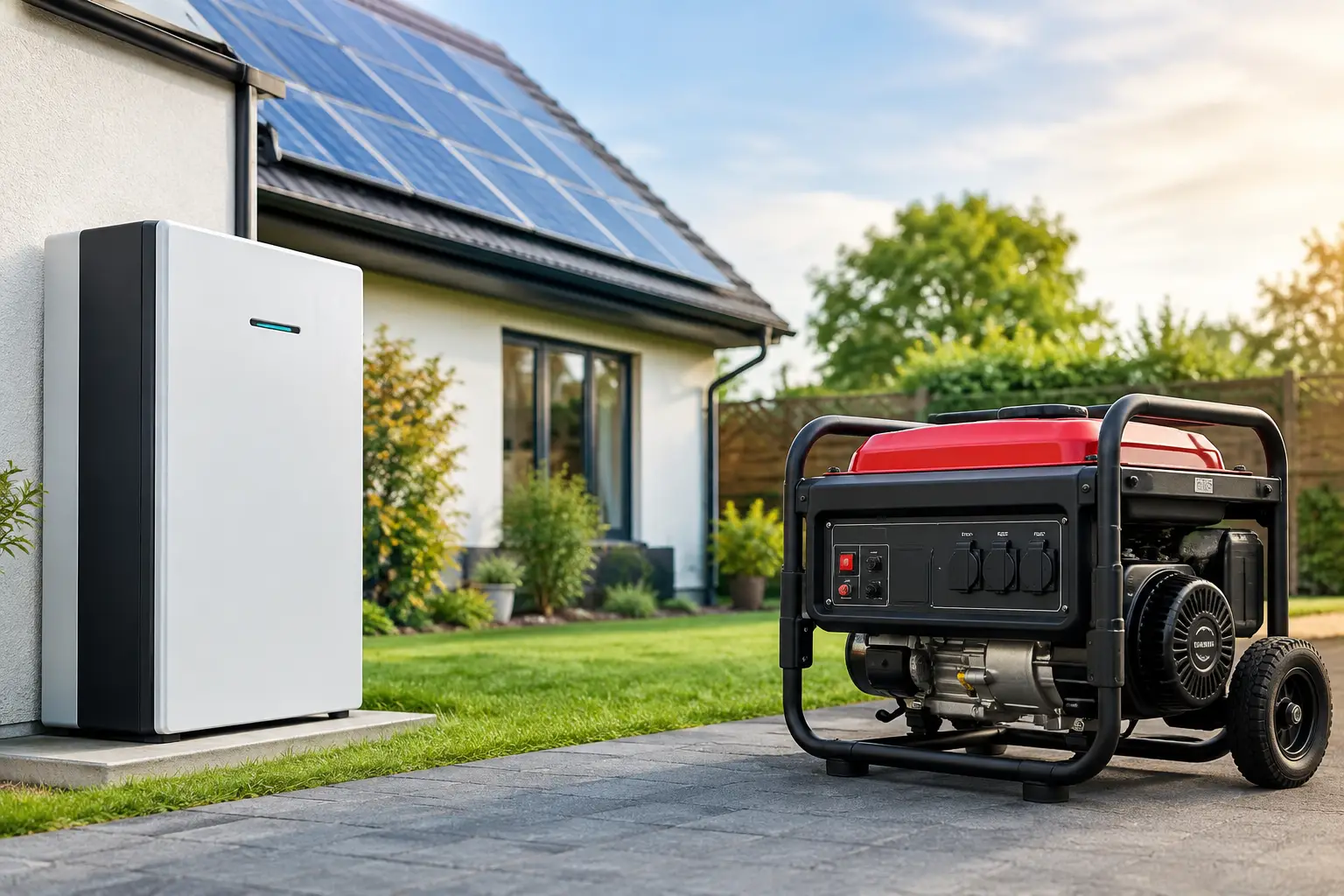
A power cut quickly shows the difference between having lower electricity bills and having genuine energy resilience. When comparing solar batteries vs generators, the best choice depends on what you need power for, how long you need it, and whether reducing day-to-day energy costs matters as much as emergency backup.
For many UK households, a battery storage system is the practical long-term choice because it stores lower-cost solar electricity for use later. A generator can still have a place, particularly where outages are frequent or extended, but it brings fuel, noise and maintenance into the equation. The right answer is rarely about buying the largest unit. It is about designing a system around your property and the loads that matter most.
Solar batteries vs generators: the real difference
A solar battery stores electricity. Most commonly, it charges from excess generation from a Solar PV system during the day, then supplies that electricity during the evening, overnight or when household demand rises. Many systems can also charge from the grid during off-peak tariff periods, ready to reduce peak-rate electricity use later.
A generator produces electricity by burning fuel, usually petrol, diesel, LPG or natural gas. It can run for as long as there is sufficient fuel and can be a dependable source of power in a prolonged outage. However, it does not reduce electricity costs in the same way as a battery charged by solar or lower-rate grid electricity.
The distinction matters. A battery is usually an everyday energy-saving asset with backup capability when specified correctly. A generator is primarily an emergency power source.
What a battery system can do for your property
A well-designed battery storage system helps you use more of the electricity your solar panels produce. Instead of exporting surplus solar power in the middle of the day and importing electricity after sunset, you store part of that energy for later.
That can lower grid imports, improve the value of your Solar PV installation and provide greater protection against changing electricity prices. For homes with an electric vehicle, heat pump or high evening usage, battery storage can be particularly useful, provided the system size matches actual consumption.
Backup power is possible, but it must not be assumed. Not every battery installation will keep a property powered during a grid outage. The inverter needs an emergency power supply or backup function, and the installation must be designed to safely disconnect from the grid when the network is down.
Some systems provide a dedicated backup socket for a few essential appliances. Others can supply selected circuits, such as lighting, broadband, refrigeration and sockets. A full-property backup arrangement is also possible in some cases, but it needs careful load assessment. Electric showers, ovens, immersion heaters and larger heat pumps can quickly exceed the available battery output.
Two ratings are especially important: battery capacity, measured in kilowatt-hours, and output power, measured in kilowatts. Capacity affects how long stored energy can last. Output power affects what can run at the same time. A battery with 10 kWh of usable storage may support essential loads for many hours, but that does not mean it can run every high-demand appliance in the house simultaneously.
Where generators perform better
Generators are strongest when long-duration backup is the priority. A battery will eventually discharge, particularly during winter when solar generation is lower and household electricity use is often higher. A generator can continue operating if it is safely refuelled and maintained.
This can be valuable for rural properties with unreliable supply, agricultural buildings, remote workshops and certain businesses where a lengthy loss of power would cause significant disruption. A generator may also be suitable where critical equipment has a high power demand that would require an unusually large and costly battery system.
There are practical limitations. Generators need a safe outdoor position, ventilation, weather protection and suitable electrical changeover equipment. They produce noise and emissions, require regular servicing, and fuel must be stored and managed appropriately. A portable generator should never be run indoors, in a garage or close to open doors, windows and vents because of the serious risk from carbon monoxide.
Automatic standby generators can start when the mains fails, but they are a more involved installation than simply purchasing a portable unit. For dependable operation, the generator, transfer equipment, fuel arrangement and protected circuits all need to work together.
Cost is more than the purchase price
A generator may appear cheaper at the outset, especially for occasional emergency use. But its running costs can be substantial, particularly when fuel prices rise. It also needs servicing, oil changes, inspections and periodic testing. A generator that sits unused for years may not perform as expected when it is finally needed.
Battery storage typically requires a higher initial investment, especially when backup functionality and additional consumer-unit work are included. Its financial value comes from regular use: storing solar generation, charging at lower tariff rates where appropriate and reducing reliance on imported electricity.
The payback period depends on your energy tariff, export arrangement, solar generation, household demand profile and battery size. Oversizing a battery simply to chase autonomy is not always cost-effective. Equally, choosing a very small battery may limit the savings available from your existing Solar PV system.
For a business, the calculation should also consider the cost of downtime. If a short outage stops card payments, refrigeration, security systems, IT equipment or production, a backup solution may protect revenue as well as provide energy savings.
Noise, maintenance and everyday living
For most residential settings, batteries are the easier system to live with. They operate quietly, automatically and without fuel deliveries. Once installed and configured, they can work in the background every day, responding to solar generation, household demand and tariff timings.
Generators need more hands-on attention. Even quieter inverter generators are audible, and noise can be a consideration for neighbours as well as the household using them. They also have moving parts, exhaust emissions and a finite fuel supply.
That does not make generators a poor choice. It simply means they solve a different problem. If you expect occasional short outages and want to cut bills throughout the year, battery storage is generally the better fit. If you need to support a site for several days without grid power, a generator may provide the endurance a battery alone cannot.
Can solar panels work in a power cut?
Usually, no. Standard grid-connected Solar PV systems are designed to shut down during a power cut. This is a safety requirement that prevents electricity being sent onto the network while engineers may be working on it.
To use solar generation during an outage, you need a compatible battery and inverter system with an approved backup arrangement. Even then, available solar power will vary with daylight and weather. On a bright day, solar panels may recharge the battery while supplying essential loads. During a dark winter afternoon, there may be little generation available.
This is why battery backup should be designed around essential circuits rather than assumptions. Keeping lights, refrigeration, internet, selected sockets and heating controls operating can make an outage far more manageable. Trying to operate every electrical load as normal can increase system cost significantly.
When a hybrid solution makes sense
For some properties, the strongest solution combines both technologies. A solar battery can reduce bills and provide immediate, quiet backup for normal outages. A generator can then act as a secondary source for extended interruptions, recharging the battery or supporting designated loads when solar production is limited.
This approach is often relevant for off-grid properties, farms, remote commercial sites and homes where energy security is critical. It requires a compatible system design. Not every inverter, battery and generator combination will operate together safely or efficiently.
A professional assessment should examine your electricity usage, critical circuits, solar output, tariff options, available installation space and local network requirements. For customers across Lincolnshire, Norfolk, Cambridgeshire, Rutland and Leicestershire, RJ Hill Electrical can help turn those practical details into a system that is built around real energy use rather than a generic package.
The most useful question is not simply whether a battery or generator is better. It is which loads you cannot afford to lose, how long you need to support them, and how your investment can reduce energy costs on every ordinary day as well as during the unexpected one.