Rural Energy Resilience That Works When It Matters
22 October 2026 | By RJ Hill Electrical
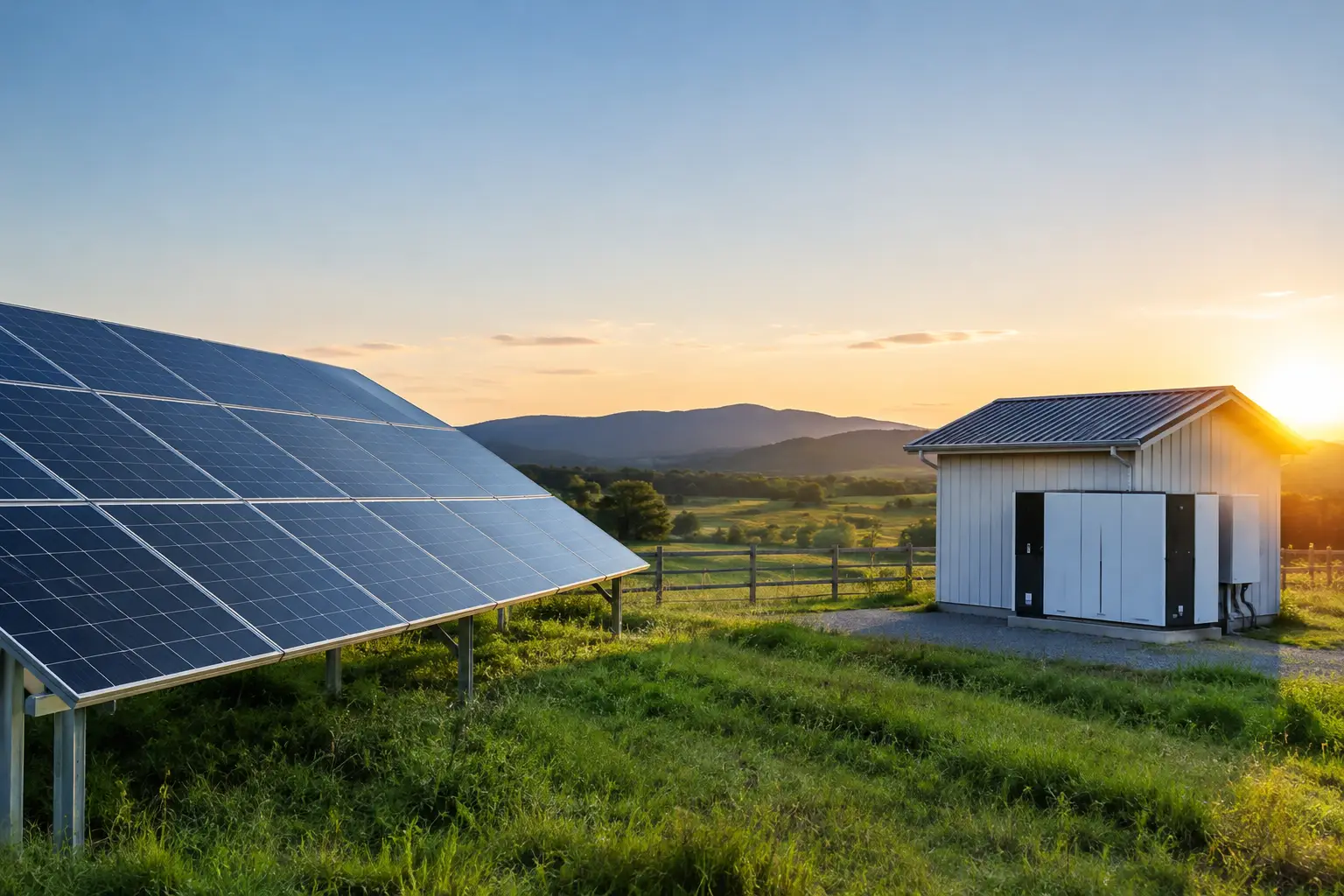
A power cut in a rural property is rarely a minor inconvenience. It can stop a heating pump, affect refrigeration, interrupt internet access and leave a business unable to trade. Rural energy resilience means designing an electrical system that reduces dependence on the grid while keeping the essentials running when supply is disrupted.
For homes, farms and rural businesses, the answer is seldom one piece of equipment on its own. Solar PV, battery storage, backup capability and safe electrical design need to work as one system. Done properly, that system can reduce electricity bills every day and provide valuable protection when the grid is under pressure.
Why rural properties face a different energy challenge
Many rural properties sit at the end of long distribution lines, where faults can take longer to locate and repair. Storms, fallen branches and local infrastructure issues may cause outages that are more frequent or longer than those experienced in towns and cities. Even without a full power cut, voltage fluctuations and poor supply quality can create problems for sensitive equipment.
The impact depends on how a property uses electricity. A family home may be concerned about heating, lighting, refrigeration and broadband. A small business may need computers, card machines, security systems or workshop equipment. Farms can have more specialised requirements, including water pumps, livestock systems, cold storage and electrically operated gates.
This is why resilience should begin with an honest assessment of what must keep running. The aim is not always to power every circuit indefinitely. It is to protect the loads that matter most, for as long as practical, within a sensible budget.
Rural energy resilience starts with the right design
A solar and battery system should be designed around the building, its usage and its priorities. Roof orientation, shading, available roof area, existing consumer unit capacity, annual consumption and overnight electricity demand all affect the result.
Solar PV generates electricity during daylight hours, reducing the amount bought from the grid. A battery stores surplus generation for use later, often during the evening when household demand rises and solar output falls. This combination can improve self-consumption significantly, particularly where daytime generation would otherwise be exported for a lower value.
However, standard solar panels alone do not provide power during an outage. For safety reasons, a grid-connected solar inverter normally shuts down when the grid fails. To provide backup power, the system must include suitable battery storage, an inverter with backup or off-grid capability, and correctly designed changeover arrangements.
That distinction matters. A property may have solar panels and still have no electricity during a cut unless backup functionality has been planned from the outset.
Choosing what is backed up
A well-designed backup system often supplies a dedicated essential-loads circuit rather than the entire property. This is usually the most cost-effective approach because high-demand equipment can drain a battery quickly.
Typical priority loads include:
- refrigeration and freezer circuits
- lighting in key areas
- broadband router and communications equipment
- selected sockets for charging devices and low-power appliances
- heating controls, circulation pumps or a boiler where appropriate
- security systems, gates or critical business equipment
An electric shower, immersion heater, large electric cooker, heat pump or workshop machinery may require more battery and inverter capacity than is reasonable for backup alone. That does not mean these loads cannot be included, but it requires a larger and more carefully specified system. The right approach depends on what continuity is worth to the household or business.
Solar PV and battery storage: daily savings with a second purpose
The strongest case for solar and batteries is often their everyday value. Solar generation can offset daytime use, while batteries can store excess energy rather than sending it straight to the grid. In some cases, batteries can also charge from lower-cost off-peak tariffs for use when electricity prices are higher.
That helps make resilience a practical investment rather than an emergency-only expense. The battery is used throughout the year to manage energy more effectively, then provides backup support when it is needed.
Battery size should not be selected by headline capacity alone. A 5 kWh battery and a 13.5 kWh battery serve very different needs, but usable capacity, discharge rate, inverter output and expected demand are equally important. A battery may have enough stored energy for several hours of lighting and refrigeration, yet be unable to start or sustain high-power loads if the inverter is undersized.
For a rural business, the cost of downtime should be part of the calculation. Lost trading, spoiled stock, interrupted production or compromised security can outweigh the cost of installing a properly designed system. For homes, the value may lie in comfort, safety and avoiding disruption during extended outages.
Do not overlook the electrical installation
Renewable technology performs best when the underlying electrical installation is in good order. Older properties can have limited consumer unit space, ageing wiring, inadequate earthing arrangements or circuits that were never intended to support modern loads such as EV chargers, heat pumps and battery systems.
An experienced electrical contractor will assess the whole installation, not simply fit equipment to the nearest available space. This includes cable routes, isolation, protection devices, earthing, load balance and the practical location of inverters and batteries. Battery systems also need suitable environmental conditions, clear access and careful consideration of manufacturer requirements.
For solar PV, MCS-accredited installation is particularly relevant where customers want confidence in design standards and may need eligibility for export arrangements. Good workmanship also affects system reliability over the long term. A lower initial quote can become expensive if it leaves poor cable management, unsuitable equipment locations or no clear plan for maintenance.
When an off-grid or hybrid system makes sense
Some rural buildings have an unreliable connection, a costly new connection requirement or no practical grid supply at all. In these cases, a hybrid or off-grid system may be the right route.
A hybrid system remains connected to the grid but can use solar, batteries and backup functions to reduce reliance on it. An off-grid system is designed to operate independently, usually combining solar PV, battery storage and a generator for prolonged periods of low solar generation or unusually high demand.
Off-grid living requires more planning than a standard domestic solar installation. Winter generation in the UK is substantially lower than summer output, so the system must be designed for the difficult months, not just sunny days in June. Energy efficiency becomes central: efficient appliances, sensible heating choices, load scheduling and realistic expectations can reduce the size and cost of the system required.
For many properties, full off-grid operation is not necessary. A grid-connected solar and battery system with essential-load backup can provide a better balance of cost, convenience and protection.
Planning for outages before they happen
Resilience is as much about preparation as equipment. A backup system should be tested, and everyone using the property should understand which circuits remain live during an outage. It is also worth reviewing how long the battery is likely to last under different conditions.
During winter, a household may need to reduce demand to preserve stored energy. Running the washing machine, tumble dryer and electric oven while off-grid backup is active will shorten runtime considerably. Clear priorities make the system more useful when it matters most.
Monitoring is valuable too. Most modern systems provide generation, consumption and battery data, helping owners understand their energy patterns. Over time, this information can identify opportunities to shift demand into solar hours, adjust battery settings or add capacity if usage changes.
For customers across Lincolnshire, Norfolk, Cambridgeshire, Rutland and Leicestershire, local conditions and property types vary widely. A detached rural home, a converted barn and a working commercial site should not receive the same off-the-shelf recommendation. A site survey and a clear discussion about priorities are the foundation of a system that delivers genuine value.
A practical route to greater independence
Start by looking at electricity bills and identifying the essential loads that need protection. Then consider how much of your daytime demand solar could cover, how much energy is used after dark, and what an outage currently costs your household or business.
A tailored solar, battery and electrical design can turn those answers into a realistic plan. RJ Hill Electrical combines more than 20 years of electrical experience with specialist renewable energy installation, helping customers build systems that reduce bills while improving confidence in their power supply.
The most useful resilience system is not necessarily the biggest one. It is the one designed around your property, your usage and the moments when reliable electricity matters most.