Home Battery vs Generator for Your UK Home
30 October 2026 | By RJ Hill Electrical
A power cut is inconvenient when it lasts an hour. It becomes a real problem when it affects heating controls, refrigeration, home working, security systems or a business trading from the property. The home battery vs generator decision is therefore not simply about having backup power. It is about choosing how you want your property to operate when the grid is unavailable - and how that investment can work for you every day.
For most homes, a battery storage system is the more practical long-term solution, particularly when combined with solar PV. A generator still has a place where outages are prolonged, power demand is high or grid connection is not available. The right answer depends on your usage, the circuits you need to protect and the level of independence you want.
Home battery vs generator: the key difference
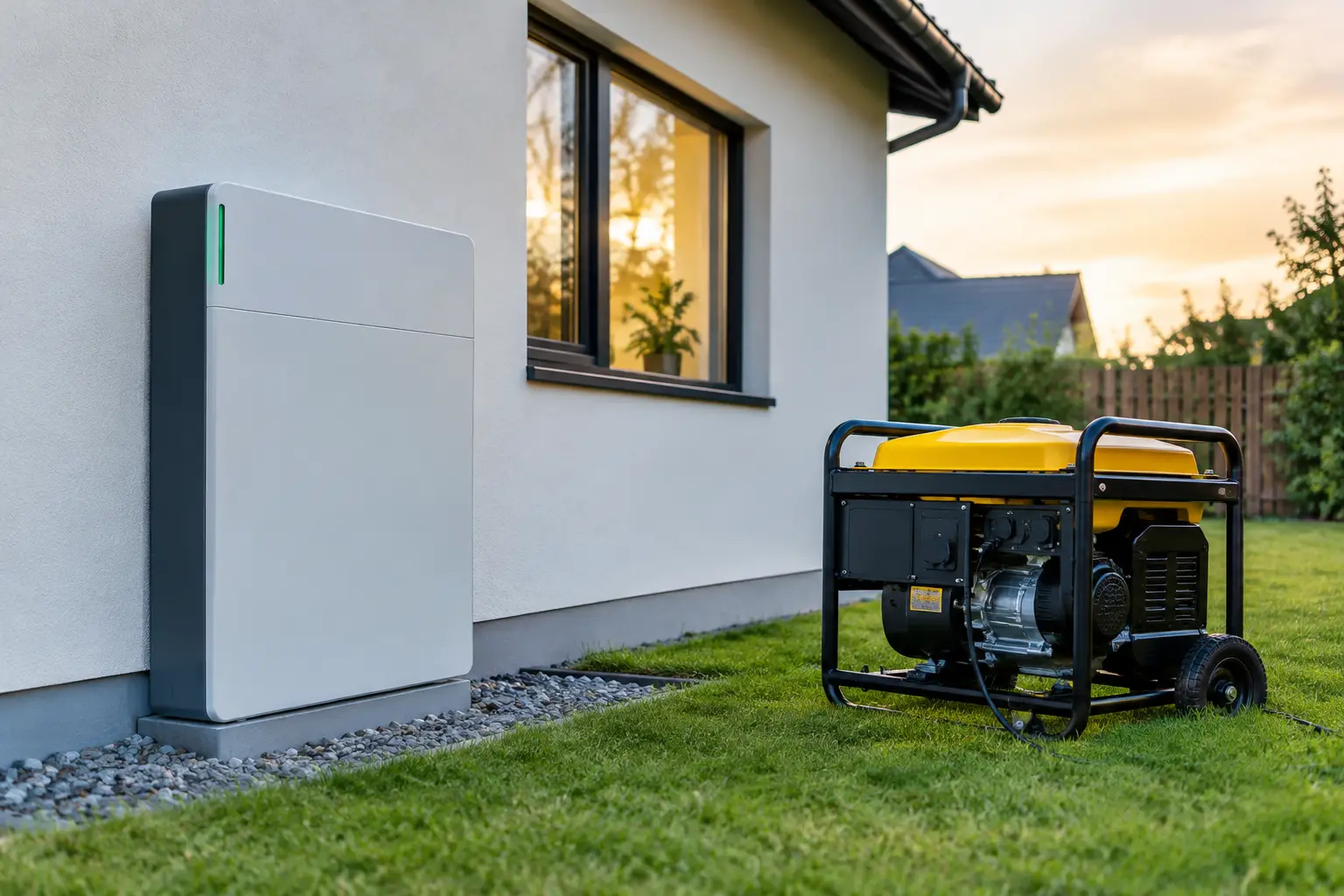
A home battery stores electricity for later use. It can charge from your solar panels, from cheaper off-peak electricity tariffs, or from the grid when required. During normal operation, it can reduce the amount of electricity you buy at peak times. With suitable backup equipment and system design, it can also supply selected circuits during a power cut.
A generator creates electricity by burning fuel, usually petrol, diesel, LPG or gas. It is generally used only when the mains supply fails. It can provide substantial power for as long as fuel is available, but it needs manual attention, regular testing and safe outdoor operation.
That distinction matters. A battery is an energy-saving asset that can also provide resilience. A generator is primarily an emergency power source.
Which option reduces electricity bills?
A battery has a clear advantage here. It stores surplus solar generation that would otherwise be exported to the grid, allowing you to use more of the electricity generated at your property after the sun has gone down. It can also charge on lower-cost overnight tariffs and discharge when electricity prices are higher, subject to the tariff, battery capacity and system controls.
For households with solar PV, electric vehicles, heat pumps or high evening consumption, this can make a meaningful difference to imported electricity. The benefit is not the same for every home. A small battery on a property with low electricity use may fill quickly and offer limited additional value, while an appropriately sized system can improve solar self-consumption and provide more useful backup.
A generator does not reduce your usual electricity bill. Every kilowatt-hour it produces comes from fuel, and the cost per unit can be considerably higher than grid electricity. It may protect you from the consequences of an outage, but it is not designed to make day-to-day energy use cheaper.
Backup power during an outage
Battery backup is quiet, automatic and immediate when designed with an approved backup or changeover solution. This is particularly useful for essential loads such as lighting, broadband, refrigeration, heating controls, sockets for charging devices and selected kitchen equipment. You may not even notice a brief outage on the protected circuits.
However, battery backup is not unlimited. Its run time depends on the usable battery capacity and the load being drawn. A battery that keeps lights, Wi-Fi, a fridge and a boiler running can last far longer than one supporting an electric shower, immersion heater, oven or heat pump at full output. Careful circuit selection is central to a successful installation.
A generator can run for much longer if fuel is available, making it suitable for remote homes, farms, workshops and sites where an extended outage would cause serious disruption. It can also support larger loads than many domestic battery systems. But it does not always start automatically, and refuelling in difficult weather or late at night is not an attractive prospect.
For either solution, the property must be safely isolated from the electricity network during an outage. This prevents dangerous back-feeding into the grid and protects engineers working on network repairs. Backup should always be designed and installed by a competent electrical professional, not added as an afterthought.
Will solar panels work in a power cut?
Not necessarily. Standard grid-connected solar PV systems switch off during a power cut as a safety measure, even if the sun is shining. To use solar generation during an outage, you need compatible inverter equipment and a correctly configured battery backup system.
With the right design, solar can recharge the battery during daylight and extend the period that essential circuits remain supplied. Output will still vary with the weather, season and household demand. A winter outage is very different from a sunny summer day, so it is sensible to treat solar-assisted backup as useful support rather than an unlimited supply.
Noise, emissions and practical living
A battery operates silently and has no exhaust emissions at the property. It can be installed in a suitable indoor or outdoor location, subject to the manufacturer’s requirements, access, ventilation and fire safety considerations. Once commissioned, it works in the background.
Generators are noisy, produce exhaust gases and must operate outdoors in a well-ventilated area away from doors, windows and air intakes. Carbon monoxide is a serious risk. They also need secure storage, weather protection, fuel management and consideration for neighbours, especially in built-up areas.
For a family home, the difference is significant. A battery can protect essential power without changing the feel of the property. A generator may be entirely worthwhile, but it brings a more hands-on and disruptive form of resilience.
Upfront cost, maintenance and lifespan
A generator may have a lower purchase price than a full battery and backup installation, particularly at the smaller end of the market. That can make it appealing if you only need occasional emergency power. The total cost, however, includes a suitable changeover arrangement, fuel, servicing, oil changes, replacement parts and periodic testing.
Battery storage typically requires a greater upfront investment, especially where backup circuits, a gateway and solar integration are included. In return, it can reduce ongoing electricity costs and has few moving parts. Most systems need limited maintenance, although performance should be monitored and equipment kept in good working order.
Neither option should be selected on purchase price alone. Consider the likely duration and frequency of outages, your annual energy use, whether solar PV is installed or planned, the loads you need to protect and the practical cost of being without power.
When a battery is the better choice
A battery system is usually the better fit if you want lower electricity bills as well as backup capability. It is particularly effective where solar generation is already available, or where you can benefit from time-of-use tariffs. It also suits households that want quiet, automatic power for essential circuits rather than the ability to run every appliance without limits.
It can be a strong option for home workers, households reliant on internet connectivity, properties with refrigerated medication, and families who want greater resilience without storing fuel. For many customers, the ability to use more of their own solar electricity is the main financial driver, with backup power providing additional reassurance.
When a generator is the better choice
A generator can be the sensible choice where prolonged interruptions are common and the property needs substantial power for extended periods. Agricultural buildings, off-grid properties, rural workshops and businesses with critical machinery may need the flexibility and output a generator provides.
It may also suit a property where a battery would need to be exceptionally large to support the required loads. Running an electric heating system, multiple high-power appliances or commercial equipment from a modest battery is rarely realistic for long. In these cases, a generator can provide the endurance, while a battery can still cover short interruptions or reduce everyday energy costs.
A combined approach can offer the strongest resilience
For some properties, it is not a choice between one or the other. A battery can handle everyday solar storage, tariff savings and immediate backup. A generator can provide a second layer of support during an unusually long outage or when high loads are unavoidable.
This approach needs proper planning. The controls must prevent the generator, battery, solar inverter and grid supply from conflicting with one another. It also needs a clear priority order, so the system behaves predictably rather than relying on manual workarounds during an emergency.
A tailored assessment should begin with your electricity consumption and the circuits that genuinely matter when the power goes off. An experienced installer can then size the battery, review solar potential, specify safe backup arrangements and explain what the system will - and will not - run. That clarity is what turns backup power from an expensive precaution into a useful part of a lower-cost, more independent energy system.