
Battery Storage Systems for Lower Energy Bills
5 July 2026 | By RJ Hill Electrical
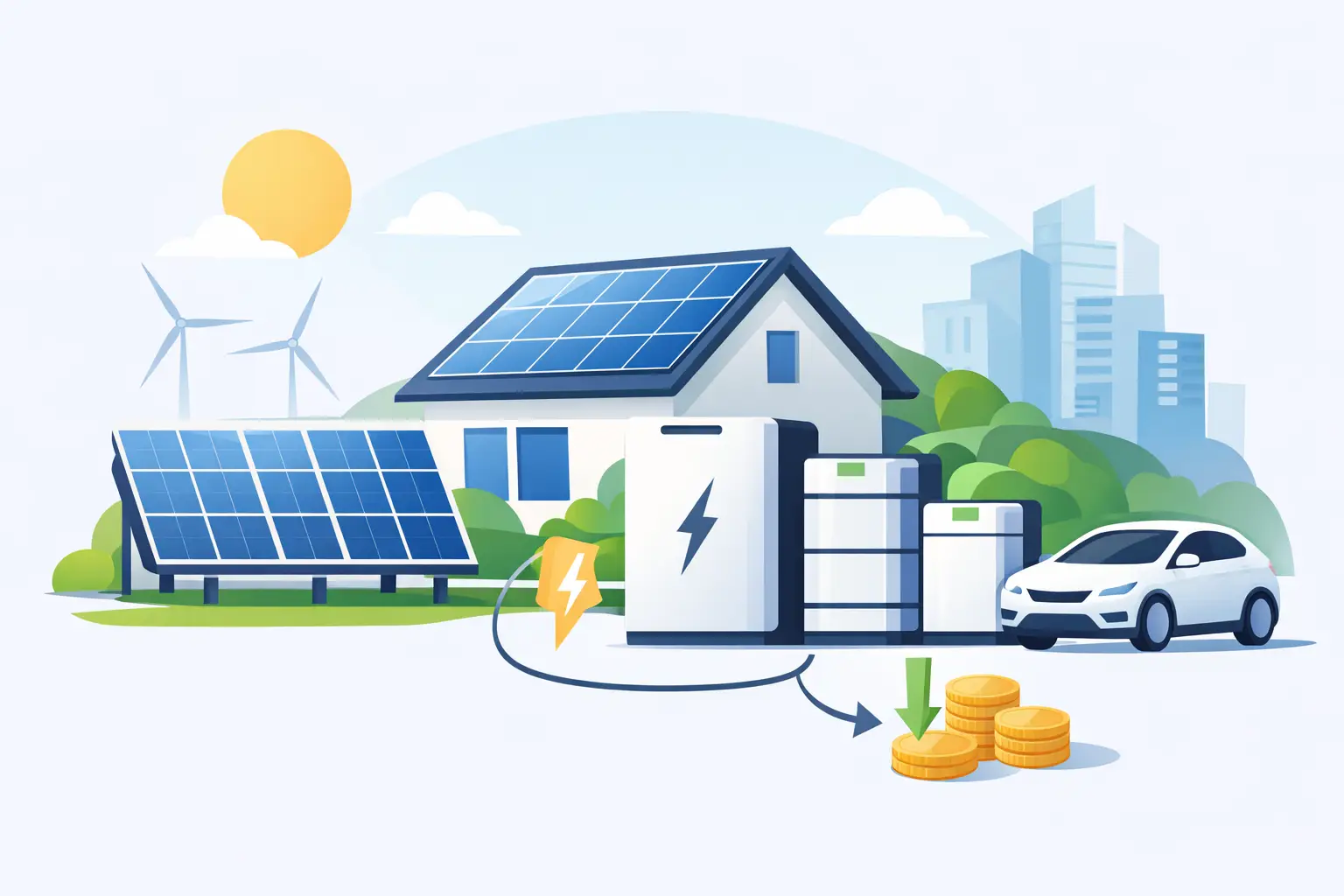
If you generate solar power during the day but still buy electricity from the grid every evening, you are not getting the full value from your system. Battery storage systems are designed to solve that problem by storing surplus electricity for use when you actually need it. For homeowners and businesses facing high energy costs and ongoing price uncertainty, that can make a noticeable difference to both bills and energy security.
A battery does not create electricity on its own. What it does is give you more control over when and how you use the energy available to you. That matters because most properties do not consume electricity at the same time it is produced. Solar panels often generate strongly in the middle of the day, while demand tends to rise in the morning and again in the evening. Without storage, excess power is exported. With storage, more of that energy can stay on site and work harder for you.
What battery storage systems actually do
At a practical level, battery storage systems capture unused electricity and hold it for later use. In many cases, that electricity comes from solar PV, but batteries can also be charged from the grid when tariffs are lower. The stored energy can then be used during peak-rate periods, after sunset, or during short power interruptions, depending on the system design.
That makes battery storage useful in more than one way. For some properties, the main goal is to increase self-consumption from solar and reduce imported electricity. For others, the priority is backup capability, particularly where continuity matters for refrigeration, connectivity, alarms or business operations. In some cases, it is about futureproofing, especially for households adding EV charging or businesses trying to manage rising electrical demand more efficiently.
The right setup depends on how the building uses power. A family home with daytime occupancy has a different demand profile from a house that is empty until 6pm. A small office, a retail unit and an agricultural site will all have different usage patterns as well. That is why battery storage should never be treated as a one-size-fits-all product.
Why battery storage systems are increasingly worthwhile
The case for storage has strengthened because electricity prices have become less predictable, while solar adoption has continued to grow. If you already have solar panels, a battery can improve the return on that investment by reducing the amount of power you need to buy back from the grid later. If you are planning solar, adding storage at the design stage can create a more complete and better balanced system.
There is also a simple behavioural point here. Most people want lower bills, but they also want less reliance on the grid. Batteries support both aims. They allow you to use more of your own generated electricity and reduce exposure to peak pricing. That does not mean every property will achieve the same savings, because usage habits, tariff structure and system size all affect the outcome. Even so, for many customers, storage moves a solar installation from good to far more effective.
Businesses can see particular value where energy use continues into the evening, where equipment loads are consistent, or where resilience has commercial importance. A battery may help smooth demand, reduce expensive imported electricity and support more predictable running costs. For companies already looking at wider efficiency improvements, it can fit neatly into a broader energy strategy rather than standing alone.
Choosing the right battery size
One of the most common mistakes is assuming that bigger automatically means better. In reality, an oversized battery may add cost without giving proportionate savings, while an undersized battery may fill and empty too quickly to make enough impact.
A suitable battery size depends on several factors: how much electricity the property uses, when that usage happens, how much solar generation is available, and whether the aim is bill reduction, backup power or both. Evening-heavy households often benefit from enough storage to cover the period after solar generation drops off. Businesses may need a different balance if their main loads occur during trading hours or overnight.
It is also worth thinking ahead. If you are likely to add an electric vehicle, heat pump or further electrical equipment, that can change the picture. A well-planned installation takes current use into account but also leaves room for sensible future expansion where appropriate.
Battery storage with and without solar
Battery storage is often paired with solar for obvious reasons, but it can still offer benefits without panels. Some customers use batteries to charge at off-peak times and discharge during more expensive tariff periods. Whether that makes financial sense depends on your tariff structure and daily consumption pattern.
That said, solar and battery together usually provide the strongest overall value. Solar generates the electricity, and the battery helps you keep more of it. Used properly, the combination can reduce grid dependence significantly. It can also make energy use feel more predictable, which is something many property owners now place a high value on.
For customers considering a new renewable installation, it often makes sense to assess the full system rather than treating each element separately. Panels, inverter, battery capacity and property demand all need to work together. That joined-up approach tends to deliver better performance than piecemeal upgrades.
What to expect from installation
A professional battery installation starts with design, not equipment choice. The first step is understanding the property, the existing electrical setup and the energy profile. From there, the system can be specified to match the real requirement rather than a rough estimate.
The installation itself needs to be safe, compliant and properly integrated with the wider electrical system. That includes the location of the battery, inverter compatibility, cable routes, isolation, protection and commissioning. Good workmanship matters here because storage is not just another appliance. It is a core part of the electrical infrastructure and should be installed accordingly.
This is one area where experience makes a clear difference. A contractor with strong electrical foundations as well as renewable energy expertise is in a better position to deliver a system that performs properly over the long term, not just on day one. For customers, that means fewer compromises, clearer advice and better aftercare.
The trade-offs to consider
Battery storage is a strong option, but it still needs honest assessment. The upfront cost is the most obvious factor, and the payback period will vary. Some customers are focused mainly on direct financial return. Others place equal weight on resilience, lower carbon use and reduced reliance on imported electricity. Neither approach is wrong, but it does affect what counts as value.
There are also technical considerations. Not every battery offers the same backup capability, and not every system is designed to keep the whole property running in a power cut. In some cases, only selected circuits can be supported. That needs to be clear from the outset.
Space, location and existing infrastructure matter too. Some properties are straightforward to adapt, while others need a little more planning. A good installer should explain those practicalities clearly and recommend what is worth doing, rather than pushing a specification that looks impressive on paper but does not suit the site.
Who benefits most from battery storage?
Homes with solar panels are an obvious fit, especially where occupants use more electricity in the evening. Families, landlords and homeowners looking for better control over energy costs often see the appeal quickly. The same applies to households planning for EV charging, where stored electricity can support a more cost-effective charging routine.
For businesses, battery storage can be particularly attractive where there is regular electrical demand, concern about rising operating costs, or a need for greater resilience. Offices, workshops, retail units and mixed-use sites can all benefit, but the detail matters. The strongest outcomes usually come from systems designed around actual consumption rather than assumptions.
This is where tailored advice is far more useful than generic package pricing. A battery should fit the building and the way it runs. That is how it delivers real savings rather than theoretical ones.
A smarter way to use the energy you already have
Battery storage is not about chasing technology for its own sake. It is about making better use of available energy, cutting waste and reducing unnecessary grid reliance. For many UK properties, that now makes practical and financial sense.
Whether you are looking to improve the performance of an existing solar setup or planning a new installation from scratch, the most effective route is a system designed around your property, your usage and your long-term goals. RJ Hill Electrical takes that approach because it leads to better results - and better results are what matter when you are investing in your energy future.
If you are considering storage, the useful question is not whether batteries are popular. It is whether the right system would leave you buying less electricity, wasting less solar power and feeling more confident about the way your property uses energy.