EV Chargers: Choosing the Right Setup for You
7 November 2026 | By RJ Hill Electrical
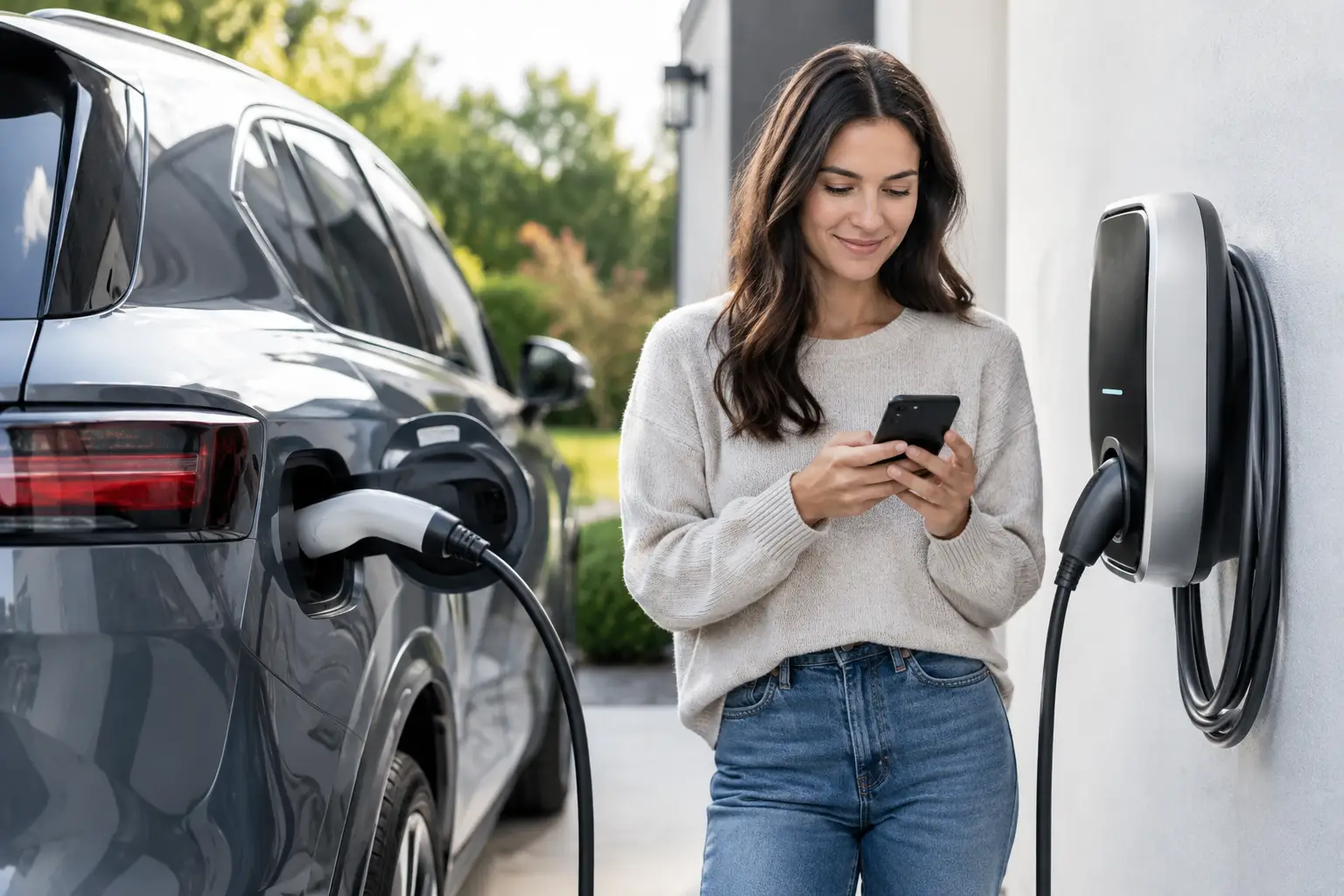
A public charger can get you home, but it should not be the plan you rely on every day. Home and workplace EV chargers give drivers control over when they charge, what they pay and how easily electric driving fits around normal routines. For most owners, plugging in where the vehicle is parked is simpler, cheaper and more dependable than searching for available public charge points.
The right charger is not simply the fastest unit on the market. It needs to suit the vehicle, the electrical supply, daily mileage and wider energy goals for the property. If you have solar PV or are considering battery storage, the charging strategy matters just as much as the charger itself.
Why a dedicated EV charger is worth fitting
A standard three-pin socket may be useful for occasional charging, but it is not designed to be a long-term, high-load EV charging solution. Charging this way is slow and can place sustained demand on an electrical circuit that may not have been assessed for that use.
A purpose-designed charge point provides a safer, more practical alternative. It is installed on an appropriately designed circuit, includes the required protection, and lets you charge at a rate suited to your supply. It also keeps the cable management and everyday use far more straightforward, particularly when the charger is positioned close to your usual parking space.
For a typical household with off-street parking, a 7kW charger is often the sensible choice. It can add a substantial amount of range overnight, meaning the car is ready for the next day without changing the household routine. The exact result depends on the vehicle battery, its onboard charging limit and how much charge it needs.
Businesses can benefit in a similar way. Charging at a workplace can support employees who drive electric, reduce the operating costs of a small fleet and make the premises more attractive to customers or visitors. The right approach depends on how many vehicles need to charge, when they are on site and whether access needs to be controlled or billed.
Choosing between home EV chargers
The first decision is usually charging power. Most domestic properties in the UK have a single-phase electrical supply, where a 7kW unit is common. This is suitable for the majority of domestic EVs and provides reliable overnight charging. A 3.6kW charger may suit a lower-capacity supply or a property where charging time is less important, although it will take longer to replenish the battery.
Three-phase properties can support faster charging, such as 11kW or 22kW, where both the supply and vehicle allow it. That can be valuable for businesses, larger homes or vehicles that spend limited time on site. Faster is not automatically better, however. Many cars cannot accept the full rate of a 22kW charger on AC power, so paying for additional capacity may not improve the real-world charging experience.
Tethered and untethered units are another practical consideration. A tethered charger has its cable attached, which makes daily charging quick and convenient. An untethered unit has a socket instead, allowing you to use the cable supplied with the vehicle and keeping the installation neater when not in use. Neither is universally right. It comes down to preference, parking layout and how often different vehicles will use the charger.
Smart functionality is now a key consideration. A smart charger can schedule charging for lower-cost off-peak electricity periods, monitor usage and respond to the available electrical capacity at the property. These features help turn charging from an extra demand on the household into something that can be managed around your energy use.
Installation starts with the electrical supply
A proper site survey is the foundation of a dependable EV charger installation. Before recommending equipment, an experienced electrician should assess the consumer unit, earthing arrangement, cable route, parking position and the capacity available at the property.
Load management is particularly important in homes with electric showers, heat pumps, induction hobs or other high-demand appliances. The charger may need to reduce its output temporarily when the house is using more power, preventing overload while allowing the vehicle to continue charging whenever capacity is available. This is not a compromise in quality. It is often the most sensible way to make an EV charger work safely alongside modern electrical loads.
Cable route also affects the finished result. A charger positioned directly beside the drive may be ideal, but that is not always possible. Detached garages, garden offices, outbuildings and parking areas at the side of a property can all be considered, provided the design protects the cable, meets electrical requirements and remains convenient to use.
For commercial sites, the planning stage is more involved. Future demand should be considered from the outset. Installing suitable containment, electrical capacity and distribution arrangements now can make later expansion more cost-effective than treating each new charger as a separate project.
Using solar power for EV charging
Solar PV and EV charging are a strong combination, but the benefits are best understood realistically. Solar generation is highest during daylight hours, while many cars are at work or being driven during the day. That does not make the pairing ineffective. It means the system should be designed around when the vehicle is actually at home and how flexible charging can be.
A solar-aware charger can adjust charging to use surplus generation that would otherwise be exported to the grid. On a sunny day, this can put locally generated electricity directly into the vehicle. If the available solar output changes because clouds pass over, the charger can respond accordingly.
There is a trade-off. Charging only from surplus solar may be slower, especially outside the summer months. Many owners choose a mixed approach: use surplus solar when practical, then schedule any remaining charging for an overnight tariff. This gives the vehicle the charge it needs without relying on a single source of energy.
Battery storage can add further flexibility. It may allow solar generated earlier in the day to be used later, although charging an EV from a home battery is not always the most economical use of stored electricity. Battery capacity, household consumption, tariff structure and vehicle charging needs all need to be considered together. A joined-up design prevents one energy system from working against another.
What affects the cost of charging at home?
The electricity tariff has a major influence on charging costs. Many EV tariffs offer cheaper overnight periods, allowing drivers to schedule charging when electricity is less expensive. A smart charger makes this easy, but it is still worth checking that the wider tariff suits household consumption as well as the car.
Vehicle efficiency and annual mileage also matter. A smaller, efficient car used for local travel will consume far less electricity than a large electric van covering high motorway mileage. The useful comparison is not simply the price per charge, but the cost per mile and the convenience gained by charging where the vehicle is parked.
Installation costs vary too. A straightforward installation close to the consumer unit is generally simpler than one requiring a long cable run, groundworks, upgrades to the electrical distribution or complex load management. A clear quotation should identify what is included and flag any site-specific work before installation begins.
EV chargers for workplaces and small fleets
For businesses, charging should be treated as part of the site electrical infrastructure, not an add-on. A charger that works well for one director's car may be unsuitable for a fleet, staff parking or customer use. The number of charging bays is only one part of the decision.
Consider who needs access, how long vehicles remain on site and whether charging should be free, monitored or paid for. Businesses may also need to balance charging demand against workshop equipment, refrigeration, office loads or solar generation. Dynamic load management can help maintain reliable operations while making the most of the supply already available.
It is also worth planning for growth. Electric vans and company cars are becoming more common, and a site that is designed with future charging in mind avoids unnecessary disruption later. This may mean installing a smaller number of active chargers initially while allowing for more capacity and cabling as demand develops.
A charger that works with the way you live
The best EV charger is one that is easy to use every day and designed around the property rather than forced into it. For some households, that means a simple 7kW charger scheduled overnight. For others, it means a solar-aware unit, load management and a wider plan that includes solar PV and battery storage.
RJ Hill Electrical designs and installs practical electrical and renewable energy systems across Lincolnshire, Norfolk, Cambridgeshire, Rutland and Leicestershire. With more than 20 years of electrical experience, the focus is on safe installation, realistic savings and a system that continues to perform as your energy needs change. A professional assessment before choosing your charger can turn a straightforward purchase into a more useful long-term energy investment.