When Should Consumer Units Be Replaced?
7 July 2026 | By RJ Hill Electrical
A consumer unit often gets ignored until something starts tripping, a new installation is planned, or an electrician flags a problem during inspection. If you are asking when should consumer units be replaced, the short answer is this: not by age alone, but when safety, capacity or compliance is no longer good enough for the property and the way you use electricity today.
That matters more than ever. Modern homes and businesses are asking more from their electrical systems than they did 20 or 30 years ago. Solar PV, battery storage, EV chargers, electric heating, home offices and higher everyday demand all place greater expectations on the distribution board. A consumer unit that was acceptable years ago may now be limiting performance, creating nuisance faults or, in some cases, falling short on safety.
When should consumer units be replaced in the UK?
There is no fixed expiry date stamped on a consumer unit that means it must be changed after a set number of years. A well-installed board in good condition may continue to perform safely for a long time. Equally, an older unit may need replacing much sooner if it shows signs of wear, heat damage, outdated protective devices or poor workmanship.
In practice, replacement is usually recommended when the unit no longer offers the level of protection expected under current standards, when it cannot safely accommodate new circuits, or when inspection results highlight defects that make repair poor value compared with a full upgrade.
For many property owners, the real question is not simply whether the board still works. It is whether it still works safely, reliably and with enough flexibility for future use.
The clearest signs a consumer unit may need replacing
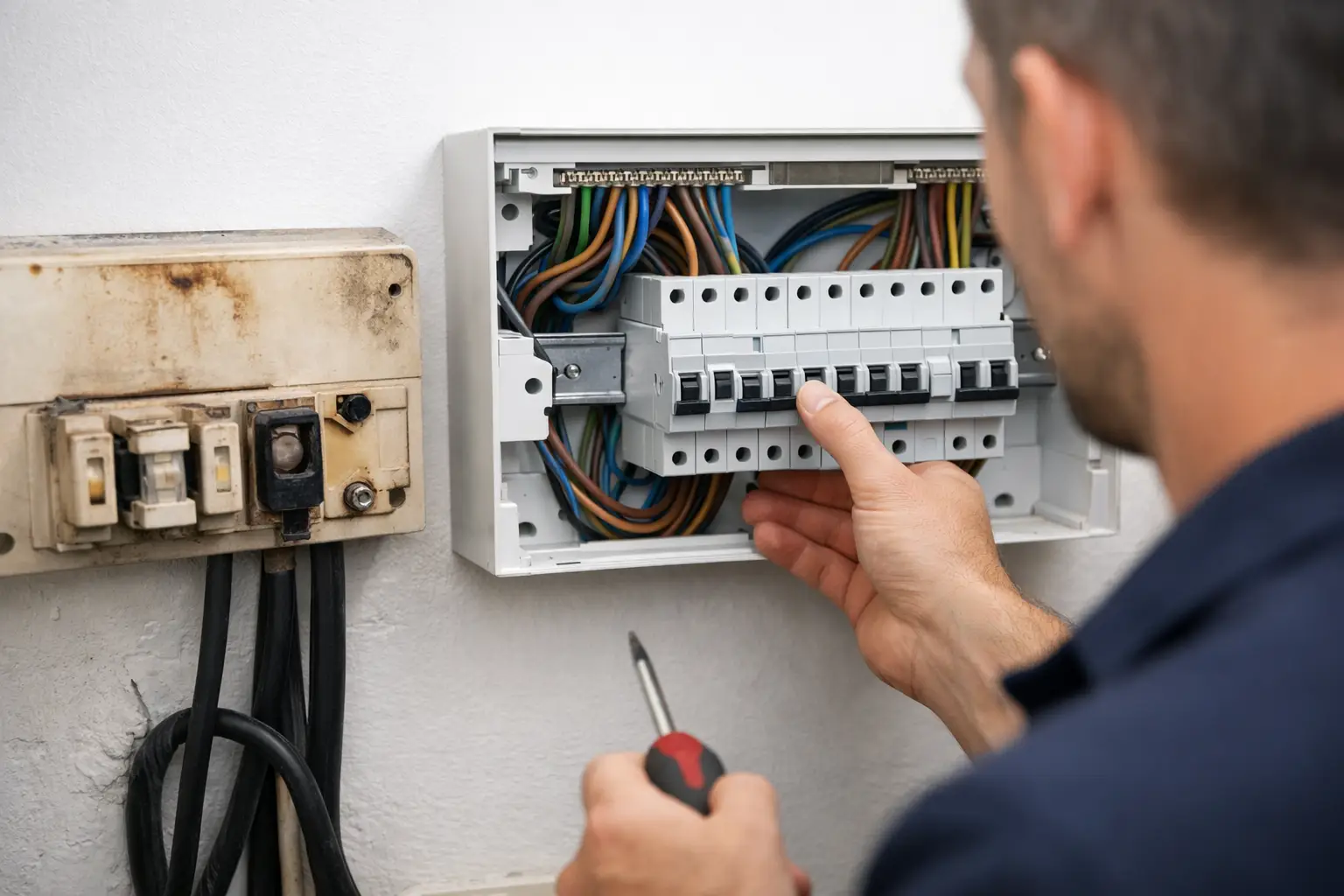
One of the biggest warning signs is an old fuse box with rewirable fuses rather than modern circuit breakers and RCD protection. These older arrangements were common in many UK properties, but they do not offer the same level of fault protection as modern consumer units. If your board still relies on fuse wire, replacement is usually the sensible route.
Frequent tripping is another common issue. Tripping itself is not always a sign that the consumer unit is faulty. Sometimes it is doing exactly what it should by detecting a dangerous fault. But repeated nuisance tripping, unexplained outages or circuits that will not reset can point to underlying problems with the board, the protective devices or the wider installation.
Visible damage should never be ignored. Scorch marks, a burning smell, cracked casing, loose components, signs of overheating or buzzing noises all need prompt attention. In those cases, the concern is not convenience but fire risk and electrical safety.
A lack of RCD protection is another major factor. Many older boards do not provide appropriate protection for socket circuits, outdoor equipment or areas where shock risk is higher. If a property has been extended or altered over time, it is also common to find a mix of old and newer electrical work that leaves the board looking crowded, poorly labelled or not fit for purpose.
Age matters, but condition matters more
People often ask whether a consumer unit should be replaced after 20 or 25 years. Age is a useful indicator, but it is not a rule. Some older units are still serviceable, while some newer ones may be poorly installed or unsuitable for current demand.
What age does tell you is the likely standard of protection. A unit installed decades ago may pre-date current expectations around RCDs, surge protection or metal enclosures. Even if it appears to be working, it may not offer the same level of protection that a modern installation should.
That becomes especially relevant if you are buying a property, letting one out, or planning wider electrical upgrades. An Electrical Installation Condition Report can help identify whether the existing consumer unit is still acceptable or whether replacement would be the safer and more cost-effective option.
When upgrades to the property trigger replacement
A consumer unit often comes under scrutiny when the property itself is changing. If you are adding solar panels, battery storage, an EV charger, electric heating or an extension, the existing board may not have the spare ways, current rating or protective arrangement needed for the new equipment.
This is where replacement becomes less about fixing an old problem and more about making sure the whole system works properly together. New energy technology needs to be integrated into an installation that is safe, compliant and practical to maintain. Trying to bolt modern systems onto an outdated consumer unit can create complications and false economy.
For example, an EV charger has specific circuit and protection requirements. Solar and battery systems also need careful coordination with the rest of the property’s electrical infrastructure. If the current board is full, lacks the right protection, or is already showing signs of age, replacing it as part of the wider project is often the right call.
Repair or replace - which makes more sense?
Sometimes a repair is enough. If a single breaker has failed, labels are missing, or a minor defect can be corrected without affecting the integrity of the whole board, repair may be a sensible option.
But there is a tipping point where replacement becomes better value. If the unit is outdated, lacks modern protection, has multiple issues or would need several parts changed to bring it up to a reasonable standard, investing money into an old board rarely makes long-term sense. You may still be left with a system that is limited, awkward to expand and below the level you really want for a modern property.
The practical question is this: are you spending money to extend the life of something that is already behind the curve, or are you investing in a safer, more future-ready electrical system? That answer often becomes clear once an electrician has inspected the installation properly.
Safety standards and compliance
Consumer unit replacement is not just about preference. It is tied closely to compliance with current wiring regulations and overall installation safety. That does not mean every older unit automatically fails because standards have changed. Regulations are not generally retrospective in that way.
However, if inspection identifies potentially dangerous issues, inadequate fault protection or non-compliant alterations, replacement may be strongly advised. Landlords, in particular, should take this seriously because periodic inspections can highlight consumer unit issues that affect the safety of tenants and the legal standard of the installation.
For businesses, downtime also matters. An unreliable board can interrupt trading, affect equipment and create avoidable disruption. In commercial settings, replacing an inadequate consumer unit can be as much about continuity and resilience as safety alone.
When should consumer units be replaced before renewable upgrades?
If you are investing in solar PV, battery storage or a broader energy upgrade, it makes sense to assess the consumer unit early rather than halfway through the job. The board is the hub of the property’s electrical distribution, so if it is not suitable, everything else becomes harder.
A modern consumer unit can support cleaner integration, better circuit separation and safer protection arrangements for renewable technologies. It also helps create a more organised installation that can be serviced and expanded more easily later.
For customers focused on lowering bills and improving energy independence, this is not a minor detail. The performance of the wider system depends on the quality of the electrical infrastructure around it. An outdated board can hold back a good investment.
At RJ Hill Electrical, this is why electrical upgrades are looked at as part of the bigger picture rather than in isolation. If a property is moving towards solar, battery storage or EV charging, the consumer unit needs to be ready for that shift.
The best time to replace a consumer unit
The best time is usually before it becomes urgent. Replacing a board during planned electrical work is easier, more controlled and often more cost-effective than dealing with it after a fault, failed inspection or safety concern.
If your property has an older fuse box, no RCD protection, signs of overheating, recurring tripping or limited space for new circuits, it is worth getting it assessed now. The same applies if you are planning an extension, major renovation or renewable installation.
A good consumer unit should do more than keep the lights on. It should protect people, support modern demand and give you confidence that the electrical system is ready for what comes next.
If you are unsure, the right next step is not to guess based on age alone. Have it inspected properly, understand what condition it is in, and make the decision based on safety, performance and future plans. That usually saves money and disruption in the long run.