What Is Solar PV Installation?
5 July 2026 | By RJ Hill Electrical
If your electricity bills have climbed and you are looking at your roof wondering whether it could do more for your property, you are asking the right question: what is solar PV installation? In simple terms, it is the process of fitting a system that turns daylight into usable electricity for your home or business, helping you buy less power from the grid and gain more control over your energy costs.
For many property owners, solar starts as a cost-saving decision. It often becomes something more practical than that. A well-designed system can reduce exposure to rising energy prices, improve day-to-day energy resilience and work alongside battery storage and EV charging to make a property more efficient overall.
What is solar PV installation and how does it work?
Solar PV stands for solar photovoltaic. The term refers to panels that generate electricity from daylight. That is different from solar thermal systems, which are designed to heat water rather than produce electrical power.
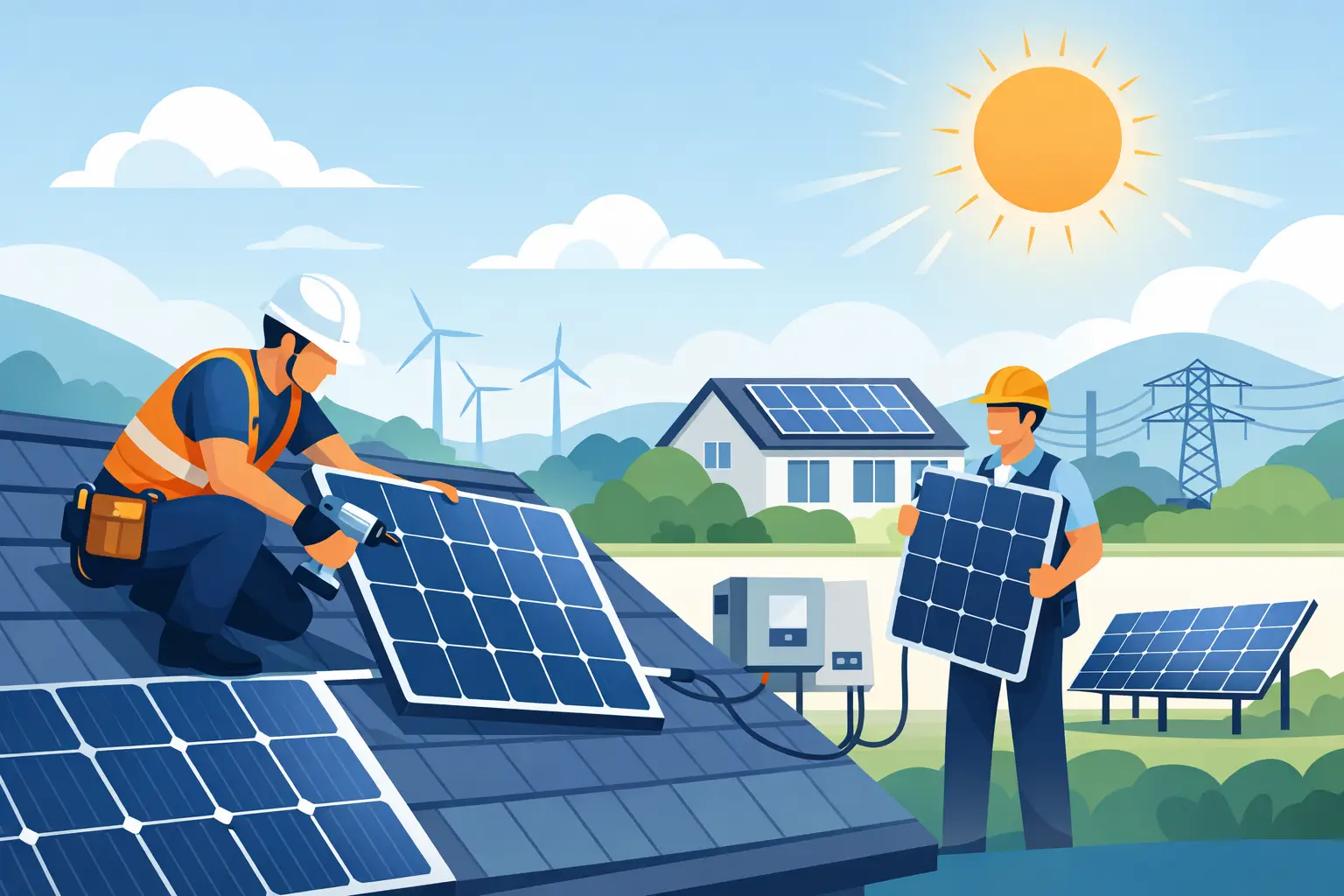
A solar PV installation usually includes several key parts working together. The panels sit on the roof or another suitable structure and generate direct current electricity. An inverter then converts that electricity into alternating current, which is what most homes and businesses use. The system is connected to your consumer unit so that the generated electricity can supply lights, sockets, appliances and equipment on site.
If you add battery storage, any spare electricity that is not used straight away can be stored for later. Without a battery, surplus power may be exported back to the grid, depending on how the system is set up. That is where the design side matters. A good installation is not just about fitting panels. It is about matching generation, usage patterns and property layout to get the best return.
What happens during a solar PV installation?
The actual installation is only one part of the job. Before any equipment is fitted, the property needs to be assessed properly. Roof orientation, pitch, shading, structural condition and available space all affect performance. So does your energy usage. A household that uses most of its electricity in the daytime may benefit differently from solar than one that is empty until the evening.
The design stage looks at those details and turns them into a system specification. That includes the number of panels, expected output, inverter size and whether battery storage is worth including. For commercial sites, it may also involve reviewing three-phase supplies, larger daytime demand or operational equipment loads.
Once the design is agreed, the installation itself typically involves mounting brackets being fixed securely to the roof, panels being fitted to the framework, cabling being run safely and neatly, and the inverter and any battery equipment being installed in a suitable location. The system is then connected, tested and commissioned.
In the UK, workmanship and compliance matter as much as product choice. Solar has to be installed to the correct electrical and safety standards, and if you want confidence in system quality and eligibility for certain schemes, using an MCS-accredited installer is an important part of that process.
What does a solar PV system include?
Most systems are built from the same core components, but the specification can vary a lot from one property to another. The panels are the most visible part, but they are only one element. The inverter does much of the hard work behind the scenes, converting electricity into a usable form and managing how the system performs.
Mounting equipment is another key component because the panels need to be secured properly for long-term weather resistance. Cabling, isolation points and protective devices all need to be selected and installed correctly. If battery storage is included, that adds another layer of functionality by allowing you to use stored energy when solar generation drops, such as in the evening.
Monitoring is also increasingly useful. Many systems now allow owners to track generation and usage, which helps you see where savings are being made and whether your habits could be adjusted to get more from the system.
Is solar PV worth it in the UK?
For many UK properties, yes, but it depends on the site and on how electricity is used. A common misconception is that solar only works in hot climates. In reality, solar PV relies on daylight, not heat. UK systems can generate useful electricity throughout the year, although output will be higher in spring and summer than in the darker winter months.
The financial case is usually strongest where a property uses a good share of the generated electricity on site. That is because every unit of solar power used directly is electricity you do not need to buy from your supplier. If a property is empty all day and uses most of its power in the evening, battery storage may improve the value of the system by shifting that energy for later use.
Commercial properties often see strong results because their peak activity tends to line up with daylight hours. Homes can also benefit significantly, especially where there is regular daytime demand from appliances, home working, heat pumps or EV charging.
There are trade-offs. Roof shape, shading from trees or neighbouring buildings, and the age or condition of the roof can all affect whether solar is the right fit straight away. Sometimes the answer is to install now. Sometimes it makes more sense to combine solar with other upgrades or to plan around future roof works.
The difference between solar PV and battery storage
This is where many customers want clarity. Solar PV generates electricity when daylight is available. Battery storage stores electricity so you can use it later. They often work well together, but they are not the same thing.
A solar-only system can still cut bills by supplying electricity as it is generated. A solar-plus-battery system gives you more flexibility because excess generation can be kept for the evening or for periods when grid electricity is more expensive. For customers focused on energy independence, adding a battery often makes the system more practical rather than simply larger.
That said, batteries are not essential in every case. If most of your electricity use happens during the day, a standard solar PV installation may deliver strong savings on its own. The right answer depends on usage patterns, budget and long-term plans for the property.
What should you look for in a solar installer?
Price matters, but system quality, design accuracy and installation standards matter more over the life of the system. A cheaper quote is not always better value if the design ignores shading, uses lower-performing equipment or leaves no real aftercare support once the job is finished.
Look for an installer with proven electrical experience as well as solar-specific knowledge. That matters because a PV system is not a standalone gadget bolted to a roof. It becomes part of the property’s wider electrical infrastructure. If you are also considering a battery, EV charger or future energy upgrades, integrated design is a real advantage.
It is also worth asking how tailored the proposal is. Good installers do not simply sell a standard package. They assess the property, the load profile and the customer’s goals. Some want the fastest payback. Others want greater resilience, lower carbon impact or a route towards a more self-sufficient property. The best systems are designed around those priorities.
For customers who want one contractor to handle electrical work, renewable integration and ongoing support, that joined-up approach can save time and avoid costly mistakes.
What is solar PV installation for homes and businesses really about?
At its best, it is not just a set of panels on a roof. It is a practical upgrade to how a property uses and manages electricity. For homeowners, that can mean lower monthly bills and better use of energy generated on site. For businesses, it can mean improved overhead control, better long-term planning and a more resilient operating base.
RJ Hill Electrical approaches solar in that broader way, combining electrical expertise with renewable system design so customers get a solution that works in practice, not just on paper. That is especially important when solar forms part of a wider plan involving battery storage, EV charging or ongoing maintenance.
If you are weighing up whether solar is right for your property, the most useful next step is not guessing from average figures online. It is getting the roof, the usage and the opportunity assessed properly. A solar PV installation is only as good as the design behind it, and the right design can turn rising energy costs into a problem you are far less exposed to in the years ahead.