
Solar Panels vs Heat Pumps: Which Saves More?
25 August 2026 | By RJ Hill Electrical
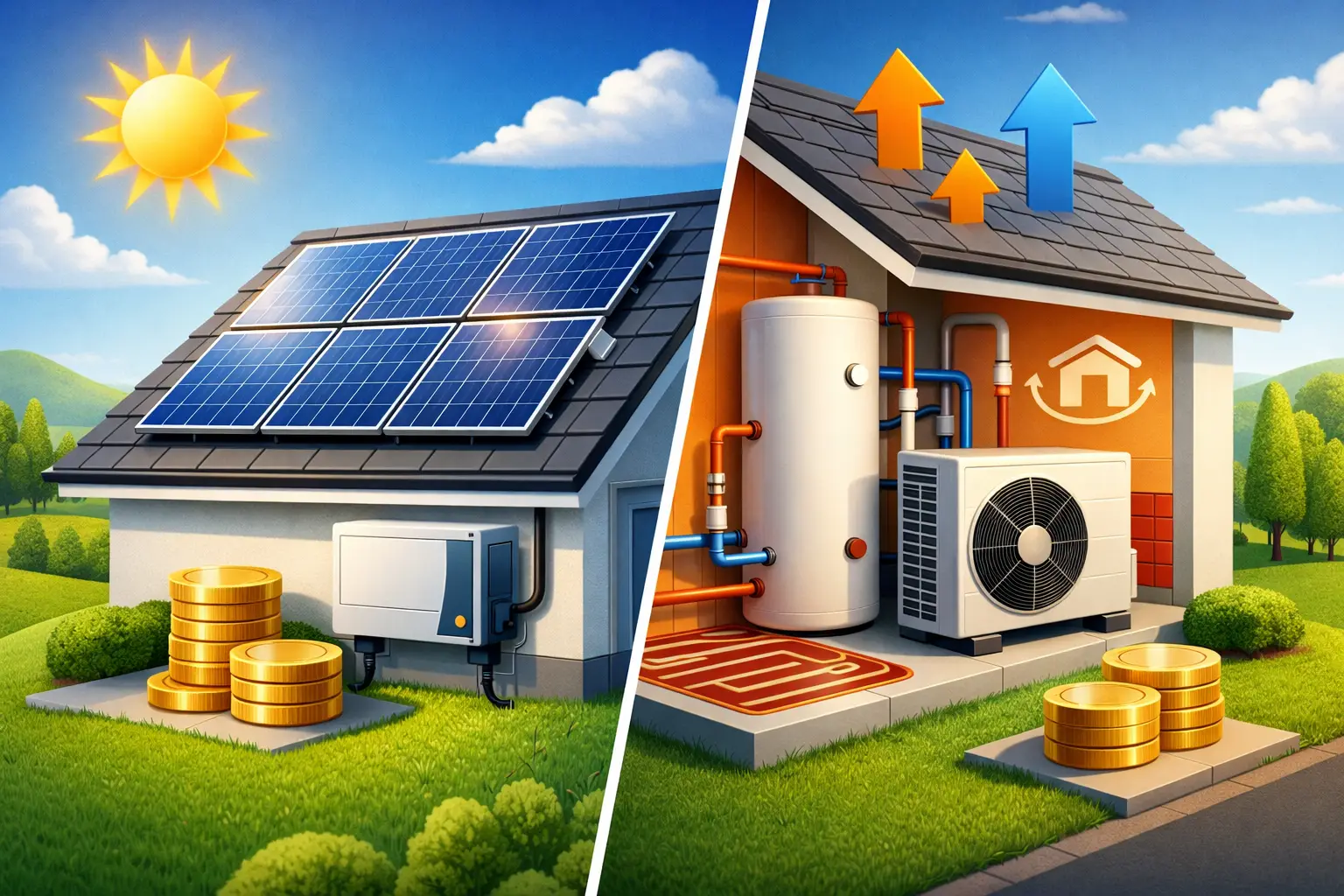
A household with high electricity bills and an ageing gas boiler may be tempted to ask which upgrade comes first: solar panels vs heat pumps. The most useful answer is that they solve different parts of the energy bill. Solar PV generates electricity on your roof, while a heat pump uses electricity efficiently to heat your rooms and hot water. For many properties, the strongest long-term result comes from designing both systems to work together.
Solar panels vs heat pumps: the key difference
Solar panels convert daylight into electricity. That electricity can run appliances, charge a battery, support EV charging and, when generation is available, power a heat pump. Any surplus can be exported to the grid through an agreed export tariff.
An air source heat pump takes low-grade heat from the outside air and upgrades it for use in your heating and hot-water system. It does not create free electricity. Instead, it can deliver several units of heat for every unit of electricity it consumes, provided the system is correctly specified and the property is suitable.
This distinction matters when comparing savings. Solar reduces the amount of electricity you need to buy. A heat pump replaces fossil-fuel heating with an efficient electric system. If your main concern is daytime electricity use, solar may make the more immediate difference. If you are replacing an old oil, LPG or inefficient electric heating system, a heat pump can have a greater impact on overall household energy costs and carbon emissions.
Which investment should come first?
There is no universal order. The right choice depends on how your property currently uses energy, the condition of its heating system, its insulation, roof space and your budget.
Solar PV is often the more straightforward first step. A well-designed system can reduce purchased electricity from day one, with no change to your heating controls or radiators. It also creates a useful foundation for future upgrades such as battery storage, an electric vehicle charger or a heat pump. Homes and businesses with good, unshaded roof areas and substantial daytime electricity demand are particularly well placed to benefit.
A heat pump may deserve priority where a boiler is near the end of its life, fuel costs are high, or a property relies on oil, LPG, direct electric heating or an older electric storage system. It is not simply a boiler swap. A proper assessment should consider heat loss, insulation, radiator sizes, hot-water cylinder capacity and the space available for the external unit. Improving the building fabric first can reduce the size of heat pump required and improve running costs.
For a gas-heated home with a relatively new boiler, solar panels may deliver an easier route to lower bills in the short term. For an off-gas property facing an expensive boiler replacement, a heat pump assessment could be the more valuable starting point.
Upfront cost and the savings picture
Both technologies are long-term investments, but their costs are influenced by very different factors. Solar PV pricing is driven largely by system size, roof layout, panel specification, access requirements, electrical upgrades and whether battery storage is included. A battery can increase the proportion of solar energy used on site, particularly in the evening, but it should be sized around real consumption rather than added by default.
Heat pump costs vary with the property more than many customers expect. The unit itself is only one part of the project. Pipework, controls, a hot-water cylinder, potential radiator upgrades, electrical work and installation complexity all affect the final figure. Available government support can change over time, so eligibility and current funding should always be checked as part of a quotation rather than assumed.
Running-cost comparisons also need care. A heat pump's performance changes with outside temperatures, flow temperatures and how the home is operated. Solar output changes through the seasons and is highest when space-heating demand is usually lowest. That does not make the combination ineffective. It means expectations should be realistic: solar can contribute to heat-pump electricity use, especially in spring and autumn, but it will not normally cover all winter heating demand.
The best financial outcome comes from using as much generated electricity as possible, selecting a suitable electricity tariff and avoiding oversized equipment. An installer should model likely generation and consumption patterns instead of quoting headline savings that assume every kilowatt-hour is used at the ideal time.
Can solar power a heat pump?
Yes, but not in the simplistic sense of a dedicated panel feeding a dedicated heater. Solar and a heat pump are connected through the property's electrical system. When the panels are generating, that electricity can supply the heat pump alongside other household loads. When generation is low or unavailable, the heat pump draws electricity from the grid in the normal way.
A battery can store surplus solar generation for later use, although it may not be economical to size a battery to cover heavy winter heating demand. Smart controls can also help by heating hot water or gently preheating the building when solar generation is strong. The aim is to increase self-consumption without sacrificing comfort or forcing the system to operate inefficiently.
This is where integrated electrical and renewable design is valuable. The consumer unit, inverter, battery, EV charger, heat-pump supply and monitoring equipment all need to work safely together. Load calculations and appropriate protection are not extras. They are central to a dependable installation.
Property suitability matters more than trends
Solar panels need a structurally sound roof with viable orientation and limited shading. East-west roofs can still perform very well because they spread generation across the morning and afternoon, often matching household demand better than a single south-facing array. Listed buildings, conservation considerations and roof condition may require additional checks before work begins.
Heat pumps work in many types of UK property, not just new builds, but they reward good preparation. Draught reduction, loft insulation, cavity or solid-wall insulation where appropriate, and correctly sized emitters all matter. Some homes need larger radiators or underfloor heating in selected areas so the heat pump can run at lower water temperatures. A heat-loss calculation should guide these decisions.
For businesses, the question is equally operational. A workshop, farm, office or retail site may have substantial daytime electricity use that makes solar particularly attractive. Heating requirements, occupancy hours, three-phase supply and future EV fleet charging can all influence whether a combined system offers a stronger return.
Choosing between solar, a heat pump or both
Choose solar first when electricity costs are the clear pain point, the roof is suitable and you want a flexible platform for batteries, EV charging or future electrification. It is also a practical choice for businesses that use power while the sun is up.
Prioritise a heat pump when replacing costly fossil-fuel heating, particularly after improving insulation and checking the existing heat-distribution system. The focus should be consistent, efficient warmth rather than the highest possible temperature from radiators.
Install both when you are planning a wider move towards lower-carbon, electrically powered living. Solar generation can reduce the grid electricity bought by the heat pump and other loads, while battery storage and smart controls can make better use of what your roof produces. It is a system decision, not a competition between two products.
A site survey should establish your actual electricity use, heating fuel, roof potential, electrical capacity and future plans before any equipment is selected. For homeowners and businesses across Lincolnshire, Norfolk, Cambridgeshire, Rutland and Leicestershire, that practical assessment is the route to a system that reduces bills without compromising comfort or reliability.