Solar Panels vs Battery Storage for Your Home
17 July 2026 | By RJ Hill Electrical
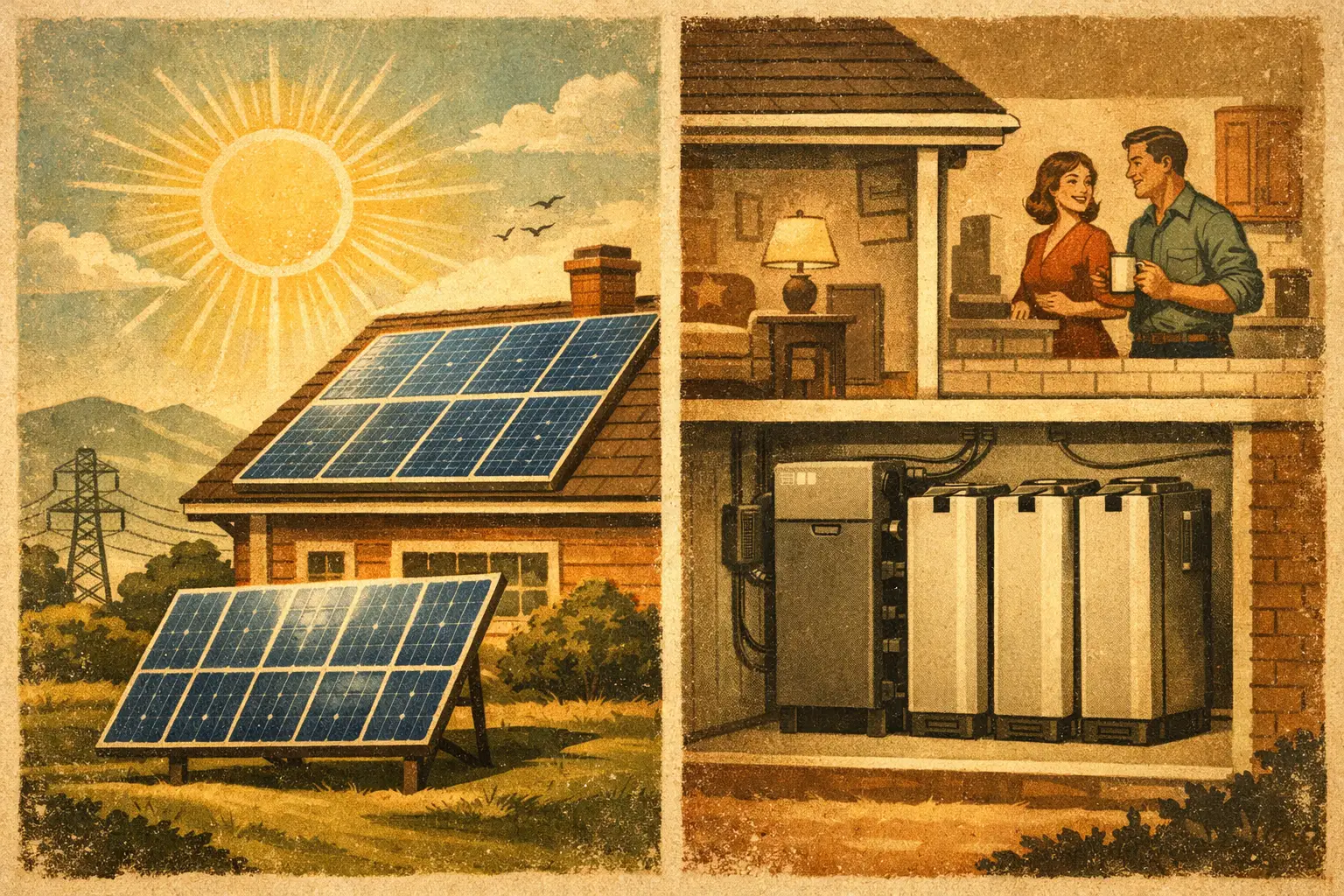
A solar quote can look straightforward until the battery option appears. Suddenly, the decision is not just about generating clean electricity. It is about when you use it, what you pay for imported power, whether you want backup during an outage and how quickly the investment can work for your property. In the debate around solar panels vs battery storage, the most useful answer is usually not either-or: it is deciding which should come first and whether both suit your energy habits.
Solar panels generate electricity. A battery stores electricity for later. They solve different parts of the same problem, so the right choice depends on your daytime consumption, electricity tariff, budget and priorities.
Solar panels vs battery storage: the core difference
Solar PV panels produce electricity when daylight reaches them. That power is used by your home or business first, reducing the amount bought from the grid. Any surplus can be exported, or sent to a battery if one is installed.
Battery storage does not generate power. It holds electricity, either from surplus solar generation or from the grid at cheaper off-peak rates, so it can be used when electricity costs more. This makes a battery particularly useful in the evening, overnight and during expensive peak periods.
For most properties, solar panels are the starting point because they reduce the need to purchase electricity in the first place. A battery can then increase how much of that lower-cost solar energy stays on site. However, a battery-only system can still be worthwhile where a property has a suitable time-of-use tariff, high evening demand or no practical roof space for solar.
Why solar panels usually come first
A well-designed Solar PV system can make an immediate difference to daytime electricity costs. Homes that run appliances during the day, work from home, use heat pumps or charge an EV can consume a meaningful share of their generation directly. Small businesses often see a particularly strong case because their electricity use is commonly highest during working hours, when solar generation is available.
Solar also offers a clear long-term benefit: it produces electricity from a resource you do not have to buy. While generation changes with the seasons and weather, panels continue to contribute for many years when installed and maintained correctly.
The trade-off is timing. A household that is empty most weekdays may generate more power than it can use at midday, then import electricity after sunset when cooking, heating and entertainment use increase. Export tariffs provide a return for spare generation, but exported electricity is often worth less than the cost of importing electricity later. This is where battery storage can improve the overall performance of a solar installation.
Solar alone remains a sensible option if budget is limited, your daytime electricity use is high, or you want to build the system in stages. Choosing compatible equipment from the outset can allow a battery to be added later without unnecessary disruption or replacement work.
What battery storage adds to a solar system
A battery stores surplus generation that would otherwise be exported. In practical terms, this can help you use solar power after the sun has gone down. Rather than sending all excess electricity to the grid at lunchtime and buying power back in the evening, you retain a portion for your own use.
That does not mean a larger battery is automatically better. Battery capacity needs to match the property's typical surplus generation and evening demand. An oversized battery may sit partly unused for long periods, particularly in winter when solar generation is lower. A battery that is too small may fill early on a bright day and leave excess solar available for export.
Modern batteries can also charge from the grid during lower-priced periods, then discharge when tariffs are higher. This can reduce costs even in darker months, when there is less solar energy to store. The value of this approach depends on the tariff, battery efficiency, daily usage and how regularly prices change.
For households with an EV, a battery can complement home charging, but it should not be sized on assumptions alone. A large EV battery can use far more energy than a typical home battery holds. In many cases, smart EV charging on a suitable tariff and solar generation during the day will be just as important as battery capacity.
Does battery storage provide power during a cut?
Not always. This is one of the most common misunderstandings. A standard solar PV system normally shuts down during a power cut to protect network engineers working on the electricity supply. Adding a battery does not automatically change that.
If backup power matters, the system must be designed with the appropriate backup or islanding capability. Depending on the equipment and electrical design, this may support selected essential circuits, such as lighting, refrigeration, broadband and certain sockets, rather than the whole property. High-demand loads such as electric showers, ovens and some heating systems can require significant battery and inverter capacity.
For customers who want greater resilience, this requirement should be raised early in the design process. Backup is a valuable feature, but it adds complexity and cost, and it needs to be matched to the appliances you genuinely need to keep running.
When a battery-only system makes sense
Battery storage without solar is not the default choice, but it can be a practical solution. It may suit a home with a low off-peak electricity rate and high usage in the morning or evening. It can also work for properties where roof orientation, shading, planning constraints or structural considerations make Solar PV less suitable.
Businesses may consider battery storage to reduce exposure to peak tariff periods or to manage demand more effectively. The financial case needs careful assessment, particularly where consumption patterns vary across the week or season.
A battery-only installation relies on buying electricity from the grid, albeit at better times and potentially at lower rates. It cannot offer the same reduction in imported energy as a solar and battery system. If the roof is suitable and the budget allows, generating your own electricity usually provides the stronger long-term foundation.
How to choose the right order for your property
Start with your electricity data rather than a standard package. Half-hourly smart meter information, electricity bills and a clear picture of major loads reveal far more than annual consumption alone. The pattern matters: a family using power after 5pm has different needs from a workshop operating from 8am to 4pm.
Consider roof space, orientation and shading for solar, then look at how much generation you are likely to use directly. Think about upcoming changes too. An EV, heat pump, home extension or new business equipment can alter the right system size significantly.
Budget should be approached as a phased investment, not a barrier to making progress. Solar now with a battery-ready design can be a sound route. Where evening consumption is already high and a suitable tariff is available, installing both together may provide better control over imported electricity from day one.
The installation quality matters just as much as the equipment. System design should account for the consumer unit, cable routes, inverter location, roof construction, grid connection requirements, monitoring and future expansion. MCS-accredited installation is particularly relevant for Solar PV customers who may wish to access export payments through a Smart Export Guarantee tariff.
The decision is about your energy pattern
There is no universal winner between solar panels and battery storage. Solar panels are usually the best first investment for reducing bought-in electricity and lowering carbon emissions. Battery storage becomes more compelling when you have regular surplus solar, substantial evening demand, an advantageous tariff or a clear need for greater energy resilience.
A site survey and a properly tailored proposal can show expected generation, likely self-consumption, export levels and the role a battery would play before you commit. For homeowners and businesses across Lincolnshire, Norfolk, Cambridgeshire, Rutland and Leicestershire, RJ Hill Electrical can design an integrated Solar PV and battery solution around the way your property actually uses energy. The most useful next step is to turn a year's worth of bills and your future plans into a system that remains practical as your electricity needs change.