Solar Panel Maintenance Guide for Better Output
8 July 2026 | By RJ Hill Electrical
If your solar system is meant to cut bills year after year, it needs to keep performing as designed. That is where a sensible solar panel maintenance guide helps. Most systems are low-maintenance, but low-maintenance does not mean no maintenance - especially when you are relying on solar to offset rising electricity costs.
For most UK homes and businesses, the goal is simple: protect output, spot issues early and avoid losing savings through faults that go unnoticed. The good news is that routine solar maintenance is usually straightforward. The more important point is knowing what you can safely check yourself, what should be left alone, and when a professional inspection makes financial sense.
What a solar panel maintenance guide should focus on
A good solar panel maintenance guide is not about constant cleaning or unnecessary servicing. It is about preserving generation, protecting key components and making sure the system is still working properly as seasons change.
Solar PV panels have no moving parts, which is one reason they are so reliable. Even so, the wider system includes cabling, isolators, mounting equipment and usually an inverter. If you also have battery storage, that adds another layer of equipment that should be monitored correctly. In practice, the panels themselves are often the least troublesome part of the installation.
That is why maintenance should be viewed in two parts. First, there are the simple visual checks and performance checks that property owners can keep an eye on. Second, there is periodic professional servicing to assess electrical safety, component condition and system performance in more detail.
How often do solar panels need maintenance?
It depends on the site, the roof pitch and the surrounding environment. A standard domestic system in a fairly open area may need very little intervention beyond periodic checks and the occasional clean if dirt build-up becomes visible. A system near busy roads, agricultural land, trees or heavy bird activity may need more attention.
Commercial sites can vary even more. Warehouses, farms and business premises often have larger arrays, and a small drop in performance can mean a more noticeable financial loss. In those cases, a planned inspection schedule is usually the better approach.
As a rule, it is sensible to keep an eye on performance throughout the year and arrange a professional inspection if output drops unexpectedly, faults appear, or the system has not been checked for a long time.
What you can check yourself
Homeowners and business owners do not need to climb onto a roof to stay on top of solar maintenance. In fact, they should not. Most useful checks can be done safely from ground level or by reviewing the inverter display and monitoring app.
Start with generation figures. If your system has monitoring, compare current performance with previous periods, allowing for weather and season. A bright day producing much less than expected does not automatically mean a fault, but a sustained drop over time is worth investigating.
Next, carry out a visual check from the ground. Look for obvious dirt, leaf build-up, bird fouling, shading from new tree growth or anything that appears physically out of place. Also check whether warning lights or error messages are showing on the inverter.
If your property has had recent roof works, building works or severe weather, it is worth being extra alert. Storm damage, dislodged fittings or accidental interference with cabling can affect performance or safety.
Cleaning solar panels - when it helps and when it does not
One of the biggest misconceptions is that solar panels need frequent cleaning to work properly. In the UK, rainfall often does a reasonable job of washing away general dust and light debris. That means many systems do not need regular manual cleaning.
However, there are exceptions. Bird droppings, heavy pollen, algae, traffic residue and debris from nearby trees can create localised shading or a film across the panel surface. When that build-up is significant, output can be affected.
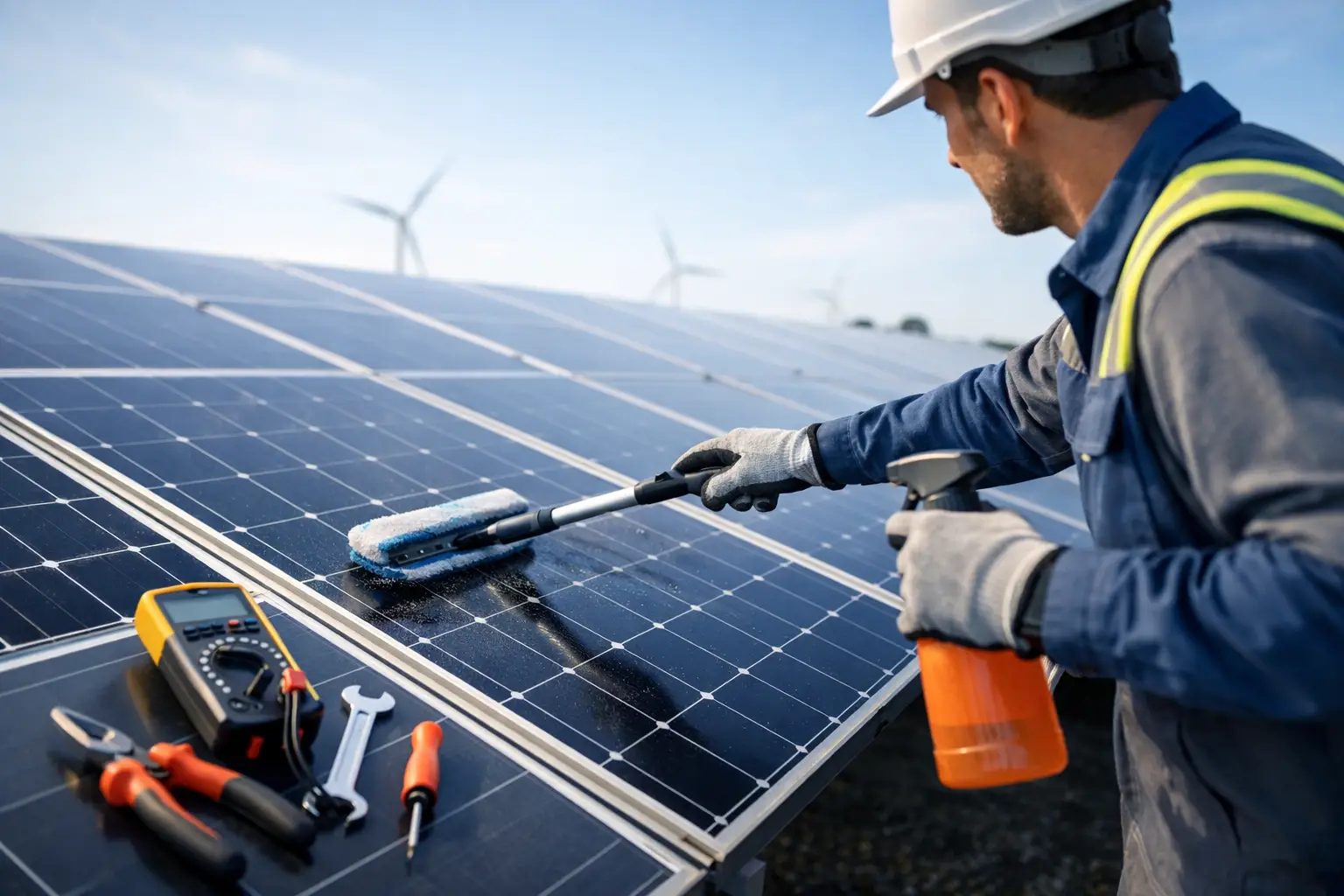
The key point is not to clean panels unnecessarily or unsafely. Scrubbing with the wrong equipment can scratch the glass or damage seals. Pressure washers are a poor choice, and getting onto the roof without the right access equipment creates obvious risk.
If panels are visibly dirty and performance appears affected, professional cleaning is often the safer route. It is especially worth considering on commercial buildings or hard-to-access roofs where safe access matters as much as the clean itself.
The parts of the system that matter most
When people think about maintenance, they usually focus on the panels. In reality, the inverter often deserves more attention. It is the working heart of the system, converting generated electricity into usable power, and it is usually the component most likely to show a fault first.
If the inverter is displaying warnings, running unusually hot, making unfamiliar noises or repeatedly shutting down, it needs checking. Some issues may be minor. Others can stop generation altogether.
Mounting systems are also important. Roof fixings and rails should remain secure and weather-tight. This is not something most property owners can inspect closely themselves, but it matters because a solar installation must remain mechanically sound as well as electrically safe.
Then there is the cabling, connectors and isolators. These should be protected from damage, water ingress and deterioration over time. Poor connections can reduce performance and, in more serious cases, create safety concerns.
Warning signs you should not ignore
Some maintenance issues are obvious. Others creep in slowly and are easier to miss.
A sudden drop in generation is one of the clearest signs that something is wrong, especially if weather conditions do not explain it. Repeated inverter fault codes, visible panel damage, cracked glass, water ingress around equipment, or signs of wildlife nesting near cabling all need proper attention.
It is also worth noticing the less dramatic signs. If your electricity bills are rising despite similar usage and a functioning solar system, reduced PV output may be part of the picture. If battery charging behaviour changes unexpectedly, that may point to a wider system issue rather than a battery issue alone.
This is where professional diagnosis matters. Guesswork can waste time, and with electrical systems, it can also create risk.
Professional servicing - what it should include
A proper solar service should do more than confirm the panels are still on the roof. It should assess whether the system is safe, operating correctly and delivering the performance it should.
That usually includes checking the inverter, reviewing generation data, inspecting visible cabling and isolators, and assessing the condition of mounting components where accessible. Depending on the system, electrical testing may also be appropriate. If the property has battery storage, the service should consider battery performance and system integration too.
For businesses, planned maintenance can be especially useful because downtime and underperformance affect operating costs directly. For landlords, it also supports asset protection and helps avoid problems being discovered only when tenants raise concerns.
An experienced installer will also understand the practical side of troubleshooting. Sometimes the issue is panel soiling. Sometimes it is shading that has increased over time. Sometimes the system itself is healthy, but consumption patterns have changed and the owner expects more than the array can realistically deliver in winter.
Seasonal factors in the UK
UK weather changes what good maintenance looks like. Autumn can bring leaves and debris. Winter often means lower generation anyway, which can mask faults if nobody is paying attention. Spring pollen can leave residue on panels in some areas, while summer is the time when performance losses are easiest to notice because output should be strongest.
Snow is usually less of a problem than people expect, as it often slides off pitched panels and does not tend to linger for long in many parts of the UK. The bigger concern is trying to remove it manually. That should be avoided.
For properties in rural parts of Lincolnshire, Norfolk, Cambridgeshire, Rutland and Leicestershire, nearby farmland, dust, birds and open exposure can all influence maintenance needs. That does not mean every rural system is high-maintenance. It simply means local conditions matter.
Is a maintenance plan worth it?
For some systems, yes. For others, occasional servicing is enough.
If you have a relatively new domestic system with easy monitoring and no obvious issues, you may only need periodic checks and professional support when something changes. If you have a larger system, an older installation, battery storage, or a site where downtime has a clear cost, a maintenance plan is often a practical investment.
The value comes from preventing avoidable losses. Even modest underperformance over a long period can quietly erode the savings that justified the installation in the first place. Maintenance is not about adding unnecessary cost. It is about protecting return on investment.
Getting the balance right
The best approach is usually simple: monitor output, check for obvious changes, keep access and safety in mind, and bring in a qualified professional when the system shows signs of underperformance or has gone too long without inspection.
Solar should make your property cheaper to run, not give you another system to worry about. With the right maintenance at the right time, it can keep doing exactly what it was installed to do - lower bills, improve energy resilience and deliver reliable performance for years to come.