Solar Panel Fault Signs Every Owner Should Know
27 August 2026 | By RJ Hill Electrical
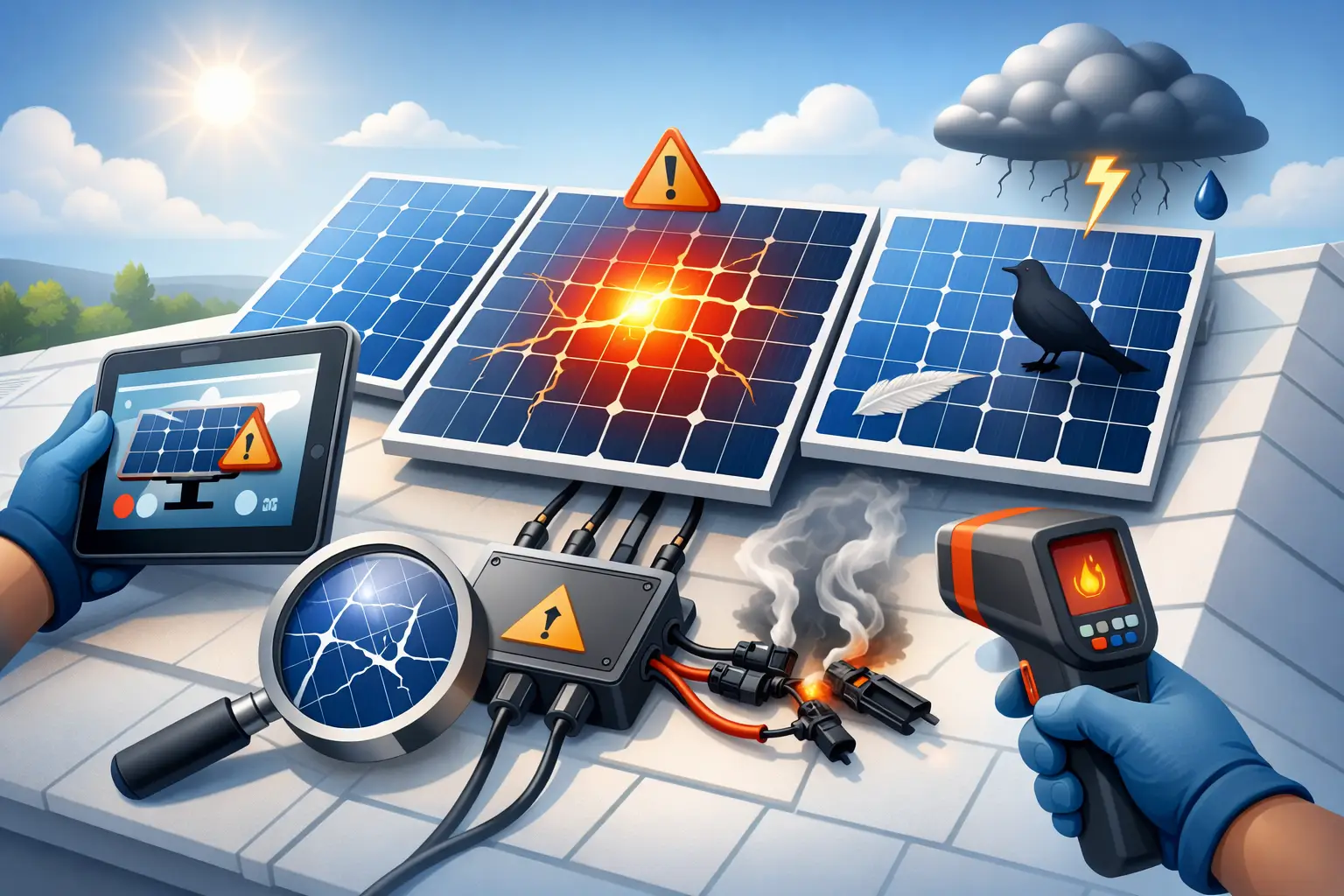
A sunny day with unexpectedly low generation is one of the clearest solar panel fault signs a property owner can spot. Your system may still be producing electricity, but a drop in output can reduce bill savings, slow battery charging and leave you buying more power from the grid than necessary.
Solar PV systems are designed to work quietly in the background, so problems can go unnoticed for weeks. The good news is that monitoring data, a visual check from ground level and a basic understanding of seasonal performance will usually tell you when something needs attention. The key is knowing what is normal, what is not, and when electrical work must be left to a qualified installer.
Solar panel fault signs to take seriously
The most common warning sign is a sustained fall in generation that cannot be explained by the weather or time of year. Output naturally changes throughout the year in the UK. A clear day in June should not be compared directly with a short, overcast day in December. Instead, compare today’s generation with similar weather conditions and the same period in the previous year, if your monitoring platform provides the data.
A system that produces nothing at all during daylight hours needs prompt investigation. This may be as simple as the inverter having lost its connection to the grid, but it can also point to an inverter fault, an RCD trip, a failed string or an issue with the supply connection. Do not assume the panels themselves are at fault.
Other signs worth acting on include:
- An inverter display showing a fault code, warning light or repeated shutdown message.
- Generation that starts and stops repeatedly on otherwise stable, bright days.
- One string of panels producing far less than another where the roof layout and shading are similar.
- A consumer unit or solar-related RCD that trips more than once.
- New damage visible from the ground, including cracked glass, loose panels, damaged cabling or signs of water ingress around roof penetrations.
- An unexpected rise in imported electricity despite similar household or business energy use.
A monitoring app can also flag communication errors. These do not always mean the solar PV system has stopped generating. Sometimes the inverter is working but has lost Wi-Fi or mobile connection, so the app is simply not receiving data. Check the inverter display before drawing conclusions from the app alone.
What normal changes in output look like
Not every lower reading indicates a fault. Cloud cover, low winter sun, morning and evening shading, and high panel temperatures all affect output. Solar panels are tested under controlled conditions, and real-world generation will vary.
A build-up of dirt, pollen or bird droppings can also reduce performance, particularly where it covers part of a panel. In most UK locations, regular rainfall removes ordinary surface dust. Cleaning is not automatically needed and should never involve climbing onto a roof without the right access equipment and safety controls. Harsh chemicals, abrasive tools and high-pressure washing can cause damage or create unnecessary risk.
New shading is another common cause of reduced generation. A tree that has grown over a few years, a neighbouring extension, or even a new chimney or vent can affect a panel string. The impact depends on system design. Some systems use optimisers or microinverters to limit the effect of shade on other panels, while conventional string systems can be more affected by shading on a single module.
Start with safe, simple checks
Before arranging a repair visit, there are a few checks that can help identify whether there is an obvious issue. These should be observational only. Do not remove covers, disconnect cables or touch DC isolators and connectors. Solar panels generate electricity whenever there is daylight, and DC faults require specialist knowledge and safe isolation procedures.
First, check whether the inverter has a clear status message or fault code. Take a photograph of the display and note the time and weather conditions. Next, look at your generation history. A gradual decline may suggest shading or soiling, while a sudden drop is more likely to be an electrical, inverter or connection issue.
Then check the consumer unit from a safe position. If an RCD or breaker associated with the solar system has tripped, do not repeatedly reset it. One trip can occasionally occur for an external reason, but repeated tripping is a reason to call an electrician or solar installer. It may indicate an insulation fault, moisture ingress, equipment failure or another issue that needs testing.
Finally, inspect the roof installation from ground level. Look for debris beneath the array, panels that appear out of line, damaged visible cable containment, or obvious bird nesting. Photograph anything unusual rather than attempting to investigate it yourself.
Inverter problems are common, but not always straightforward
The inverter converts the electricity generated by your panels into usable AC power for the property. As a working electronic component, it is often more likely to develop a fault over the lifetime of a system than the panels themselves.
An inverter may stop generating because of an internal component fault, overheating, ventilation problems, grid voltage issues or a loss of grid connection. On hot days, temporary power reduction can be normal if the inverter is protecting itself from high temperatures. Repeated overheating, however, should be assessed, especially if the unit is installed in a confined cupboard, loft or poorly ventilated location.
Grid-related messages can be confusing. An inverter is required to disconnect if the grid supply sits outside permitted limits. This safety function protects people working on the network. If the message appears repeatedly, the installer may need to test the installation and, where appropriate, work with the local electricity network operator to investigate supply voltage.
When battery storage makes the symptoms less obvious
If your system includes battery storage, low solar generation may be masked for a while because the battery continues to supply the property. You may first notice that the battery is no longer charging fully, that it reaches full charge much later than usual, or that grid imports increase in the evening.
It is also possible for the solar PV system to be healthy while the battery or its settings are causing unexpected results. For example, a battery may be held at a reserve level for backup power, scheduled to charge from the grid overnight, or limited by a software setting. The monitoring data should be read as a whole: solar generation, household consumption, battery charge and discharge, and grid import or export.
This is why a proper fault visit should not focus on one device in isolation. The most useful diagnosis looks at how the panels, inverter, battery, consumer unit and monitoring platform are working together.
Signs that need urgent professional attention
Some faults should not wait for routine maintenance. Arrange an urgent inspection if you notice burning smells, smoke, scorching around electrical equipment, water entering an inverter or consumer unit, exposed cables, damaged panels after a storm, or persistent tripping.
Switching off a system is not always straightforward, and the correct sequence matters. If there is immediate danger, keep clear of the equipment and contact emergency services where necessary. For less immediate concerns, use a qualified solar and electrical installer rather than attempting repairs yourself.
A professional inspection can include electrical testing, inverter diagnostics, string voltage checks, insulation resistance testing, thermal imaging where appropriate, roof mounting checks and a review of performance data. The right approach depends on the symptoms, system age, equipment type and whether the fault is intermittent or constant.
Preventing avoidable solar faults
Solar PV needs relatively little day-to-day attention, but a simple annual review is worthwhile. Check that monitoring is reporting correctly, compare generation against previous periods, keep vegetation under control where safe to do so, and arrange inspection after severe weather or roof work near the array.
Keep installation documents, commissioning records, warranties and inverter login details together. They make future servicing quicker and help an installer understand how the system was designed. If your system has been expanded with a battery, EV charger or additional panels, make sure the settings and protection arrangements have been reviewed as part of the wider electrical installation.
For homeowners and businesses across Lincolnshire, Norfolk, Cambridgeshire, Rutland and Leicestershire, an experienced solar installer can assess the fault without guesswork and help protect the savings your system was installed to deliver. Acting on unusual performance early is usually the most practical way to keep your solar investment working hard for years to come.