
Solar Monitoring: Get More From Every kWh
8 September 2026 | By RJ Hill Electrical
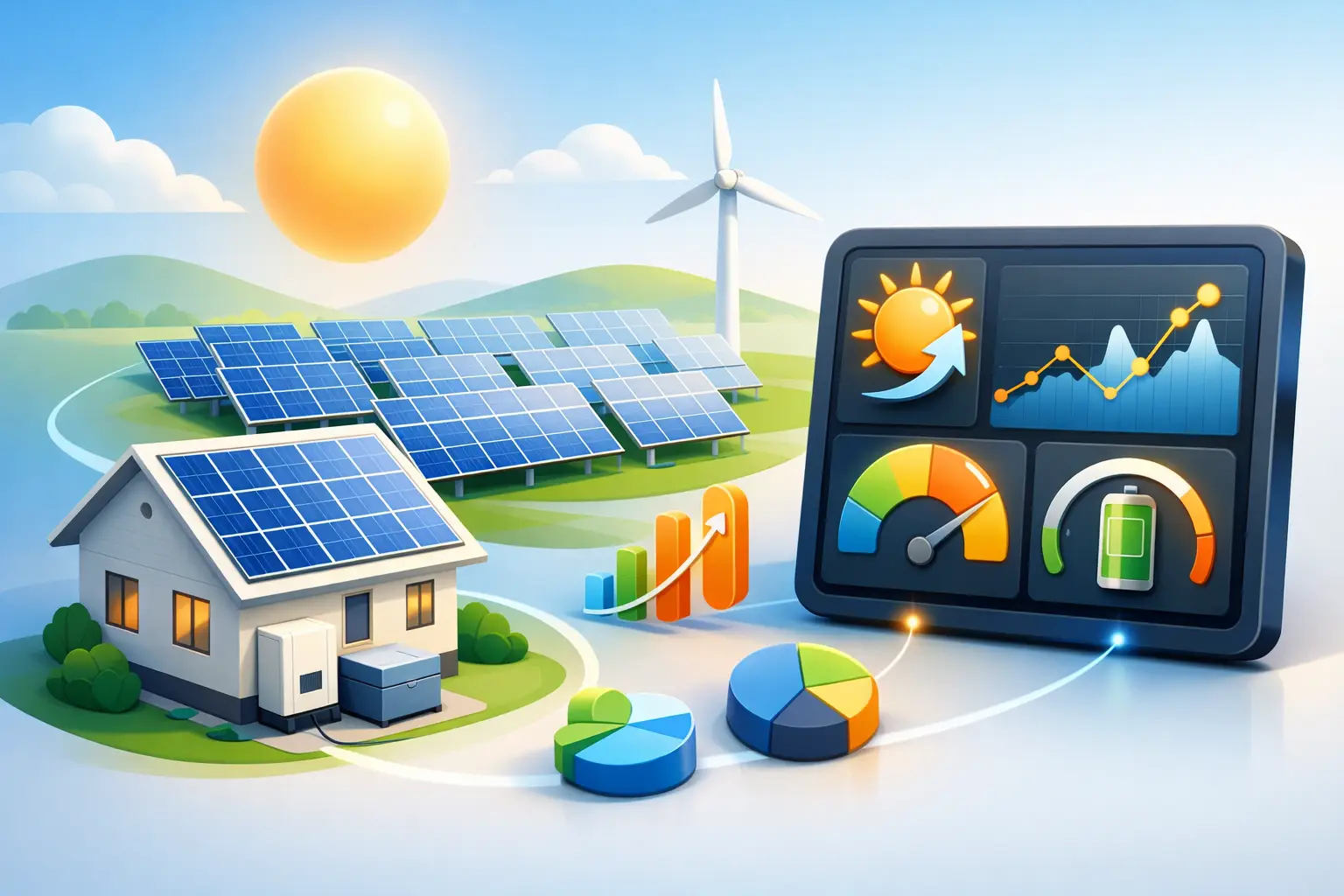
A solar PV system can be generating well while a property still imports costly electricity at the least helpful times. Solar monitoring turns the figures behind your panels, battery and electricity use into useful information. It shows what is being generated, what is being used on site, what is exported and, where applicable, how a battery is charging and discharging.
For homeowners and businesses, that visibility matters because savings do not come from generation alone. They come from using more of that generated power when it is available, identifying unnecessary grid imports and ensuring the system continues to perform as designed.
What solar monitoring actually tells you
Most solar systems include an inverter app that reports solar generation. This is useful, but generation is only one part of the picture. A more complete monitoring setup can also measure household or business consumption, grid import and export, and battery activity.
This allows you to see the difference between a sunny day with high production and a genuinely efficient day where solar electricity covered a meaningful share of demand. If 18 kWh is generated but 12 kWh is exported while the property imports power later that evening, there may be an opportunity to improve how energy is stored or used.
Generation is not the same as savings
A system can produce exactly as expected and still deliver less value than it could. This often happens when occupants are out during the brightest part of the day, when a business has low daytime demand, or when high-load appliances run after sunset.
Monitoring highlights these patterns. A homeowner may find that running the washing machine, dishwasher and hot water heating during the middle of the day reduces imports. A business may see that refrigeration, workshop equipment or office air conditioning already makes excellent use of daytime generation. The right decision depends on each property's routine, tariff and equipment.
Consumption data gives the full picture
Without consumption monitoring, an app may show a healthy production figure but cannot always explain why electricity bills remain higher than expected. Whole-property monitoring uses a meter or current sensors to track power flowing to and from the grid. It can reveal overnight base load, unexpected daytime demand and periods where electricity is being bought despite usable solar energy being available.
This is especially valuable in larger homes and commercial premises, where small continuous loads can add up. It also provides a clearer starting point when considering battery storage, an EV charger or further solar capacity.
Using solar monitoring to reduce grid imports
The most useful monitoring is not something checked once and forgotten. It should help shape practical changes that improve self-consumption - the proportion of solar electricity used at the property rather than exported.
For many households, the first opportunities are straightforward. Timed appliances can run through the late morning or early afternoon, particularly in spring and summer. Immersion heating controls can use surplus generation to heat water. If an electric vehicle is at home during the day, smart charging can use available solar power rather than relying entirely on grid electricity.
Businesses have different operating patterns, but the principle is the same. Solar generation and demand should be considered together. A site that operates mainly during daylight hours may get strong value from solar without a battery. A business with significant evening demand, peak charges or resilience requirements may benefit more from combining solar PV with battery storage.
Battery settings should match real usage
A battery is not simply a container for spare solar electricity. It can be set to respond to generation, household demand and, with compatible systems, time-of-use electricity tariffs. Monitoring helps confirm whether those settings reflect how the property actually uses energy.
For example, charging a battery from cheap overnight electricity may make sense in winter or on days with poor forecast generation. In summer, preserving capacity for surplus solar may be the better choice. There is no single setting that is right all year round. Usage habits, battery size, electricity tariff and solar array output all affect the best approach.
Monitoring can also show whether a battery is regularly reaching full capacity by midday, which may indicate that additional daytime loads, EV charging or a larger battery could improve the use of generation. Equally, a battery that rarely fills may not need to be expanded.
When solar monitoring points to a problem
Daily and monthly figures create a useful performance record. You do not need to watch the app constantly, but a sudden or sustained change is worth investigating. Generation naturally varies with weather, season, shading and panel orientation, so comparisons should be made against similar conditions rather than a single sunny day.
The following signs can justify a closer look:
- Generation is consistently lower than expected for the season, with no obvious weather explanation.
- One section of the array is underperforming compared with the rest of the system.
- The inverter shows repeated faults, warnings or unexplained periods offline.
- Grid imports remain high at times when solar generation or battery charge should be available.
- Battery charge levels or discharge behaviour do not match the settings and routines in place.
A monitoring alert is not always evidence of a fault. It could be a tripped isolator, loss of internet connection, a changed tariff schedule or simply an appliance creating a new demand pattern. However, prompt checks can prevent a minor issue from becoming months of missed generation and avoidable electricity costs.
Choosing the right level of solar monitoring
The best setup depends on what you want to manage. Basic inverter monitoring is often sufficient for an uncomplicated solar-only installation where the main requirement is confirmation that the array is generating. It provides a clear production history and can make faults easier to spot.
For properties with battery storage, EV charging, heat pumps or high electricity use, whole-property energy monitoring is usually more valuable. It gives the context needed to understand where power is flowing and whether different technologies are working together effectively.
A good system should present information clearly rather than burying it in technical graphs. The useful figures are usually current solar output, property demand, battery state of charge, import, export and longer-term totals. It should also retain enough historical data to compare months and seasons.
Internet-connected monitoring adds convenience, allowing performance to be checked remotely and alerts to be received where supported. But internet access is not a substitute for sound electrical design and quality installation. The monitoring equipment must be correctly configured, with consumption sensors fitted in the right position and system settings properly commissioned.
Monitoring for landlords and commercial properties
For landlords, monitoring can provide reassurance that communal or landlord-supplied solar is operating as intended, while helping identify unusual consumption where the system feeds shared services. The exact arrangement should be considered carefully, particularly where tenant metering, supply contracts and data access are involved.
Commercial monitoring can be even more useful because a half-hourly demand profile may expose expensive peaks or equipment running outside operating hours. It can support decisions on battery capacity, load shifting and future investment. For a small business, this may be as simple as identifying when machinery is left on. For a larger site, it can inform a more detailed energy strategy.
The objective is not to make every user an energy analyst. It is to give decision-makers reliable information before they spend money on additional equipment or make changes to how a site operates.
Installation and aftercare make the difference
Solar monitoring is most effective when it is planned alongside the wider system. The inverter, battery, EV charger and energy meter need to be compatible, and the monitoring should reflect the electrical layout of the property. Retrofitting is often possible, but it may not offer the same level of detail as a fully integrated design.
At RJ Hill Electrical, solar PV and battery systems are designed with the wider energy picture in mind. With more than 20 years of electrical experience and MCS-accredited installation capability, the focus is on systems that are correctly specified, properly commissioned and practical to live with.
A quick monthly check of your figures can be enough to keep a system on track. Look for patterns rather than chasing every daily change, act on clear anomalies and use what you learn to run high-demand equipment at more cost-effective times. That is how solar monitoring moves from an app on your mobile phone to a practical tool for lower bills and greater energy independence.