
Solar Export Tariff Explained for UK Homes
15 July 2026 | By RJ Hill Electrical
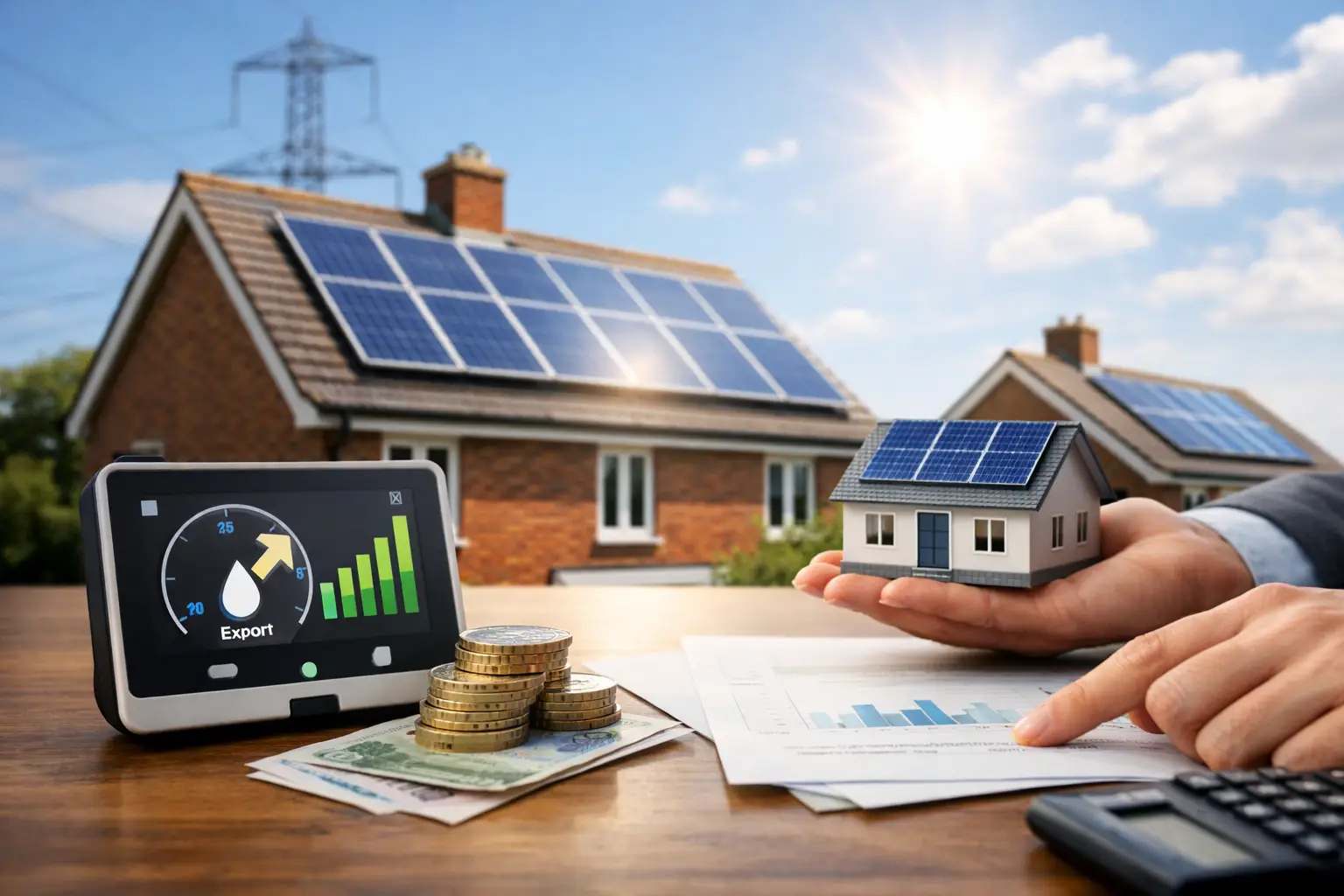
Your solar panels may produce more electricity than your property can use at certain times of day. Rather than letting that surplus go to waste, it can be sent to the grid and paid for. This solar export tariff explained guide sets out how those payments work, what they are worth, and why the best result usually comes from considering export alongside your electricity import tariff, usage habits and battery storage.
Solar export tariff explained: what you are paid for
A solar export tariff pays you for every unit of electricity your Solar PV system sends back to the grid. In Great Britain, most households receive these payments through the Smart Export Guarantee, commonly called SEG.
SEG replaced the previous Feed-in Tariff scheme for new applicants. The difference matters. The Feed-in Tariff paid eligible households for generating electricity as well as exporting it. Under SEG, you are paid only for the electricity measured as exported. Your main financial benefit from solar still comes from using your own generation instead of buying electricity from the grid.
Export is measured in kilowatt-hours, or kWh. If your system exports 1,000 kWh over a year and your tariff pays 15p per kWh, your export income would be £150 for that period. The payment is separate from the saving made when you use solar power directly in the home or business.
That distinction is central to getting the design right. If electricity costs you 28p per kWh to buy but your export tariff pays 15p per kWh, using a unit of solar power on site is generally worth more than exporting it. If a time-based export tariff pays a higher rate during a particular period, exporting may occasionally be more valuable. The right approach depends on the tariffs available and how your property uses energy.
How the Smart Export Guarantee works
Energy suppliers with at least 150,000 domestic customers must offer at least one SEG tariff. They set their own rates, payment frequency and terms, so there is no single national export price. You can often choose one supplier for imported electricity and a different supplier for export, although it is worth checking each tariff's conditions before switching.
To receive SEG payments, a typical domestic Solar PV installation needs an eligible generating system and appropriate certification. For most new systems, this means using an MCS-certified installation and retaining the required paperwork. Your supplier will normally also require a smart meter capable of recording half-hourly export readings, plus an export MPAN, which identifies the connection for billing purposes.
Your installer and Distribution Network Operator process are both part of the picture. Small domestic systems are commonly notified to the network operator after installation under the relevant connection process. Larger or more complex systems may need approval before work starts. This is not simply administration: it helps make sure the local network can safely accommodate your generation and export capacity.
If you already have solar panels, check whether you are on an older Feed-in Tariff arrangement. Some legacy systems receive deemed export payments rather than payments based on actual exported units. A smart meter and a move to metered export can change how you are paid, so compare the figures before making a decision.
Fixed and flexible export rates
A fixed SEG tariff pays the same rate for every exported kWh, giving a simple and predictable return. It can suit households that prefer certainty and do not want to monitor energy prices closely.
Flexible tariffs can vary by time of day, wholesale market conditions or other supplier rules. They may reward export at periods when the grid needs it most, but the rate can also fall significantly at quieter times. Some dynamic tariffs can even include negative export prices during exceptional periods of very high renewable generation. This is why the headline rate alone is not enough to choose a tariff.
Read the terms for minimum contract periods, whether an import tariff must be taken with the same supplier, how export readings are submitted and when payments are made. A rate that looks attractive may be less suitable if it does not match your normal generation pattern or requires active management that you do not want.
What affects your solar export income?
The size of your array matters, but it is only one part of the calculation. A larger system can generate more surplus electricity, yet a household with high daytime demand may export less than a similar property with lower demand. Working from home, running a heat pump, charging an EV and using appliances during daylight hours can all increase self-consumption.
Seasonality also has a major effect. Solar generation is usually strongest during spring and summer, when daytime output can exceed household demand. In winter, panels generate less and more of that electricity may be used immediately. A projection should therefore consider annual performance, not just a particularly sunny week.
Roof orientation, shading, panel capacity, inverter settings and local network limits can all influence output and export. For a business, operating hours are particularly relevant. A premises that consumes electricity through the working day may gain more from avoided import costs, while a site that is empty in daylight may export more.
It is sensible to view export payments as one part of the return, rather than the sole reason for installing solar. A well-designed system should first reduce the electricity you need to buy, then obtain fair value for the surplus you cannot use or store.
Where battery storage can improve value
A battery stores surplus solar generation for later use, such as the evening period when a household's electricity demand often rises. This can reduce exports and increase self-consumption. Where the value of avoided grid imports is higher than the export payment, that can improve the value obtained from each unit generated.
However, a battery is not automatically the best choice for every property. Batteries have an upfront cost, finite capacity and round-trip losses. If your daytime consumption is already high, or an export tariff is particularly competitive, the additional benefit may be smaller. The best battery size is based on your actual load profile, expected solar surplus, electricity tariff and future plans such as an EV or heat pump.
Some battery systems can also charge from the grid during lower-cost periods and support household demand when electricity is more expensive. This can be useful on a suitable time-of-use tariff, but it needs careful configuration. Certain export tariff terms may restrict payment for electricity originally charged from the grid, and an installation should never be set up on assumptions that conflict with supplier rules.
A properly specified system gives you options. It can prioritise your own solar use, reserve energy for evening demand, export when rates are favourable and, where appropriate, provide backup capability through an approved resilience design. Not every battery provides power during a grid outage, so this should be discussed clearly at design stage.
How to compare solar export tariffs properly
Start with your likely annual export, but do not stop there. Compare the export rate with the price you pay to import electricity and identify when your property consumes the most power. A household that is empty from 8am to 5pm will have different priorities from one with someone working from home, an electric vehicle on the drive and a heat pump running through the day.
Ask suppliers whether the rate is fixed or variable, how often it can change, whether half-hourly readings are required, and whether there are conditions relating to the import account. If you are considering battery storage, ask how the tariff treats exported battery energy and whether there are technical requirements for the meter or system setup.
For commercial properties, the analysis should include half-hourly demand data, peak consumption, operating hours and any plans to electrify vehicles or heating. The most profitable answer is not always the system that exports the most. It is the system that puts generated energy to the highest-value use while fitting the site's electrical infrastructure and long-term plans.
Getting the system design right from the start
Solar export income is more reliable when the system has been designed around the property rather than a generic panel count. This means assessing roof space, shading, annual consumption, daytime demand, electrical capacity and realistic changes in future use. It also means planning certification, metering and network notification correctly so that SEG registration is straightforward after installation.
RJ Hill Electrical combines more than 20 years of electrical experience with MCS-accredited solar installation, battery storage and EV charging expertise. For homeowners and businesses across Lincolnshire, Norfolk, Cambridgeshire, Rutland and Leicestershire, a tailored quotation can show the likely balance between self-consumption, battery use and export income before any work begins.
The most useful next step is to gather a year's electricity usage, consider how your energy habits may change, and have the proposed system modelled against realistic tariffs. That gives you a clearer route to lower bills and greater energy independence than choosing an export rate in isolation.