
Smart Export Guarantee Tariff: What You Earn
6 September 2026 | By RJ Hill Electrical
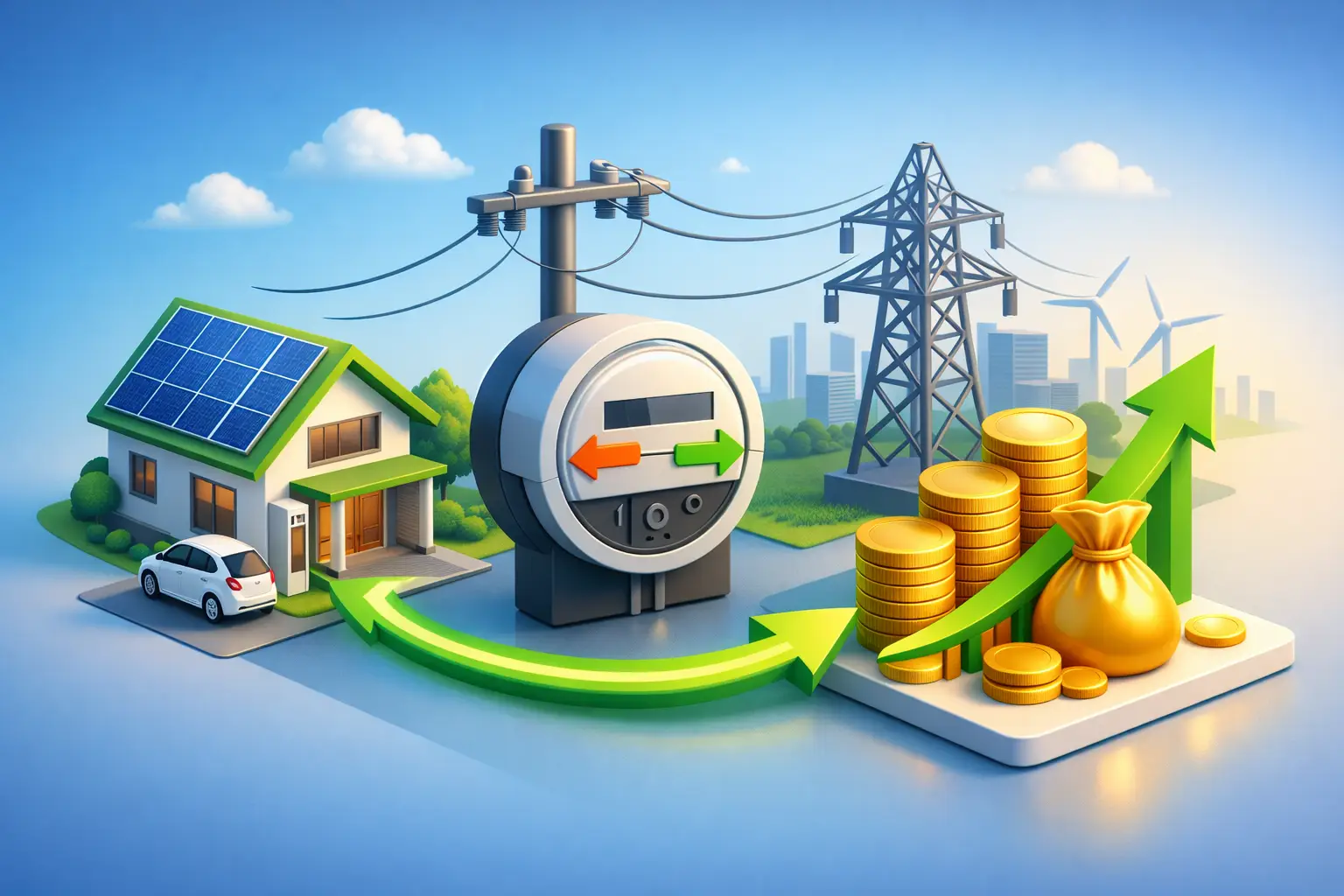
If you have searched for a smart export guarantee tariff, the correct term is the Smart Export Guarantee (SEG) tariff. It is the payment you can receive for surplus electricity exported from your solar PV system to the grid. For households and businesses considering solar, it matters - but it should not be the only figure used to judge whether a system will pay for itself.
The strongest financial return from solar usually comes from using as much of the electricity you generate as possible. SEG payments add value for the power you do not use on site. Getting the balance right starts with a system designed around your property, energy habits and future plans, rather than simply fitting the largest possible array.
What is a Smart Export Guarantee tariff?
The Smart Export Guarantee is a Government-backed arrangement requiring larger electricity suppliers to offer at least one export tariff to eligible small-scale, low-carbon generators. Solar PV is the most common example. Your supplier pays you for each kilowatt-hour (kWh) of electricity that your system sends to the national grid.
The scheme replaced the former Feed-in Tariff for new applicants. Unlike that previous scheme, there is no single national payment rate. Suppliers set their own export rates and terms, which means the value of a Smart Export Guarantee tariff can vary considerably.
Some tariffs offer a fixed price per exported kWh. Others have variable rates that change by time of day or reflect wider electricity market conditions. A higher headline rate can be attractive, but it is worth checking how the tariff works in practice, whether you must buy your imported electricity from the same supplier, and whether the rate can change.
How solar export payments are measured
To receive SEG payments, your system needs an export-capable smart meter. This records the electricity flowing from your property to the grid, typically in half-hourly periods. Your supplier uses these readings to calculate what you are owed.
Your solar inverter converts the electricity produced by the panels into usable AC electricity. Your home or business uses that generation first when appliances, equipment or charging points are drawing power. Any generation left over is exported automatically, unless it is stored in a battery.
For example, if your solar panels produce 4 kWh during an hour and your property uses 1.5 kWh, the remaining 2.5 kWh may be available for export. The actual export payment depends on the tariff rate and the metered export reading, not on your total solar generation.
This distinction is essential. A solar monitoring app may show a high generation figure, but only the electricity you do not use or store is eligible for SEG payment.
Eligibility and installation standards
Most domestic solar systems can qualify, provided they meet the relevant requirements. A key requirement is usually MCS certification for the installation, or equivalent evidence where accepted. The system must also be properly connected to the distribution network, with the necessary notification or permission in place.
An experienced installer will account for these requirements during the design and installation process. This is not only about securing export payments. Correct system design, electrical protection, commissioning and documentation are fundamental to safe, dependable solar generation.
If you are buying a property with existing solar or upgrading an older installation, it is sensible to check the paperwork before assuming you can register for an export tariff. Metering arrangements and ownership details can affect the process.
Why self-consumption usually matters more
Export payments are useful, but they are generally lower than the price you pay to buy electricity from the grid. That is why using solar power while it is being generated is usually more valuable than exporting it.
A washing machine, dishwasher, immersion heater, EV charger or business equipment running during solar hours can use generation that would otherwise leave the property. Smart controls can help match certain loads to available solar power without making day-to-day life inconvenient.
The right approach depends on how the building is used. A family home that is empty during weekdays may export more than a home with someone working remotely. A small business operating through daylight hours may naturally use a larger proportion of its generation. Neither pattern is wrong, but each calls for a different system design and financial assessment.
It is also worth planning for future demand. An electric vehicle, heat pump, additional refrigeration, home office or workshop can change how much solar electricity you use over the lifetime of the system.
Can battery storage improve the return?
Battery storage gives you another option for surplus solar. Instead of exporting immediately, you can store electricity for use later in the evening, overnight or during periods when demand is higher. This can increase self-consumption and reduce the amount of electricity bought from the grid.
That does not automatically mean a battery is right for every property. If a property has limited surplus generation, or occupants use much of their solar power during the day, the additional savings may be smaller. Battery capacity, tariff choice, household usage and future plans all need to be considered together.
A battery can also support a more flexible energy strategy. On suitable tariffs, it may charge from cheaper off-peak grid electricity and help cover usage at more expensive times. Some systems can provide backup capability during a power cut, but this requires specific design and equipment. Standard solar panels alone do not normally keep a property powered when the grid fails.
The trade-off is clear: storing solar can reduce your SEG income because less electricity is exported, while potentially delivering a greater saving by avoiding imported electricity. The best choice is based on total energy costs, not the export rate in isolation.
Choosing an export tariff without chasing headlines
It is sensible to compare tariffs, but focus on the terms that affect your real return. A tariff with an exceptional rate during a narrow time window may not be as valuable as a lower, predictable rate that suits your generation profile.
Consider these practical questions before switching or signing up:
- Is the export rate fixed or variable, and how often can it change?
- Do you need to take your imported electricity from the same supplier?
- Does the tariff pay for every exported kWh, or are there conditions and caps?
- Will you need half-hourly export readings and a compatible smart meter?
- Does the tariff work well with your battery, EV charging and daily electricity use?
For businesses, export income should be considered alongside operating hours, site load, demand charges where applicable, and the potential value of using solar power directly. A commercial system producing strongly during working hours may achieve excellent value through avoided imports, even if export volumes are modest.
Design the system around the property
Panel orientation, roof space, shading, inverter capacity and electricity consumption all influence how much energy is generated, used, stored and exported. More panels are not always the best answer. A larger array can produce more annual energy, but it may also send a greater share to the grid at a lower value if on-site demand is limited.
Equally, undersizing a system to avoid exports can mean missing valuable generation that could support an EV, battery or future electrical upgrade. A good design looks at annual consumption as well as when that consumption happens. It also considers the condition of the existing electrical installation, available roof areas and any plans to expand the system later.
RJ Hill Electrical designs solar PV and battery storage systems as part of a wider electrical solution. For customers across Lincolnshire, Norfolk, Cambridgeshire, Rutland and Leicestershire, that means looking beyond panel output to how the system will perform in the real world - from daytime usage through to EV charging and long-term energy resilience.
Get the figures that matter before you commit
When reviewing a solar quotation, ask to see the expected annual generation, estimated self-consumption, likely export volume and the assumptions used for electricity prices. These figures will never be exact: weather, changing energy use and tariff movements all affect outcomes. They should, however, provide a realistic basis for comparing options.
A Smart Export Guarantee tariff is a worthwhile part of the solar equation, particularly where regular surplus generation is expected. The bigger opportunity is building a solar and storage system that reduces costly grid imports, supports the way you use electricity and leaves room for the changes your property may need next.