
How to Reduce Peak Demand Charges at Your Site
30 August 2026 | By RJ Hill Electrical
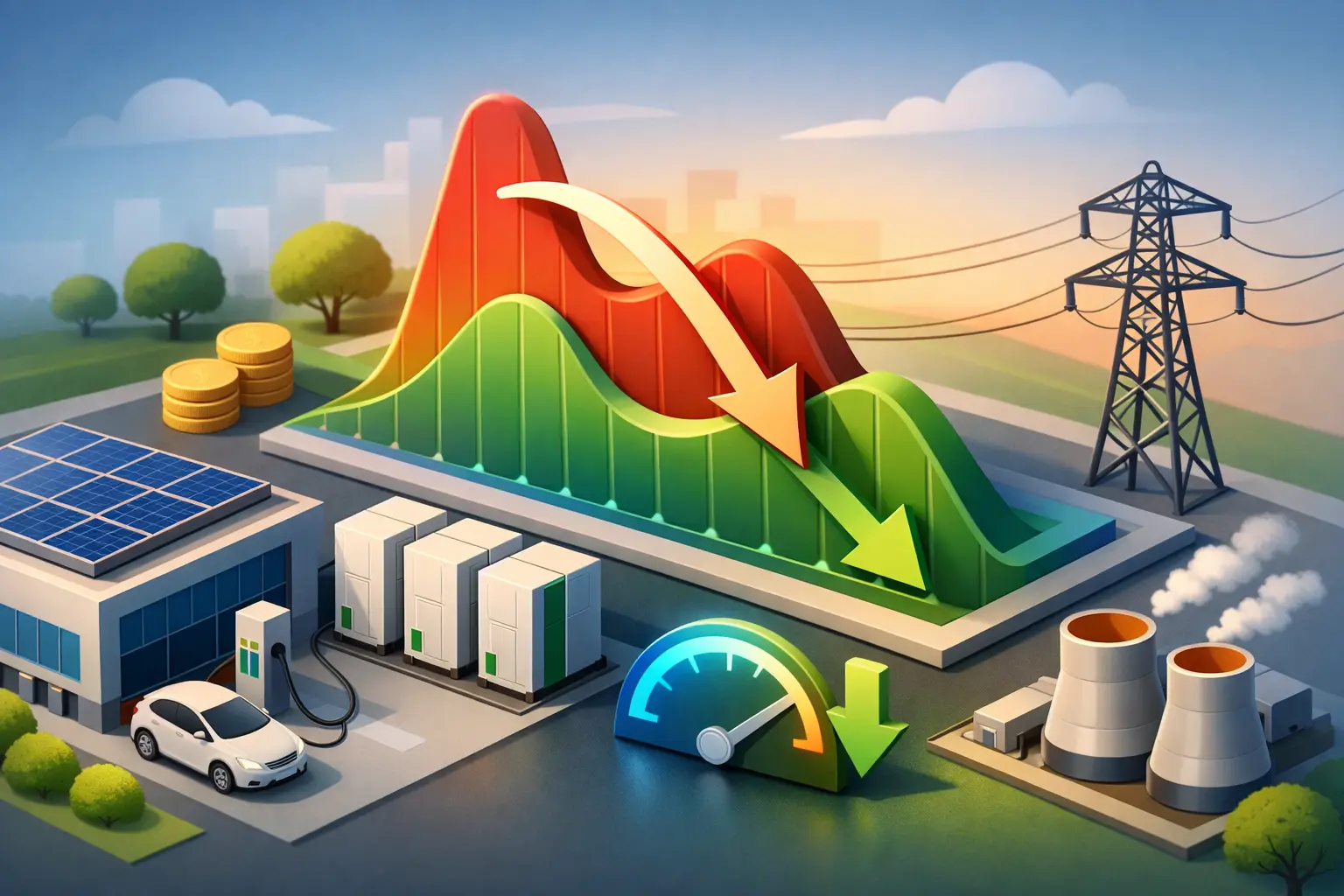
A high electricity bill is not always caused by the number of kilowatt-hours a property uses. For many businesses, the most expensive part of the bill can be a short period when several high-load systems run together. Learning how to reduce peak demand charges means looking at when power is used, not simply how much is used over a month or year.
This is especially relevant for commercial premises with half-hourly metering, larger supplies, or tariffs that include capacity, maximum-demand or network-related charges. Workshops, farms, offices, warehouses, hospitality venues and sites with EV charging can all experience sharp demand peaks. With the right monitoring, electrical design, solar generation and battery storage, many of those peaks can be avoided or reduced.
What are peak demand charges?
Peak demand is the highest level of electricity your premises draws from the grid over a set measurement period. In the UK, this is commonly recorded in 30-minute intervals for half-hourly metered sites, although the exact arrangement depends on the meter, supplier and network tariff.
If a site usually uses 20kW but draws 100kW when machinery, heating, catering equipment and EV chargers start at the same time, that brief period can affect charges for the billing period. Some contracts also include agreed supply capacity. Exceeding it can lead to excess-capacity charges or trigger a review of the connection.
Not every electricity tariff applies a separate peak-demand charge. Domestic customers are more likely to see time-of-use pricing, while larger commercial users may face more complex standing, capacity and distribution costs. The first job is therefore to read the bill and confirm what is actually being charged. A good solution is based on your tariff, operating hours and load profile, rather than a standard package.
Find the loads creating the peak
A demand peak is rarely mysterious once it is measured properly. It is often caused by normal equipment being operated at the same time: a commercial kitchen starting up for service, refrigeration recovering after a defrost cycle, compressors switching on, a heat pump responding to cold weather, or several electric vehicles beginning to charge after staff arrive.
Half-hourly data gives a useful starting point, but it may not show the full picture on its own. Sub-metering or energy monitoring can identify which circuits and items of equipment are contributing. This allows you to distinguish between a one-off spike and a regular pattern that is worth addressing.
Look at at least several weeks of data, including busy and quiet periods. Seasonal changes matter too. A farm may have a very different demand profile during harvest, while a premises with electric heating could peak on winter mornings. For a business with solar PV, compare grid imports against daytime generation to see whether the highest grid demand occurs when solar output is low or when site consumption briefly outpaces it.
Reduce peak demand charges through load management
Load management is usually the lowest-cost place to start. It means controlling the timing of flexible electricity use so that major loads do not overlap unnecessarily.
For example, EV chargers can be set to share available power rather than each drawing at full rate. A smart charging system can reduce charge rates when site demand rises, then increase them when capacity becomes available. For workplaces and fleet operators, this can avoid the cost and disruption of an oversized supply upgrade while still ensuring vehicles are ready when needed.
Other opportunities may include staggering compressor start times, scheduling equipment pre-heating outside the most expensive periods, or preventing electric heating and hot-water systems from all coming on together. In a commercial kitchen, a clear start-up sequence can make a meaningful difference where several high-load appliances would otherwise be switched on at once.
The trade-off is operational. Load shifting only works where it does not compromise production, comfort, food safety or service. That is why settings should reflect how the site actually runs. An automated control strategy is more reliable than asking staff to remember a manual sequence every day.
Check your electrical infrastructure
Demand control should be designed around the condition and capacity of the electrical installation. Distribution boards, protective devices, cable sizes and the incoming supply must all be suitable for the loads being managed. Simply adding high-demand equipment without considering the wider installation can create nuisance tripping, overheating or avoidable restrictions.
An experienced electrical contractor can assess whether a load-management solution, distribution-board upgrade or additional monitoring is the appropriate next step. In some cases, a supply-capacity increase is still necessary. The aim is not to suppress essential demand at all costs, but to invest in the most economical and dependable option.
Use battery storage for peak shaving
Battery storage is one of the most effective ways to reduce short, expensive grid-demand peaks. This approach is often called peak shaving. Instead of pulling all required power from the grid during a high-load event, the battery discharges to support the site.
If a business has a 90kW peak but wants to limit grid demand to 60kW, a correctly sized battery and inverter system can supply part of the additional 30kW. The battery can then recharge when demand is lower, during cheaper tariff periods, or from surplus solar generation.
Battery sizing needs more thought than simply choosing the largest unit available. Power rating and storage capacity are both important. A short, sharp peak may need a battery with a high discharge rate but relatively modest usable capacity. A long peak during an evening trading period may require greater stored energy. The system also needs to account for regular cycling, future load growth, backup requirements and the tariff structure.
For some sites, battery storage can provide value beyond demand reduction. It can increase self-consumption of solar electricity, provide resilience during a power cut where the system is designed for backup operation, and allow more controlled EV charging. These benefits should be assessed together, as they influence the financial case and the most suitable system specification.
Pair solar PV with a realistic demand strategy
Solar PV reduces the electricity a property needs to import while the system is generating. For businesses with strong daytime consumption, this can directly lower bills and reduce grid demand during operating hours. A workshop, office, retail premises or farm may be able to use much of its solar generation on site rather than exporting it.
However, solar alone will not always reduce the highest peak. A peak that occurs early in the morning, late in the evening or during poor winter weather may have little solar support. Similarly, a brief high-load event can exceed solar output even on a bright day.
Combining solar PV with battery storage and load management is often more effective. Solar can charge the battery or supply daytime loads, while the battery responds when demand rises above an agreed threshold. Smart controls can prioritise the best use of available energy according to your operating needs.
Accurate system design matters here. Oversizing solar without considering export limits, roof suitability and daytime consumption can weaken the return. Undersizing the battery may leave it unable to support the peaks that drive the charges. A site survey and detailed consumption data give a far stronger basis for investment than estimates based on annual electricity spend alone.
Review tariffs, capacity and future expansion
Energy equipment should work with the tariff, not against it. Ask your supplier or energy adviser for a clear explanation of maximum demand, agreed capacity, time bands and any excess charges shown on your bill. If your tariff has changed, a previously sensible operating pattern may no longer be the most cost-effective.
It is also worth planning for future demand. New EV chargers, additional refrigeration, heat pumps, electric machinery or an extension can quickly change a site’s load profile. Designing for sensible expansion can prevent a new system becoming restrictive within a few years.
For larger projects, consider how solar, batteries, EV charging and the main electrical supply will operate as one system. A single integrated design is easier to monitor, safer to maintain and more likely to deliver the savings expected.
A practical route to lower demand costs
Start with bills and interval data, then identify the equipment and operating periods behind the biggest imports. Make low-cost scheduling changes first where they are practical. After that, assess whether smart load control, solar PV, battery storage or electrical upgrades will produce a worthwhile return.
RJ Hill Electrical designs and installs integrated electrical and renewable-energy systems for homes and businesses across Lincolnshire, Norfolk, Cambridgeshire, Rutland and Leicestershire. A properly assessed system can cut avoidable grid imports while keeping your premises productive, comfortable and ready for the way you use energy.