On Grid vs Off Grid: Which Energy System Fits?
28 August 2026 | By RJ Hill Electrical
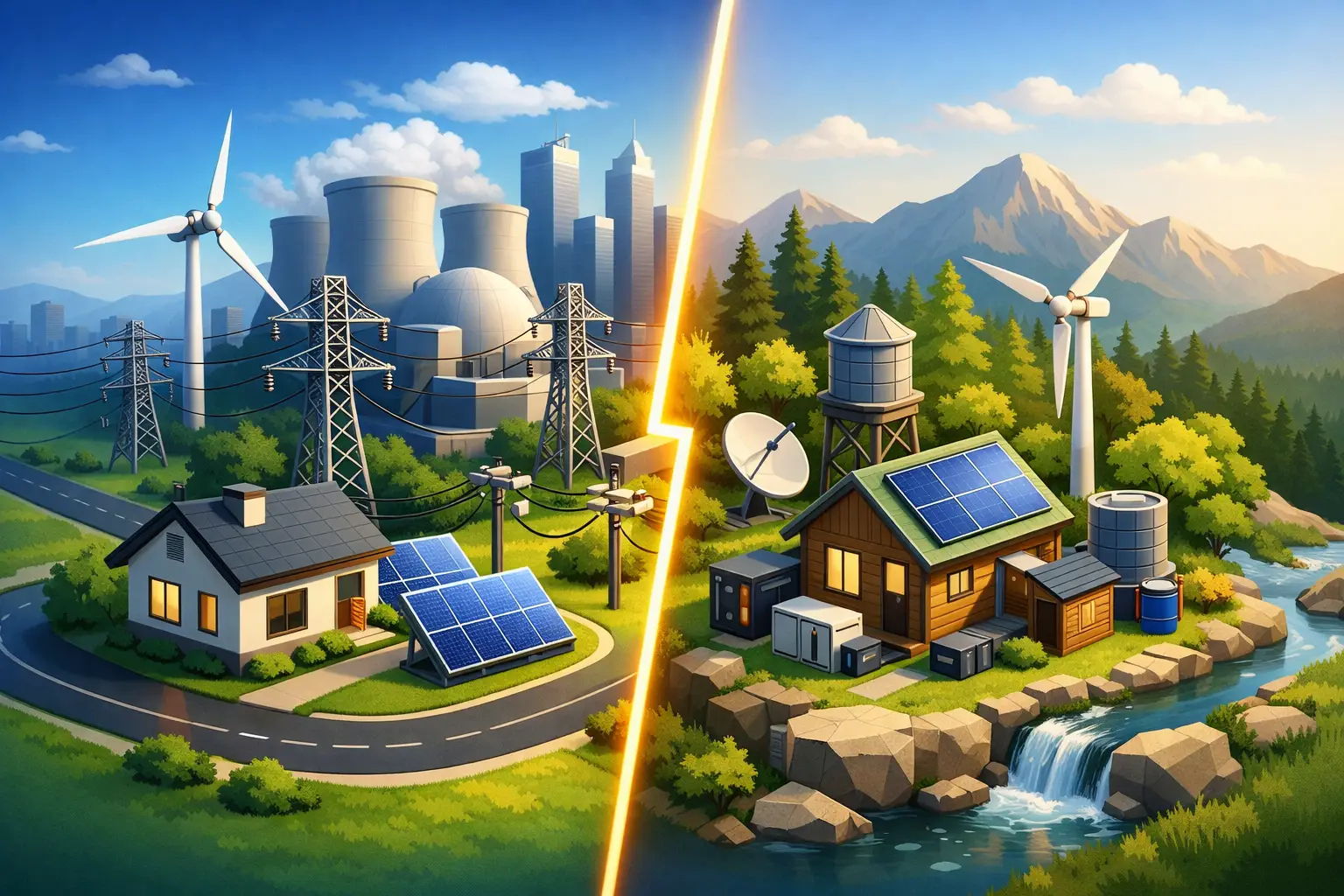
A solar system can cut the electricity you buy from the grid, but it does not automatically keep your property running when the local supply fails. That distinction sits at the centre of the on grid vs off grid decision. For most UK homes and businesses, the best answer is not complete disconnection. It is a properly designed grid-connected solar and battery system that delivers meaningful savings while retaining the security of the grid.
The right arrangement depends on your electricity use, your appetite for independence, available budget and how much disruption an outage would cause. A family home, a farm outbuilding and a small business with refrigeration all have very different priorities.
What is an on-grid system?
An on-grid, or grid-tied, system remains connected to the public electricity network. Solar PV panels generate electricity during daylight hours, supplying your property first. Any unused generation can charge a battery, where fitted, or be exported to the grid.
When solar generation is low, such as overnight or during winter, you simply import electricity as normal. This is why on-grid solar is usually the most practical starting point for occupied homes and commercial premises. The grid covers the periods when your panels cannot meet demand, so the system does not need to be oversized for every possible weather condition.
For eligible systems, exported electricity may earn payments through a Smart Export Guarantee tariff. The rate and terms vary by supplier, so export income should be treated as part of the financial picture rather than the main reason for installing solar.
A standard grid-tied solar installation will switch off during a power cut. This is a safety requirement that prevents electricity being fed back into local network cables while engineers may be working on them. If backup power matters, it must be designed into the system.
What is an off-grid system?
An off-grid system has no connection to the electricity network. It must generate, store and manage all the energy a property needs, every day of the year. Solar panels and batteries are central to the design, but many off-grid properties also need a backup generator for extended low-light periods or high-demand events.
This approach makes sense where getting a grid connection is impossible, delayed or prohibitively expensive. Remote buildings, agricultural sites, temporary installations and certain rural properties can be good candidates. It can also suit owners who have a clear reason to operate independently and are willing to accept the additional cost and planning involved.
The challenge in the UK is winter. Short days, cloud cover and higher heating-related demand can produce a large gap between generation and consumption. An off-grid system therefore needs careful load calculations, generous battery capacity and a realistic plan for poor-weather periods. Designing around a sunny summer week is a costly mistake.
On grid vs off grid: the practical differences
The biggest difference is where your backup energy comes from. An on-grid property can import electricity whenever solar output and battery charge are insufficient. An off-grid property must have enough stored energy or backup generation to cover that same shortfall.
That makes off-grid installations more demanding and usually more expensive. More panels may be required to capture useful winter generation, while larger batteries are needed to carry the property through evenings and dull days. The inverter, protection equipment and generator integration also need to be specified for the actual loads you intend to run.
On-grid systems are generally simpler to install and easier to scale. A homeowner might begin with solar PV and add battery storage later, while a business may install a larger array to reduce daytime imports before considering backup capability. The public grid remains a valuable resource, not a failure of the system.
There is also a lifestyle consideration. Off-grid living requires awareness of energy use. Running several high-load appliances, charging an EV and using electric heating at the same time can drain batteries quickly when solar production is limited. Grid-connected users retain much more flexibility, even if they still aim to maximise self-consumption.
The middle ground: solar, batteries and backup power
Many people asking about on grid vs off grid are actually looking for a hybrid solution. A hybrid system stays connected to the grid but includes battery storage and, where required, an emergency power supply function.
During normal operation, solar generation powers the building, charges the battery and can export surplus electricity. During a grid outage, a compatible battery and inverter can supply selected essential circuits. Depending on the system design, this might include lighting, broadband, refrigeration, sockets and controls for a heating system.
It is important to be precise about what “backup” means. Not every battery system provides power during an outage, and not every backup-enabled system can run the entire property. High-demand equipment such as electric showers, cookers, heat pumps, workshops and rapid EV chargers may need to be excluded or carefully managed. A dedicated essential-loads board is often the sensible solution.
For many households, this arrangement provides a strong balance: lower bills from solar and stored energy, useful protection from short outages, and no need to fund an entirely self-sufficient winter energy supply.
Costs, savings and system sizing
The lowest upfront cost is normally a straightforward on-grid solar PV system. Adding a battery increases the initial investment but can raise self-consumption by storing surplus generation for use later in the day. Batteries can also be useful for charging from cheaper time-of-use tariffs, where this suits the household's tariff and usage pattern.
An off-grid installation has a higher capital cost because it must be built for reliability rather than average annual savings alone. The system needs to cope with reduced solar production, unexpected loads and battery reserve. Skimping on capacity may result in regular generator use, which undermines the convenience and environmental benefit many owners expect.
Accurate sizing starts with real electricity data. Half-hourly smart-meter information, bills, operating hours and a list of major electrical loads give a far better picture than guessing from the number of occupants. For businesses, demand profiles matter particularly: a workshop that operates in daylight may gain strong value from solar, while a site with significant evening loads may benefit more from battery storage.
Avoid promises of zero electricity bills without examining the detail. Standing charges, winter imports, changes in consumption and equipment performance all affect the outcome. A well-designed proposal should explain expected generation, likely self-consumption, battery operation and the assumptions behind projected savings.
Grid connection, approvals and installation quality
Grid-connected solar and battery systems require the correct notification or approval process with the local Distribution Network Operator. Smaller installations commonly follow G98 requirements, while larger or more complex systems may need G99 approval. Export limits can also influence the system design.
Using an experienced installer matters because solar, batteries, consumer units, EV charging and backup supplies must work safely as one electrical system. Cable routes, isolation, earthing, inverter placement, fire considerations and future expansion should be addressed before installation rather than added as an afterthought.
For homeowners who want access to relevant export arrangements or incentives, MCS-accredited installation is an important consideration. It also provides reassurance that the design and commissioning process meets recognised industry standards.
RJ Hill Electrical designs solar PV, battery storage and electrical upgrades as connected systems, with practical advice based on how the property actually uses energy. For customers across Lincolnshire, Norfolk, Cambridgeshire, Rutland and Leicestershire, a site assessment can identify whether grid-connected solar, battery backup or a fully off-grid design is justified.
Which option is right for your property?
Choose a standard on-grid solar system when the priority is reducing daytime electricity costs with the most straightforward investment. It is particularly effective where people are at home during the day, where a business operates in daylight hours, or where appliances can be timed to use solar generation.
Consider an on-grid solar and battery system when you want to use more of your own generation after sunset, reduce reliance on peak-price imports or keep selected circuits running during outages. This is often the most balanced option for UK properties seeking greater energy resilience.
Consider fully off-grid power only when a grid connection is unavailable, impractical or unusually expensive, or when complete independence is a deliberate and well-funded objective. It should be planned around winter demand and worst-case conditions, not just annual solar figures.
Before choosing, collect a year of electricity information where possible and decide what resilience means to you. If a power cut would merely be inconvenient, grid-connected solar may be enough. If it would stop critical business operations, affect vulnerable occupants or leave a remote property without essential services, battery backup or an off-grid design deserves closer attention.
The most useful energy system is not the one with the boldest claim of independence. It is the one that matches your loads, budget and future plans, then delivers dependable savings year after year.