
How Solar Panels Reduce Bills in UK Homes
18 July 2026 | By RJ Hill Electrical
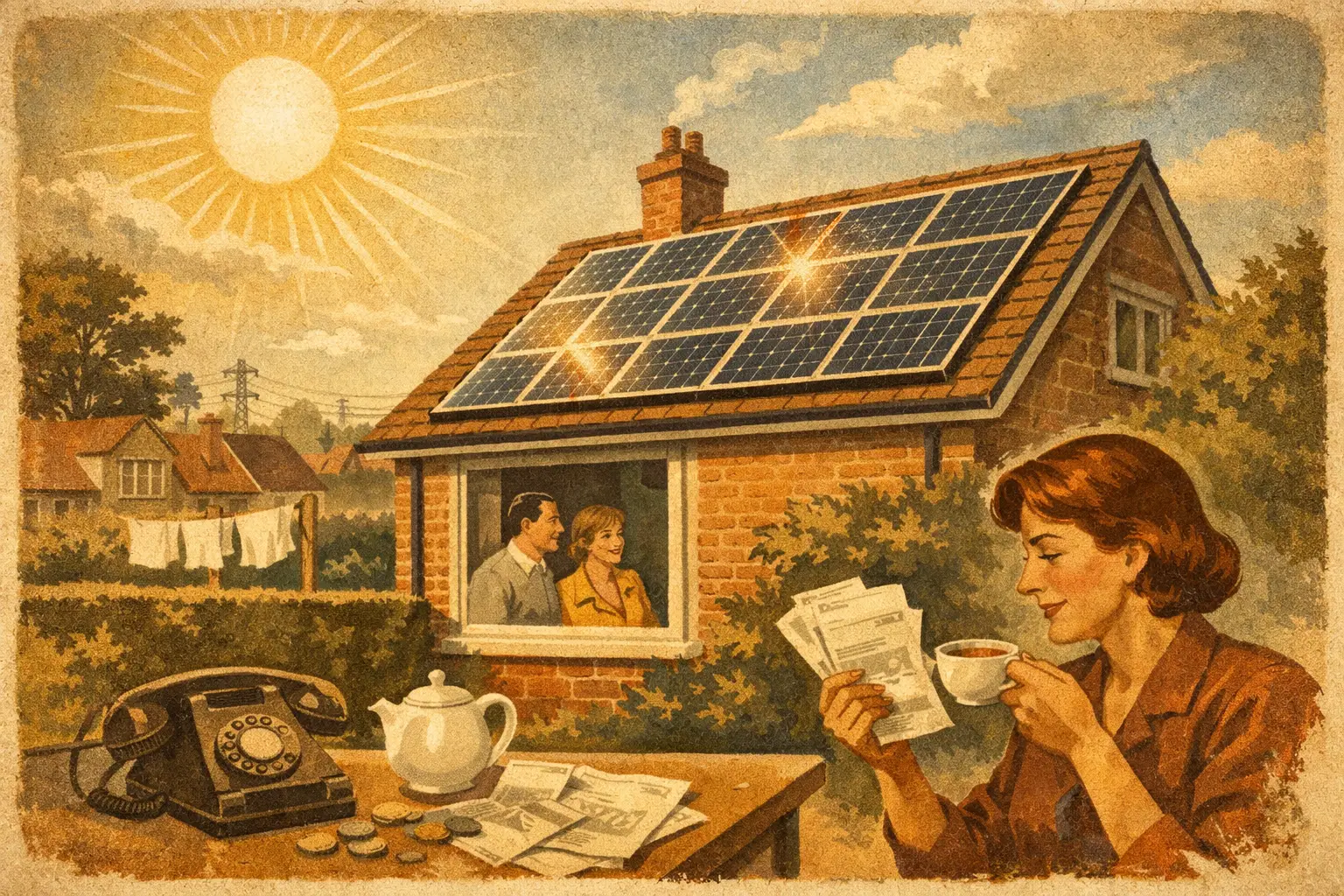
A solar system starts saving money the moment your property uses electricity generated on the roof instead of buying that electricity from the grid. That is the central answer to how solar panels reduce bills: they replace a portion of your imported electricity with power you have produced yourself. For households and businesses facing uncertain energy prices, that can make a meaningful difference over the life of the system.
The strongest results do not come from simply fitting as many panels as possible. They come from designing a system around the property, its daytime demand, roof space, usage patterns and future plans such as battery storage or an electric vehicle. A well-designed Solar PV installation gives you more control over when and where your electricity is used.
How solar panels reduce bills day to day
Solar photovoltaic panels convert daylight into electricity. This electricity is used first by the appliances and equipment operating in the building at that time. If the washing machine, lighting, fridge, computers or heat pump are running while the system is generating, the property draws less power from the grid.
This is known as self-consumption, and it is usually where the greatest saving is made. Every kilowatt-hour of solar electricity used on site is a kilowatt-hour you do not need to buy from your energy supplier at the applicable import rate.
Generation is not limited to hot, cloudless days. Panels work in daylight, including bright overcast conditions, although output is lower in winter and on darker days. In the UK, a south-facing, unshaded roof often produces the highest annual total, but east- and west-facing arrays can also be very effective. In fact, a split east-west system may suit homes where electricity use is higher in the morning and late afternoon.
Your bill falls in three main ways: by using solar electricity as it is produced, by storing surplus power for later use, and by receiving payment for eligible electricity exported to the grid. The value of each route depends on your tariff and how you use energy.
Using more of the power you generate
A solar installation can generate substantial electricity around the middle of the day, when many properties are quiet. Without changes to your routine, some of that output may be exported. Exporting is useful, but using solar power yourself will often provide a better return than exporting it at a lower rate and then buying electricity back later at a higher one.
Small adjustments can improve self-consumption without making life inconvenient. Running the dishwasher, washing machine or tumble dryer during sunny periods can help. Timers and smart controls can schedule suitable appliances to operate when generation is expected. For business premises, daytime occupancy can be an advantage because lighting, IT equipment, refrigeration and machinery may naturally use power while the array is producing it.
Electric vehicle charging is another strong match for solar. If a vehicle is at home during the day, a compatible charger can prioritise surplus solar generation. This does not mean every mile will be powered solely by the sun, particularly in winter, but it can reduce the cost of charging over a year.
Heat pumps, immersion heaters and hot-water controls can also be integrated thoughtfully. The right approach depends on the building and its heating system. Sending surplus solar electricity to heat water can be worthwhile in some homes, while others may see a better overall result from battery storage or a tariff-led strategy.
Battery storage keeps solar savings for later
A battery stores unused solar electricity rather than sending all of it to the grid. It can then supply the property in the evening, overnight or during a period of low solar generation. For many households, this is the missing piece between generating power in the day and needing it after work, when cooking, lighting and entertainment increase demand.
Battery storage can raise the proportion of generated electricity used on site, but it is not automatically right for every property. Batteries add to the initial investment, have a finite usable capacity and experience some energy loss during charging and discharging. Their value depends on your consumption profile, electricity tariff, solar output and expected future electricity needs.
They can be particularly useful alongside time-of-use tariffs. A battery may charge from low-cost off-peak electricity when solar output is limited, then reduce grid imports at more expensive times. This can help make bills more predictable, although tariffs change and a system should not rely on a single rate remaining available indefinitely.
For customers who value resilience, some battery systems can also be specified with backup capability. This requires suitable equipment and design. A standard battery installation does not necessarily keep a property powered during a grid outage, so this should be discussed at the survey stage rather than assumed.
Export payments add value to surplus generation
When your panels produce more electricity than the building can use or store, the excess can be exported to the grid. Through the Smart Export Guarantee, energy suppliers offer export tariffs for eligible customers. Rates, terms and metering requirements vary between suppliers, so it is worth reviewing both your import and export arrangements rather than looking only at one headline price.
Export income should be treated as part of the financial picture, not the sole reason for installing solar. A system designed purely to maximise exported electricity may not deliver the best savings for a property with high evening demand. In many cases, a balanced design that supports on-site use, sensible storage and export of genuine surplus is more effective.
An MCS-certified installation is important for customers who want access to applicable export arrangements and documented installation standards. It also provides confidence that the system has been designed, installed and commissioned through an established quality framework.
System design has a direct effect on savings
Panel output is only one part of the calculation. The inverter, roof orientation, shading, cable routes, consumer unit capacity and monitoring all affect how well the system performs. A professional survey identifies practical constraints before installation and avoids promises based on idealised figures.
Shading deserves particular attention. A chimney, neighbouring building, tree line or dormer window can affect generation at certain times of day. Modern panel-level optimisation can help in appropriate situations, but it is not a substitute for understanding the site properly. Equally, a smaller well-positioned system can sometimes offer better value than a larger array compromised by shade.
Your annual electricity usage matters as much as roof size. A family working from home may consume more daytime solar energy than a household empty from morning until evening. A small business with steady weekday demand may have an excellent solar profile, while a seasonal operation may need a different approach. Accurate consumption data gives the clearest starting point for sizing a system.
Future changes should be considered too. If you expect to buy an electric vehicle, install a heat pump, convert a garage or expand business operations, allowing for these loads at the outset can prevent an undersized system. The electrical infrastructure must be assessed alongside the panels, particularly where batteries, EV chargers and backup supplies are planned.
What savings can you realistically expect?
There is no honest single figure for solar savings. Output changes by season, weather and roof characteristics. Savings depend on the electricity price you avoid, the export rate you receive and how much of the generated electricity you use yourself. The more expensive grid electricity becomes, the more valuable every unit of solar electricity used on site can be, but tariff movements work both ways.
A detailed proposal should set out estimated annual generation, likely self-consumption, export assumptions and the role of any battery. It should make clear which figures are forecasts rather than guarantees. This gives you a sound basis for comparing options and understanding payback over the system's working life.
Solar should also be viewed as a long-term energy improvement rather than a short-term bill discount. Panels typically continue generating for many years, helping reduce exposure to future electricity price rises while lowering the property's carbon footprint. For landlords and businesses, lower operating costs and a more energy-efficient building can also support wider commercial goals.
Make the system work after installation
Monitoring is where planned savings become visible. Most modern systems provide an app or portal showing generation, household consumption, battery status and grid import or export. Checking this data in the first few months helps you spot useful changes, such as moving a regular appliance cycle into the daytime or adjusting battery settings to suit your tariff.
Maintenance requirements are generally modest, but the system should not be ignored. Visual checks, inverter monitoring and professional inspection when needed help protect performance and identify faults early. Trees can grow into a shading issue, and a change in household demand can alter whether battery settings still suit the property.
For homeowners and businesses across Lincolnshire, Norfolk, Cambridgeshire, Rutland and Leicestershire, a properly surveyed Solar PV system can turn unused roof space into a practical source of lower-cost electricity. The most useful next step is a tailored quotation based on your actual bills, roof and future energy plans, so the system is built to reduce the costs that matter to you.