How EV Charger Installation Works at Home
6 July 2026 | By RJ Hill Electrical
Buying an electric vehicle is the easy part. The real question usually comes a few days later, when you realise a standard three-pin plug is too slow for daily use and public charging is not always convenient. That is where understanding how EV charger installation works helps. Once you know the steps, it becomes much easier to plan the job properly, avoid delays and choose a setup that suits your property and driving habits.
For most homes and small commercial premises, EV charger installation is a straightforward electrical project, but it is not a one-size-fits-all job. The charger itself matters, but so do your incoming supply, your consumer unit, cable route, parking arrangement and whether you want the system to work alongside solar or battery storage. A good installation is not just about getting power to the vehicle. It is about doing it safely, reliably and in a way that keeps running costs under control.
How EV charger installation works from first survey to switch-on
The process usually starts with a site survey or detailed quotation stage. This is where the installer looks at the property, the parking position and the existing electrical infrastructure. In many cases, the charger is fitted on an external wall close to the driveway, but that is only one option. Some properties need a longer cable run, a pedestal mount or a route that avoids internal disruption.
At this stage, the installer will also ask practical questions. What vehicle do you have, or plan to buy? How many miles do you typically drive in a week? Do you want a simple charger or a smart unit with app control, scheduling and energy monitoring? If you already have solar panels or plan to install them, that can affect the best charger choice.
The electrical assessment is the part that tends to matter most. An installer needs to confirm whether your supply can support the charger safely. Most domestic chargers are 7kW units, which are well suited to overnight charging. They are much faster than a standard socket, but they still have to be designed around the capacity of the property. In some cases, additional protection or load management is needed so the charger does not overload the system when other high-demand appliances are running.
What happens before installation day
Once the charger location and specification are agreed, the installer plans the circuit. EV chargers should be supplied by a dedicated circuit rather than shared with other equipment. That means running suitable cabling from the consumer unit to the charger position and selecting the right protective devices.
Before work begins, there may also be checks linked to the Distribution Network Operator, depending on the charger type and the installation arrangement. In practice, an experienced installer manages this part and makes sure the system is installed in line with current requirements. For the customer, the main benefit is peace of mind that the charger has been fitted correctly and notified where needed.
The charger itself will usually be chosen based on three things: charging speed, smart functionality and how it fits into the wider energy setup of the property. Some households just want dependable overnight charging. Others want to schedule charging for off-peak tariffs, monitor usage through an app or divert surplus solar generation into the vehicle. None of these is right or wrong. It depends on how you use the car and what matters most to you - convenience, cost savings or future flexibility.
The installation itself
On installation day, the first step is usually isolating the electrical supply where required and preparing the cable route. Some jobs are simple because the charger can go close to the consumer unit. Others take longer if cables need to pass through lofts, garages, outbuildings or external trunking runs.
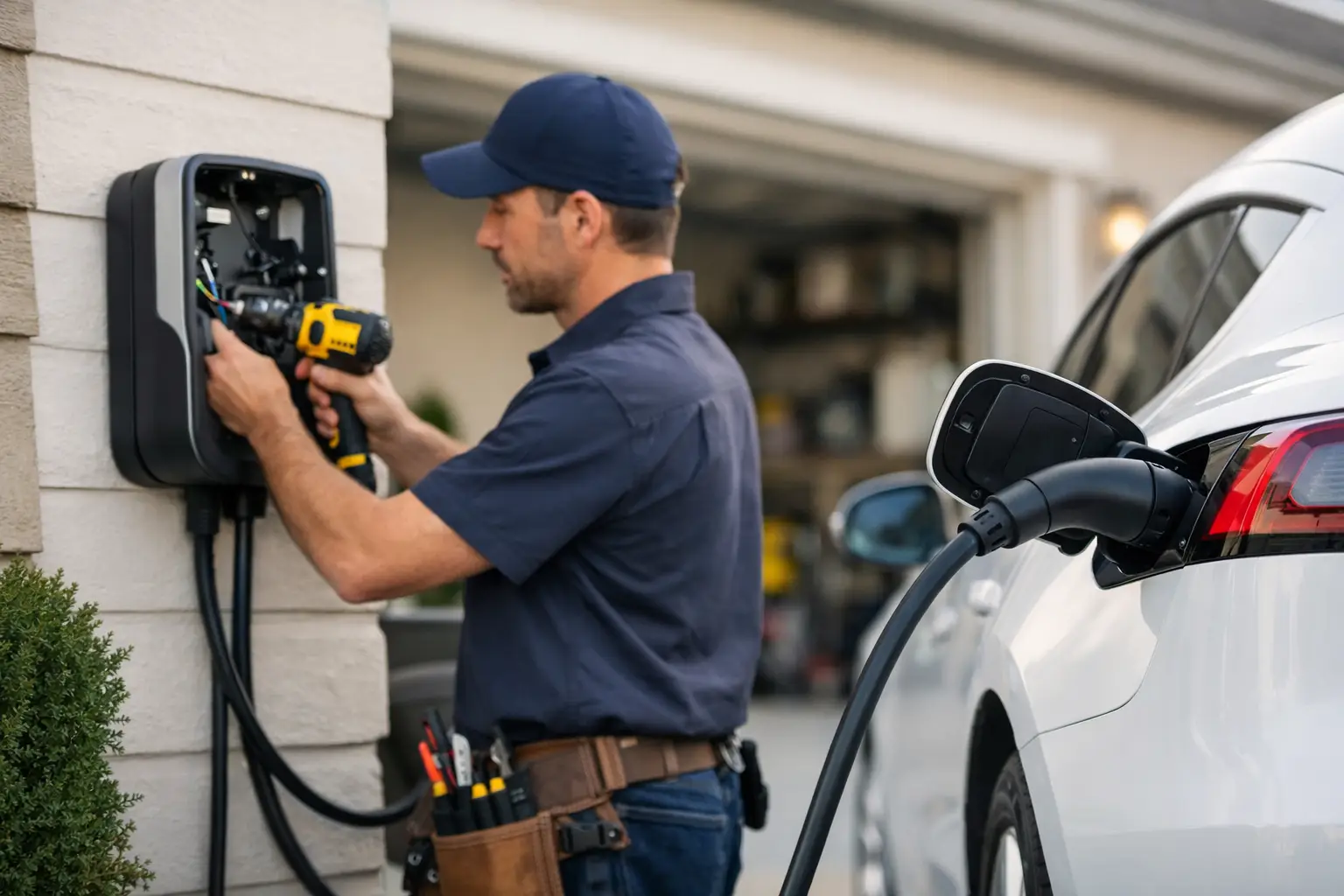
The installer then mounts the charger securely and runs the dedicated supply cable back to the board. They fit the necessary protective equipment and make all electrical connections in line with the design. If the charger is a smart model, there may also be a setup stage for Wi-Fi or app connectivity.
A tidy finish matters more than many people expect. The charger may be outside your home or business for years, so cable routing, fixing positions and weather protection all make a difference. Good workmanship is not just visual. It helps protect the installation from damage, moisture ingress and unnecessary maintenance issues later on.
How EV charger installation works with your existing electrics
This is where many properties differ. Some installations are very straightforward because the consumer unit is modern, the earthing arrangement is suitable and the parking space is close by. Others need extra work.
If the existing board lacks spare ways, a small additional enclosure may be needed. If the incoming supply is limited, load balancing can help manage demand automatically. That means the charger reduces output when the property is using more electricity elsewhere, then increases it again when demand drops. It is a practical solution where an upgrade to the supply is not necessary or would add avoidable cost.
Older properties can need a little more attention, especially where the electrical installation has not been updated for some time. That does not mean an EV charger cannot be fitted. It simply means the installation may need a few enabling works first to bring everything into a safe and suitable condition.
Smart charging, tariffs and solar integration
For many customers, the charger is only part of the value. The bigger benefit comes from charging at the right time and at the right rate. A smart charger allows you to schedule charging for cheaper off-peak periods, which can make a noticeable difference over the course of a year.
If you have solar PV, the charger can also become part of a wider energy strategy. Rather than exporting all excess generation, some systems can prioritise charging the car when solar production is high. That will not cover every journey, especially in winter, but it can reduce the cost of motoring significantly during brighter months.
This is where working with an installer who understands both electrical systems and renewable technologies adds real value. It is much easier to get the right outcome when the charger is considered as part of the whole property, not as a standalone accessory.
How long it takes and what can affect the cost
A standard domestic installation can often be completed within a day, particularly where the cable run is short and the existing electrics are in good order. More complex jobs may take longer if there is a difficult route, a detached garage, groundworks for a pedestal or additional electrical upgrades.
Cost varies for the same reason. The charger unit itself is only one part of the price. Labour, cable length, protective devices, board modifications and any groundwork or remedial electrical work all influence the final figure. That is why a proper quotation matters. A low headline price does not always reflect what the installation actually requires.
For businesses, there are additional considerations such as multiple chargers, user access, load management across several charge points and future expansion. Installing one charger is one thing. Planning for a fleet or staff parking area is another, and getting the infrastructure right early can save money later.
After installation: testing, certification and setup
Once the charger is fitted, the installer carries out electrical testing and verification. This confirms the circuit is safe, the protective devices operate correctly and the charger functions as intended. The unit is then commissioned, which usually includes checking charging performance and setting up any smart controls.
You should also receive the relevant certification for the electrical work. That paperwork is part of the job, not an optional extra. It shows the installation has been tested and completed properly.
A good handover is just as important. Customers should be shown how to start and stop charging, how to use any scheduling features and what to do if the unit displays a fault. Most chargers are simple once set up, but a clear explanation helps you get the benefit straight away.
Choosing the right installer
If you are comparing quotes, the key question is not just what charger is being offered. It is whether the installer is properly assessing the property, explaining the options clearly and designing a system that works well over time. The right job is safe, compliant and suited to how you actually use the vehicle.
That matters even more if you are planning wider energy improvements. A charger installed today may later sit alongside solar panels, battery storage or a broader electrical upgrade. Choosing an experienced contractor means those decisions can be joined up rather than tackled as separate projects.
For homeowners and businesses across areas such as Lincolnshire, Norfolk, Cambridgeshire, Rutland and Leicestershire, that practical joined-up approach is often what makes the difference between a basic installation and one that genuinely supports lower energy costs.
A well-installed EV charger should feel simple once it is in place. The planning behind it is what makes that possible - safe electrics, sensible design and a setup that works for your property rather than against it.