How Electrical Maintenance Prevents Faults
5 July 2026 | By RJ Hill Electrical
A fuse board rarely fails without warning. More often, there are signs first - tripping circuits, warm sockets, flickering lights, odd noises, falling system performance, or equipment that starts behaving unpredictably. The reason this matters is simple: how electrical maintenance prevents faults is not about avoiding minor inconvenience alone. It is about stopping small defects from becoming safety risks, downtime, expensive call-outs, or damage to the wider electrical system.
For homeowners and businesses investing in reliable power, solar, battery storage or EV charging, maintenance is part of protecting that investment. A system that is left unchecked will not usually stay at peak performance by chance. Electrical components age, connections loosen, environmental conditions change, and usage patterns shift over time.
Why faults happen in the first place
Electrical faults are not always dramatic. In many cases, they build slowly through wear, heat, moisture, vibration or overloading. A terminal connection can work loose over time. A protective device may become less reliable with age. Cabling can degrade if it has been exposed to poor conditions or installed in a way that no longer suits the present load.
In domestic properties, faults often appear where systems have evolved over the years. An older consumer unit may now be serving a modern home with higher demand from induction hobs, electric showers, home offices and EV chargers. In commercial settings, it may be distribution boards, lighting circuits, plant equipment or external installations taking more strain than originally planned.
Renewable systems add another layer. Solar PV, battery storage and EV charging are all dependable when designed and installed correctly, but they still rely on sound electrical infrastructure. If the core installation is neglected, faults can affect both safety and performance.
How electrical maintenance prevents faults in practice
Maintenance works because it deals with root causes before they develop into failures. That sounds straightforward, but the real value lies in what is being checked and why.
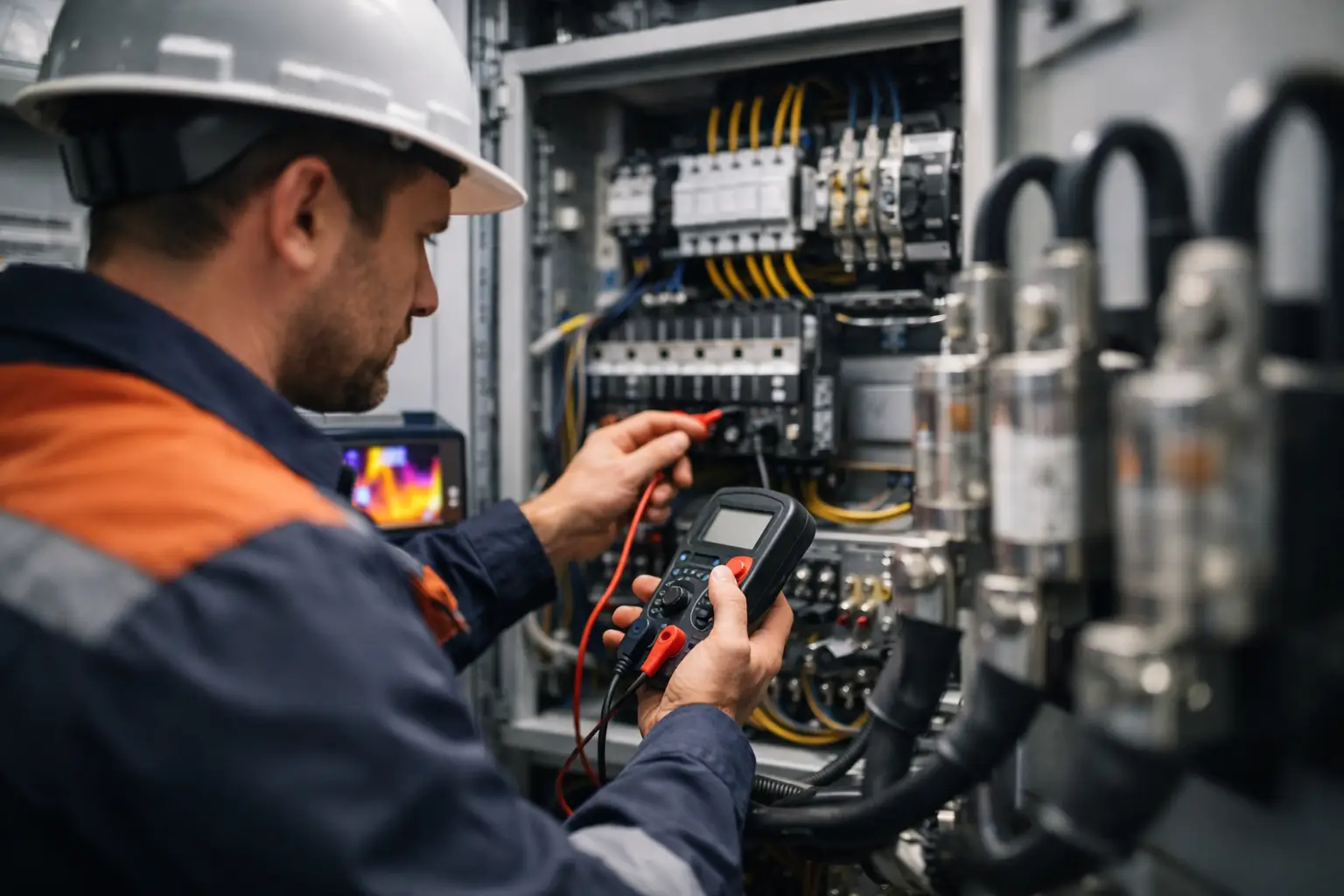
A proper inspection looks at the condition of the installation, the suitability of protective devices, the integrity of terminations, signs of overheating, insulation resistance, earthing and bonding, and whether circuits are being used as intended. Testing then confirms whether the system is operating within safe parameters rather than simply appearing fine on the surface.
This is where preventative work earns its keep. A slightly loose connection may not seem urgent until it creates heat. Heat leads to deterioration, and deterioration can lead to nuisance tripping, damaged equipment or fire risk. Catching that connection during maintenance is far cheaper than dealing with the aftermath.
The same logic applies to overloaded circuits. A property may have had extensions, new appliances or renewable upgrades added over time. Maintenance highlights when the electrical system has not kept pace with the building's needs. That gives you a chance to correct the issue properly, rather than waiting for repeated trips or a full failure.
Early detection saves money as well as disruption
Reactive repairs are nearly always more expensive than planned maintenance. When something fails unexpectedly, there is urgency, possible loss of power, and sometimes damage to connected equipment. If the fault affects a business, there may also be downtime, lost productivity and disruption to staff or customers.
By contrast, maintenance gives you control. Work can be scheduled, issues can be prioritised, and components can be replaced before they create larger problems. Not every issue needs major remedial work either. Sometimes a fault risk is resolved by tightening connections, balancing loads, replacing worn accessories or updating protective devices.
That balance matters. Good maintenance is not about recommending unnecessary work. It is about knowing which issues genuinely affect safety, compliance and long-term performance, and which can be monitored or addressed as part of planned improvements.
How electrical maintenance prevents faults in solar and battery systems
If you have invested in solar PV or battery storage, maintenance is also about performance. A system may continue operating while underperforming, and that can go unnoticed for months if nobody is checking it properly. Faults in isolators, cabling, protective equipment or connections may not shut the whole system down immediately, but they can reduce output, affect charging behaviour or shorten component life.
This is particularly relevant where electrical and renewable systems interact. A battery system depends on correct protection, sound connections and suitable configuration. An EV charger adds a significant load and must be integrated correctly with the rest of the installation. Solar generation can reduce bills well, but only if the supporting electrical system remains in good order.
For that reason, maintenance should not be treated as an afterthought once installation is complete. Ongoing checks help confirm that your system is still safe, still efficient and still delivering the financial benefit you expected.
Fault prevention is also about compatibility
One of the most common issues in upgraded properties is not a defective product but a mismatch between old infrastructure and new technology. A home may have solar panels and battery storage fitted onto an installation that also needs consumer unit improvements. A business may add EV charging without fully reviewing load demand across the site.
Maintenance helps identify those pressure points. It answers practical questions such as whether the existing board is suitable, whether cable routes remain sound, whether protection remains coordinated, and whether expansion has introduced new risks. That is especially useful for property owners trying to build towards lower energy bills and greater energy independence without creating hidden weaknesses elsewhere.
What regular maintenance usually includes
The exact scope depends on the building, the age of the installation and the equipment involved. A domestic inspection will differ from a commercial maintenance visit, and both differ again if solar, storage or off-grid elements are part of the system.
Even so, the principle stays the same. Maintenance usually combines visual inspection with testing, supported by a clear report on condition, faults found and any recommended action. In some cases, thermographic checks are useful for identifying hotspots before they become visible failures. In others, the priority may be verifying earthing arrangements, checking circuit loading or reviewing protective devices against current use.
The right frequency depends on the environment. A modern, lightly used domestic installation may need less frequent attention than a busy commercial site with heavier loads and more wear. Outdoor equipment, agricultural settings, workshops and older properties often need closer monitoring because conditions are harsher or infrastructure is more likely to have aged.
The safety side should not be underestimated
When people think about faults, they often think first about inconvenience. Lights go out, a charger stops working, a system trips. But some faults carry much higher stakes. Poor earthing, damaged insulation, overheating components or deteriorating protective devices can all create serious risk.
Preventative maintenance reduces that risk by making the hidden visible. Many dangerous defects are not obvious in day-to-day use. A socket may still work while its connections are overheating. A circuit may keep running while protective measures are no longer as effective as they should be. Testing is what tells you whether the installation is genuinely safe, not just operational.
That is particularly relevant for landlords, employers and commercial premises where legal duties also come into play. In those settings, maintenance is not only sensible asset protection. It is part of meeting responsibilities to occupants, staff and visitors.
When maintenance matters most
There are certain points where electrical maintenance becomes especially worthwhile. One is before adding new equipment such as solar PV, battery storage, air conditioning or EV charging. Another is after moving into an older property where the history of the installation is unclear.
It also matters if you are seeing warning signs: recurring trips, discoloured accessories, unusual smells, buzzing, inconsistent performance or rising energy use without a clear reason. None of these automatically means major failure is imminent, but they do mean the system should be assessed.
For businesses, maintenance becomes even more valuable where continuity matters. A planned inspection is far easier to manage than losing lighting, power or charging capability during trading hours. For homes, it protects both comfort and long-term value, especially where energy-saving upgrades are part of a wider plan.
Choosing the right approach
The best maintenance plans are proportionate. There is no sense in treating every property the same. A small home with a straightforward setup does not need the same strategy as a farm building, office, retail unit or property with integrated renewables and backup storage.
What does matter is using a qualified electrical contractor who can look at the whole picture. Fault prevention works best when the person inspecting the system understands not just basic wiring, but how modern electrical demand, renewable generation and future expansion fit together. That joined-up view is often where avoidable faults are spotted before they become expensive ones.
With more than 20 years of electrical experience behind many modern installations and upgrades, the standard should be practical advice, clear reporting and maintenance that protects both safety and performance.
A well-maintained electrical system is rarely something you notice day to day, and that is the point. It keeps power where you need it, protects the equipment you rely on, and gives your home or business a stronger foundation for lower bills and better energy resilience over time.