Guide to Electrical Safety Certificates in the UK
31 August 2026 | By RJ Hill Electrical
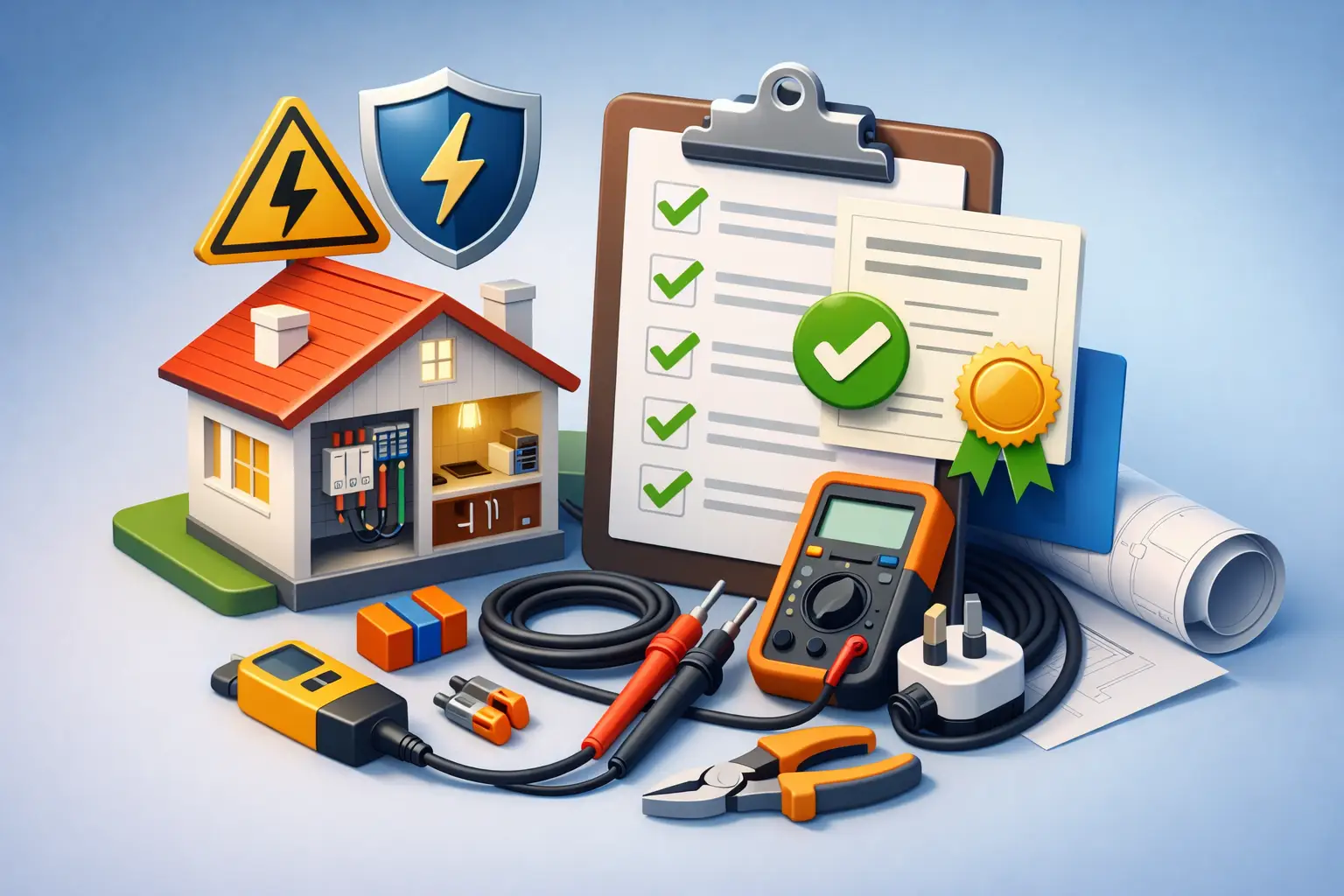
An electrical certificate is not just paperwork to file away after a job. It records whether an installation has been inspected, tested and found safe for continued use, or whether work is needed to reduce risk. This guide to electrical safety certificates explains which documents matter, when they are required and what the results mean for homeowners, landlords and businesses.
For a property with solar PV, battery storage or EV charging, good certification is especially valuable. These systems add high-demand equipment and new circuits to an existing installation. Clear, accurate records help protect people, support future maintenance and give confidence that the work has been completed to the appropriate standards.
What is an electrical safety certificate?
“Electrical safety certificate” is a useful everyday term, but it can describe several different documents. The right certificate depends on whether an electrician has inspected an existing installation, completed new electrical work, or carried out a small alteration.
In most cases, the documents are produced following work carried out in line with BS 7671, the British Standard commonly known as the IET Wiring Regulations. They are evidence of the condition of an installation at a particular point in time. They do not mean an electrical system will remain fault-free indefinitely. Wear, accidental damage, water ingress, alterations and overloaded circuits can all change its condition after the certificate has been issued.
The three documents property owners are most likely to encounter are an Electrical Installation Condition Report, an Electrical Installation Certificate and a Minor Electrical Installation Works Certificate.
The main types of electrical safety certificates
Electrical Installation Condition Report (EICR)
An EICR is an assessment of the condition of existing fixed wiring and electrical equipment. During an inspection, a competent electrician checks accessible parts of the installation and carries out tests to identify faults, deterioration and potential safety concerns.
An EICR is often requested when buying a property, preparing a rental home, managing a commercial premises or simply checking an older installation that has not been assessed for some time. It is also a sensible starting point before adding a substantial load, such as an EV charger, solar battery or extension wiring.
The report will normally be recorded as either satisfactory or unsatisfactory. An unsatisfactory outcome does not necessarily mean the whole installation is dangerous or needs replacing. It means one or more observations need attention. The report should explain the issue, its location and its level of urgency.
Electrical Installation Certificate (EIC)
An Electrical Installation Certificate is generally issued for new electrical installations or significant alterations, including the installation of new circuits. It confirms that the design, construction, inspection and testing of the completed work have been considered.
Examples may include a new consumer unit, a full or partial rewire, a new distribution board in commercial premises, or dedicated circuits installed for renewable energy equipment. When a solar PV system, battery storage system or EV charger requires new wiring and protective devices, the related electrical work should be properly tested and certificated.
This matters because a satisfactory EICR on an existing property is not a substitute for certification of newly installed work. Each document has a different purpose.
Minor Electrical Installation Works Certificate
A Minor Works Certificate is used for smaller additions or alterations to an existing circuit, where a new circuit has not been created. It might apply to certain changes to accessories, lighting points or control equipment.
It is not appropriate for every small-looking job. Whether it can be used depends on the scope of the work and the condition of the circuit being altered. A competent electrician will determine which certificate is suitable rather than treating paperwork as an afterthought.
What happens during an EICR?
An EICR involves more than a quick visual check of sockets and a look at the consumer unit. The electrician assesses accessible wiring, protective devices, earthing and bonding arrangements, signs of heat damage, circuit labelling, and the suitability of the installation for its current use. Testing may include checks on insulation resistance, circuit continuity, polarity, earth fault loop impedance and RCD protection.
The extent of inspection depends on the property and whether parts of the installation can be accessed safely. Furniture, fitted units, floor coverings and building fabric can limit what is visible without destructive work. A professional report should make clear any limitations, rather than implying that inaccessible areas have been fully inspected.
Testing may require circuits to be temporarily isolated. For homes, this can mean arranging the inspection around working hours, refrigeration, internet equipment or medical needs. For businesses, it may require planned downtime to avoid disrupting trading, machinery or IT systems. The inconvenience is usually manageable with good planning, but it is worth discussing before the visit.
Understanding EICR observation codes
EICR observations use codes to show the seriousness of a finding. The most common are C1, C2, C3 and FI.
A C1 observation identifies danger present, with a risk of injury requiring immediate action. A C2 observation identifies a potentially dangerous condition that needs urgent improvement. FI means further investigation is required without delay because the electrician cannot confirm the safety of part of the installation. Any C1, C2 or FI result will make the report unsatisfactory.
A C3 observation means improvement is recommended. It does not make the EICR unsatisfactory on its own, but it should not automatically be ignored. Older consumer units, for example, may have been compliant when installed yet fall short of current good practice. The right decision depends on the wider condition of the installation, how the property is used and any planned upgrades.
If remedial work is completed, retain the relevant invoice and certificate alongside the original report. This creates a clear record for insurers, prospective buyers, tenants and future electricians.
How often do you need an electrical safety certificate?
There is no single interval for every building. The appropriate frequency depends on the type of property, the age and condition of the installation, the environment and how heavily it is used.
For owner-occupied homes, an EICR is commonly recommended at least every ten years, or when there is a change of occupancy. A shorter interval may be sensible for older properties, installations with known issues, homes that have undergone repeated alterations, or buildings with specialist equipment.
Private landlords in England must have the electrical installation inspected and tested at least every five years by a qualified and competent person. They must also provide the report to existing tenants within 28 days of the inspection, to new tenants before occupation, and to the local authority if requested. Requirements vary across the UK, so landlords in Wales, Scotland and Northern Ireland should check the rules that apply to their tenancy and property type.
Commercial premises have no simple universal five-year rule. Employers and duty holders must manage electrical risks, and inspection intervals should be based on a suitable assessment. A lightly used office and a busy workshop, farm building or commercial kitchen do not face the same level of wear or exposure.
Certificates for solar, batteries and EV chargers
Energy upgrades should be treated as part of the wider electrical system, not as isolated additions. Before installation, the existing consumer unit capacity, earthing, protective devices, cable routes and supply arrangements all need consideration.
A professionally installed solar PV system, battery or EV charger should come with the relevant electrical certification for the work completed, together with commissioning and product information. Solar installations may also require generation-related paperwork and network notifications. The exact documents depend on the system design, whether it exports electricity and the connection arrangement.
For homeowners, this paperwork is useful when selling a property, making an insurance enquiry or arranging future servicing. For businesses, it supports maintenance planning and helps demonstrate that electrical changes have been managed responsibly. It also avoids a common problem: installing valuable energy equipment on an electrical system that is already overdue for improvement.
At RJ Hill Electrical, system design takes account of the existing installation as well as the expected savings from solar, storage and EV charging. That approach helps ensure an upgrade performs safely and reliably over the long term.
Choosing the right electrician
The certificate is only as reliable as the inspection and testing behind it. Choose an electrician with the competence, test equipment and experience relevant to the work. For renewable energy projects, it is sensible to use an installer who understands how generation, storage and charging equipment interact with the rest of the property.
Be cautious of unusually cheap reports that promise a rapid pass without explaining the scope of inspection. A proper EICR takes time, particularly in larger homes and commercial properties. The most useful quotation sets out what will be inspected, any expected limitations, the cost of remedial work if faults are found, and how certification will be issued once work is complete.
Keep your certificates with other property records and review them before major alterations. A current, well-documented electrical installation makes it easier to plan improvements that reduce energy bills without compromising safety.