
EV Tariff Versus Solar Charging: Which Pays?
10 September 2026 | By RJ Hill Electrical
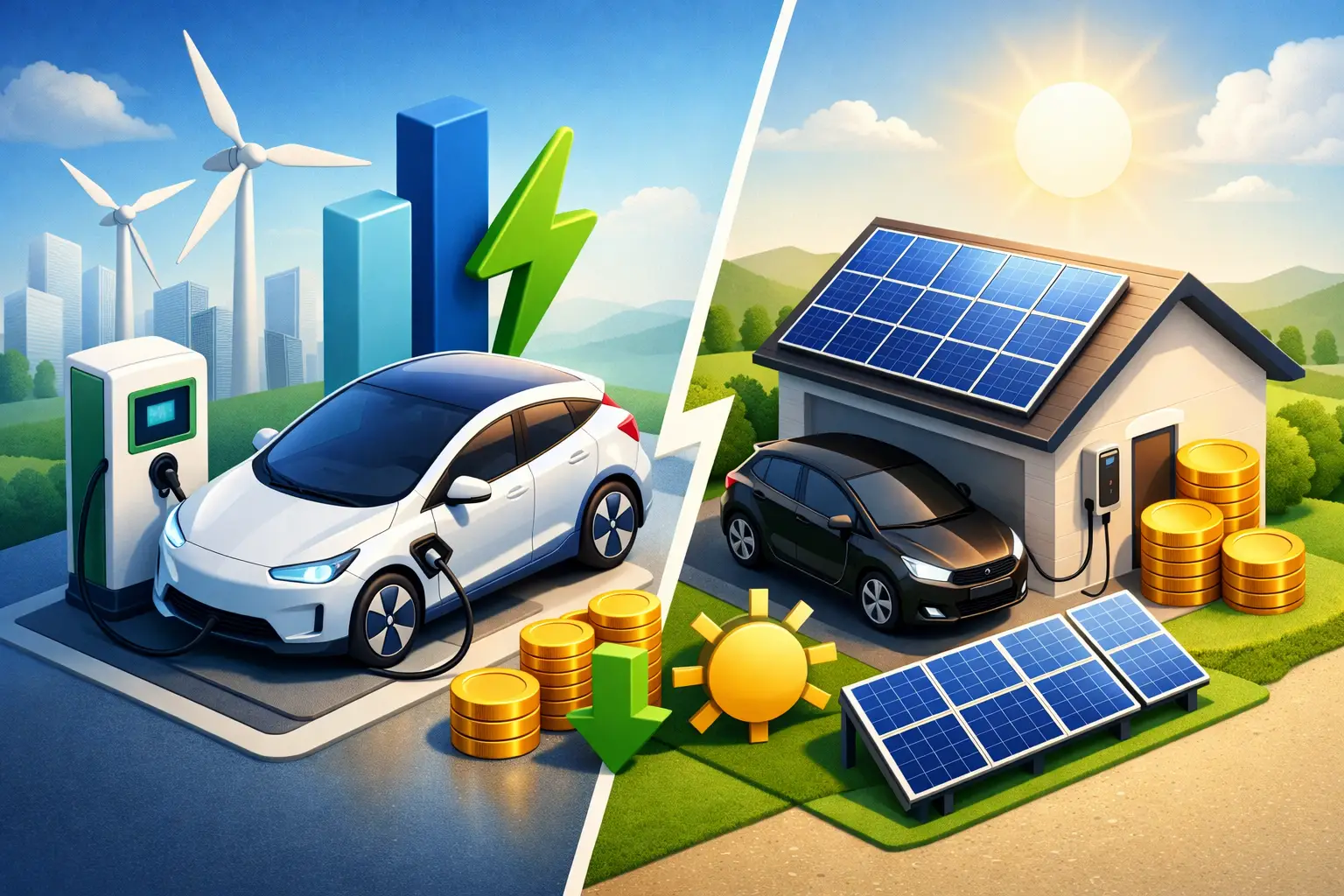
A home EV tariff versus solar charging is not a simple choice between cheap electricity and free sunshine. The lowest-cost approach usually comes from using both at the right times: solar when there is genuine surplus generation, and an off-peak tariff when the car needs a predictable overnight charge. The right balance depends on your driving, roof space, export payment, battery capacity and charger controls.
For households already considering Solar PV or an EV charger, this decision matters because charging an electric vehicle can become one of the largest electrical loads in the home. A system designed around how you actually use the car can reduce imported electricity without leaving the house short of power when demand rises.
EV tariff versus solar charging: the real cost
An EV tariff offers lower unit rates during set off-peak hours, commonly overnight. A compatible smart meter and EV charger can schedule charging automatically, so the vehicle is ready in the morning without you needing to plug in at a particular time. This is reliable, especially in winter, and it can be an excellent value option for drivers who cover regular mileage.
Solar charging uses electricity produced on your own roof. When the panels are generating more than the property is using, a smart charger can direct that surplus into the vehicle rather than exporting it to the grid. It is a very effective way to make better use of daytime generation, particularly for households with a car at home during the day.
However, solar electricity is not automatically free in financial terms. If surplus power could have been exported for payment, charging the car means giving up that export income. The useful comparison is therefore not simply solar generation versus the normal daytime import rate. It is the value of using a solar kilowatt-hour in the car compared with exporting it, alongside the cost of charging that same kilowatt-hour on an off-peak EV tariff.
For example, if exported solar earns less than the overnight charging rate, using surplus solar in the car may be the better option. If an unusually low EV tariff is available overnight and export payments are favourable, exporting solar and charging later may produce a stronger financial result. Tariffs change, so the figures should be checked against the rates available to your property rather than assumed.
Solar charging works best when the car is available
The biggest practical limitation is timing. Solar panels produce most power around the middle of the day, while many vehicles are parked at work, on the road or away from home. A large Solar PV system cannot charge a car from surplus energy if the car is not connected.
This is why home working, shift patterns and daytime parking arrangements should shape the system design. A household where the car sits on the drive from late morning to mid-afternoon can make strong use of solar diversion. A commuter leaving at 7am and returning after sunset will normally gain more from scheduled overnight charging, even with a substantial solar array.
Summer and winter also look very different. On a bright summer day, a solar array may cover household demand and still have meaningful energy available for the car. In December and January, generation is lower, days are shorter and domestic use is often higher. The EV will still need electricity, but much of it is likely to come from the grid. An off-peak tariff provides cost certainty through these lower-generation months.
That does not make solar charging less worthwhile. It simply means a good plan should not be based on summer performance alone. Solar can reduce charging costs and improve energy independence across the year, while the tariff provides a dependable low-cost fallback.
Charging speed can affect solar self-use
A standard home charge point can draw far more power than a typical solar array is producing at a given moment. If a charger is set to charge at its full rate, it may take solar generation, household electricity and grid import together.
A solar-aware charger changes this picture. It monitors generation and household consumption, then adjusts the charging level to follow available surplus power. This allows the EV to charge gradually when the sun is out, without unintentionally importing expensive electricity.
There is a trade-off. Variable solar charging is slower and can pause when clouds pass or household demand increases. If the car needs a guaranteed amount of charge by a set departure time, scheduled charging on an EV tariff is usually more practical. Many households use solar-surplus mode when time allows, then set an overnight schedule when they need certainty.
Where a home battery fits in
Battery storage can improve how solar generation is used, but it does not automatically make EV charging cheaper. The battery gives you more control over when electricity is used, stored or exported. It can hold surplus solar for evening household demand, reduce peak-rate grid imports and, on suitable tariffs, charge cheaply overnight for later use.
The key question is what should take priority: the house battery or the car battery? If solar is limited, sending all surplus to the vehicle may mean buying electricity for cooking, heating controls and evening use. In many homes, it is more cost-effective to cover the house first, then direct additional surplus to the EV.
Using a stationary battery to charge an EV also involves conversion losses and can cycle the battery more heavily. It is rarely the best reason to install storage on its own. Battery storage has greater value when it supports wider household goals, such as reducing peak imports, retaining solar for the evening and providing greater resilience alongside an appropriately designed backup solution.
A professionally planned system can set sensible priorities. For instance, it might maintain a battery reserve, cover current household demand, charge the EV from excess solar, and use low-cost overnight electricity when required. The best settings depend on the tariff, export arrangement and how much charge the car needs each week.
Choosing the best approach for your property
For most UK households, the answer is a blended strategy rather than choosing one method permanently. Solar charging is particularly attractive if you are at home in daylight hours, have a suitably sized PV system and can be flexible about when the car charges. An EV tariff is particularly useful if you drive daily, need reliable overnight charging or have limited winter solar generation.
Before selecting a charger, tariff or battery, look at your typical weekly mileage. A driver travelling 200 miles each week needs a different charging plan from someone using the car for local trips a few days a week. Also consider whether other large electrical loads run during the day, such as heat pumps, immersion heaters, cooking appliances or workshop equipment. These loads affect how much true surplus solar is available.
The charger itself should be part of the wider electrical design, not an isolated purchase. Load management can prevent the EV charger from overloading the incoming supply when the home is using high-demand appliances. Solar integration, smart scheduling and future battery compatibility are worth considering at installation stage, even if every element is not fitted at once.
For businesses, the calculation often centres on operating hours and vehicle return times. Company vehicles parked on site during the day may use solar effectively, while vehicles that return overnight may suit tariff-led charging. Where several chargers are planned, supply capacity, load balancing and charging rules become just as important as the electricity unit rate.
A practical way to make the decision
Start by collecting three pieces of information: your current import and export rates, the hours your EV is normally parked at home, and your expected annual mileage. From there, estimate how much charging can realistically happen during solar-producing hours and how much must happen overnight.
Do not size Solar PV purely around the EV, or choose a tariff solely because it advertises a low overnight rate. Some EV tariffs have higher daytime rates, which can affect the rest of the household bill. Equally, a larger solar system may have value beyond vehicle charging by reducing daytime imports and supporting battery storage.
A tailored design should bring together your consumer unit, incoming supply, roof generation, charger location and future energy plans. RJ Hill Electrical combines EV charging, Solar PV, battery storage and electrical installation experience to help homeowners and businesses make those parts work together rather than as separate upgrades.
The most useful outcome is not claiming that every mile is powered by sunshine. It is having a charging setup that uses your solar when it is genuinely available, buys electricity cheaply when it is not, and keeps your home and vehicle ready for the way you live.