Do Solar Panels Need Maintenance?
10 July 2026 | By RJ Hill Electrical
Most solar systems spend years doing exactly what they should - quietly generating electricity with very little fuss. That is why one of the most common questions from property owners is simple: do solar panels need maintenance? The short answer is yes, but not in the way many people expect. Solar PV is generally low-maintenance, not no-maintenance.
For most homes and businesses, the main job is not constant cleaning or regular part replacement. It is making sure the system is performing properly, staying safe, and not losing output because of faults that go unnoticed. A well-installed system should not demand much attention day to day, but a sensible maintenance approach protects performance, extends equipment life, and helps you get the savings you installed it for.
Do solar panels need maintenance in the UK?
In UK conditions, solar panels usually need less maintenance than people assume. Rainfall helps wash away a fair amount of everyday dust and light debris, and there are no moving parts in the panels themselves. That makes solar a practical long-term investment for homeowners, landlords and businesses that want lower bills without adding another complicated system to manage.
That said, low-maintenance does not mean maintenance-free. Panels can still become dirty, bird activity can create issues around the array, cables and fixings need to remain secure, and inverters can develop faults over time. If your system includes battery storage, there is also more equipment to monitor. The key point is that the maintenance is usually light, but it still matters.
What maintenance do solar panels actually need?
In practice, solar panel maintenance falls into three areas: visual checks, performance monitoring and periodic professional inspection.
A simple visual check from ground level often tells you a lot. If panels are heavily soiled, partly shaded by new tree growth, or affected by bird nesting around the edges, output can suffer. You do not need to inspect the roof every week, but it makes sense to take a look now and then, especially after high winds or storms.
Performance monitoring is just as important. Many systems now have monitoring apps or inverter displays that show generation levels. If output drops unexpectedly, or the system stops producing altogether, that is usually the first sign that something needs attention. A fault caught early is often far easier and cheaper to deal with than one left for months.
Professional servicing is where electrical safety and detailed system health checks come in. This can include inspecting AC and DC isolators, checking cable condition, confirming mounting security, reviewing inverter operation, and making sure the overall installation is performing as intended. For commercial systems in particular, planned maintenance is a sensible way to avoid lost generation and unplanned downtime.
Cleaning solar panels
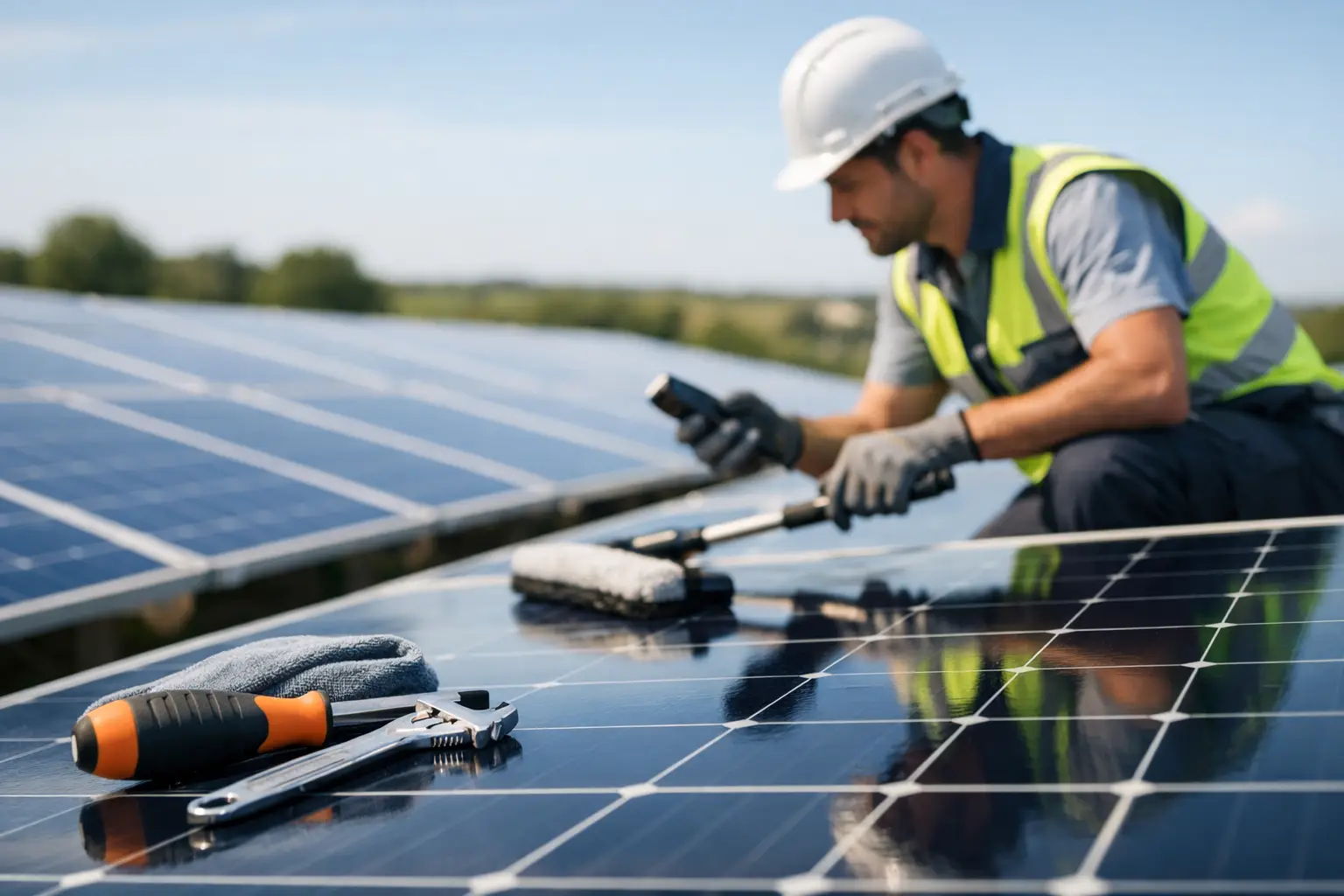
Cleaning is the part people tend to focus on most, but it is not always needed as often as expected. In many UK locations, normal rainfall does a reasonable job of removing loose dirt. If your roof has a decent pitch and there are no nearby sources of heavy contamination, panels may stay clean enough for good performance without regular washing.
There are exceptions. Panels near busy roads, farms, industrial sites or under trees may pick up more grime. Bird droppings can also create stubborn patches that reduce output more than a light layer of dust would. In those cases, periodic cleaning can be worthwhile.
The main caution is safety. Climbing on a roof and cleaning panels without the right equipment is not worth the risk. There is also a right and wrong way to clean solar panels. Harsh chemicals, abrasive tools and poor technique can damage the panel surface or surrounding components. If cleaning is needed, it is best handled carefully and, where access is difficult, professionally.
Inverter and battery checks
Panels often get the attention, but the inverter is one of the hardest-working parts of the system. It converts the electricity your panels generate into usable power for the property, and if it develops a fault, your generation can drop sharply or stop entirely. Unlike the panels, inverters do have a more limited service life and may need replacement sooner than the array itself.
If your property also has battery storage, regular checks become more important. Batteries add another layer of performance benefit and energy independence, but they also mean more equipment, settings and data to review. Monitoring battery behaviour, charge patterns and any fault alerts helps make sure the wider system continues to operate efficiently.
How often should solar panels be checked?
There is no single answer for every installation because the right schedule depends on system size, location, roof access and surrounding conditions. A typical domestic system may only need occasional owner checks and periodic professional inspection. A commercial system, especially one where energy savings are closely tied to operating costs, usually benefits from a more structured maintenance plan.
As a practical rule, property owners should keep an eye on generation data throughout the year and carry out a visual review after poor weather. A professional inspection at sensible intervals can then pick up issues that are harder to spot, such as electrical wear, loose connections or components beginning to fail.
If you notice lower generation than expected, warning lights on the inverter, repeated system shutdowns or visible damage, do not wait for a routine visit. Those signs justify a prompt inspection.
What problems can happen if maintenance is ignored?
The biggest risk is not usually dramatic failure. It is slow underperformance.
A system can continue running while producing less than it should because of dirt build-up, partial shading, damaged components or an inverter issue. That means lower savings month after month, often without the owner realising straight away. For households, that erodes the return on investment. For businesses, it can mean a noticeable impact on operating costs over time.
There is also the safety side. Solar PV is an electrical installation, and like any electrical system it should remain in good condition. Loose connections, ageing isolators or weather-related damage are not issues to ignore. Proper maintenance helps ensure the system remains safe as well as productive.
When do solar panels need professional maintenance?
Some basic awareness can sit with the property owner, but certain jobs should always be left to qualified professionals. Anything involving electrical testing, roof access, fault diagnosis or repairs needs the right competence and equipment.
Professional maintenance is particularly worthwhile when a system is older, when performance has dropped for no obvious reason, or when the installation includes multiple technologies such as solar PV, battery storage and EV charging. Integrated systems work best when looked at as a whole rather than as separate pieces of kit.
For customers who want dependable long-term performance, aftercare matters almost as much as the original installation. That is one reason many people prefer working with a contractor who understands both the electrical side and the renewable side of the system.
Is solar panel maintenance expensive?
In most cases, no. Compared with many other property systems, solar maintenance is usually modest. There are no fuel costs, servicing demands are generally limited, and many issues can be managed before they become major repairs if the system is monitored properly.
The bigger cost is often neglect. If a fault goes unnoticed and your system underperforms for months, the lost generation can outweigh what a timely inspection would have cost. So while maintenance is not usually a large ongoing expense, it is still a sensible part of protecting the value of the investment.
A practical way to think about solar maintenance
If you are asking do solar panels need maintenance, the most accurate answer is this: they need just enough attention to keep them safe, efficient and financially worthwhile.
You do not need to treat solar like a high-maintenance technology. But you should expect occasional checks, sensible monitoring and professional support when something looks off. That approach gives you the best chance of keeping generation strong and bills lower over the long term.
For property owners across Lincolnshire, Norfolk, Cambridgeshire, Rutland and Leicestershire, that usually means choosing a system designed properly from the start and backed by straightforward aftercare. Good solar should save you money without creating extra hassle - and a little maintenance is part of making sure it does exactly that.