Consumer Unit Upgrade Benefits for Safer Homes
2 September 2026 | By RJ Hill Electrical
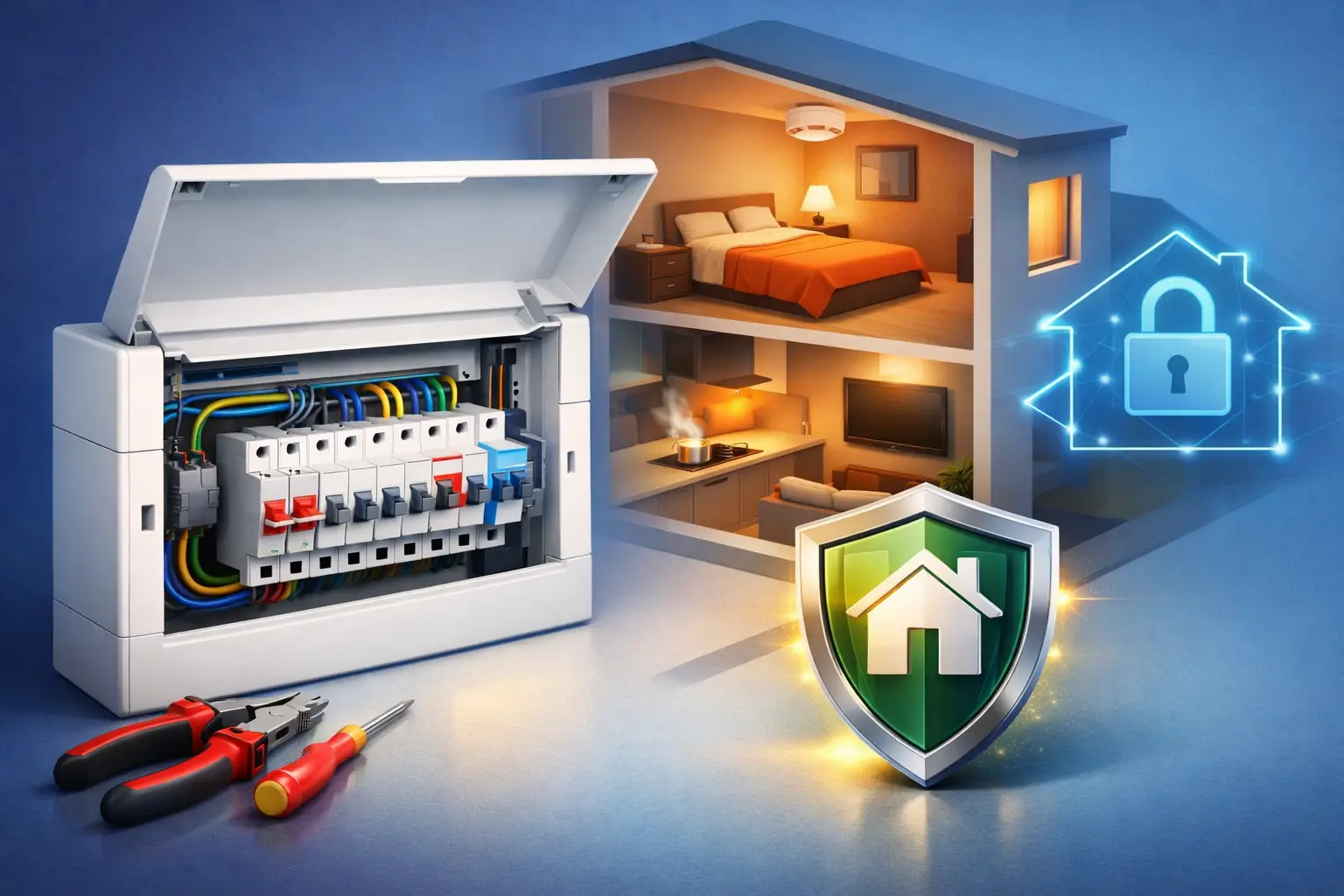
A consumer unit is rarely noticed until it causes a problem - a circuit trips repeatedly, a new EV charger is planned, or an electrician finds an ageing fuse box during a survey. The consumer unit upgrade benefits go beyond replacing old equipment. A properly designed modern board can improve protection, support higher electrical demand and give your property a sound foundation for solar PV, battery storage and electric vehicle charging.
For homeowners and businesses investing in lower energy bills and greater energy independence, this is often a practical first step. The consumer unit is the point where every circuit in the building is protected and controlled, so its capacity and condition matter.
What a consumer unit upgrade changes
Often called a fuse board or fuse box, the consumer unit distributes electricity around a property. It contains the devices that isolate circuits and disconnect the supply when it detects a fault. Older boards may use rewireable fuses or cartridge fuses. Even some newer-looking installations may not provide the level of protection expected for current electrical work.
A modern consumer unit usually uses miniature circuit breakers alongside RCDs or individual RCBOs. These devices are designed to respond quickly to faults, helping to reduce the risk of electric shock, overheating and fire. The exact arrangement should be selected following an assessment of the installation, rather than treating every property as the same.
An upgrade also gives an electrician the opportunity to inspect the existing wiring, earthing and bonding. A new board cannot make damaged or unsuitable wiring safe by itself. If issues are found, they should be addressed as part of a considered plan.
Consumer unit upgrade benefits for safety
The most significant benefit is improved fault protection. RCD protection monitors for an imbalance in electrical current that could indicate electricity is flowing somewhere it should not - for example, through a damaged cable or a person. It disconnects the circuit rapidly when a dangerous fault is detected.
Using RCBOs for individual circuits can bring an additional practical advantage. If one circuit develops a fault, only that circuit should switch off. A fault on an outside light, for instance, need not take out the kitchen sockets or the freezer. This makes fault finding clearer and reduces unnecessary disruption.
Modern boards can also include surge protection devices, where appropriate. These help protect sensitive equipment from transient overvoltage caused by events such as switching on the electricity network or nearby lightning activity. With more homes relying on smart controls, heat pumps, battery inverters and connected appliances, protection against electrical surges is worth considering.
Arc fault detection devices may be suitable in particular higher-risk settings, although they are not necessary for every installation. The right protection depends on how the building is used, the condition of its wiring and the results of the electrical design and inspection.
A better starting point for solar, batteries and EV charging
Solar panels, battery storage and EV chargers are not simply extra appliances plugged into an existing system. They introduce new circuits, protective devices and, in some cases, generation or stored energy that must work safely with the grid supply.
Before installing renewable technology, an electrician should assess the consumer unit, the incoming supply, earthing arrangements and available capacity. An older or crowded board can make an otherwise straightforward installation more complicated. There may be no safe space for additional protective devices, or the main switch and busbar rating may not suit the proposed system.
Upgrading the consumer unit can provide dedicated, clearly labelled circuits for a solar inverter, battery system and EV charger. This supports safe isolation for maintenance and makes the installation easier to understand in future. It also allows the system to be designed around your actual energy goals, whether that is maximising solar self-consumption, charging an EV overnight or keeping selected circuits running during a power cut.
For battery backup or off-grid-style resilience, careful circuit design is particularly important. Not every circuit will necessarily be backed up. High-load equipment may need to be managed separately so the battery can provide useful power for essential lighting, refrigeration, communications and selected sockets. A suitable consumer unit arrangement helps make those choices clear and dependable.
Fewer interruptions and easier maintenance
A well-organised consumer unit makes day-to-day electrical use less frustrating. Circuit labels should accurately identify what each protective device serves. When a circuit trips, you can isolate the problem more quickly rather than guessing which part of the property has been affected.
For landlords and business owners, clear labelling and documented testing also make ongoing maintenance more manageable. Staff, tenants and future electricians benefit from an installation that is easy to inspect and operate safely.
A replacement board also offers the chance to correct common issues found in older installations, such as cramped cabling, missing blanks, poor identification or inadequate protection for added circuits. These details matter. Good workmanship is not just about fitting a new metal enclosure; it is about ensuring the whole installation is orderly, tested and recorded.
Meeting current electrical standards
Electrical work in the UK must be designed and installed in line with the relevant requirements, including BS 7671. A consumer unit upgrade is not a cosmetic change. It is a substantial electrical alteration that requires proper inspection, testing and certification by a competent electrician.
Depending on the work and property type, Building Regulations notification may also apply. Your installer should explain what certification you will receive and retain the test results for your records. This paperwork can be useful when selling a property, arranging insurance or planning future electrical improvements.
It is worth being realistic here. Compliance does not mean a home will never experience an electrical fault, and a new consumer unit cannot compensate for a poor incoming supply or unsafe circuits elsewhere in the building. It does mean faults are more likely to be detected and isolated effectively, with the installation assessed against current safety requirements.
When an upgrade is likely to be worthwhile
There is no fixed age at which every consumer unit must be replaced. Its condition, protective devices, circuit capacity and the wider electrical installation are more relevant than its age alone. An Electrical Installation Condition Report can identify whether improvement work is advisable.
An upgrade is commonly worth discussing if you have an old-style fuse box, repeated tripping, visible damage, no RCD protection, limited space for new circuits, or plans for major electrical additions. Renovations, extensions, kitchen refits and conversion work are also sensible times to assess whether the existing board remains suitable.
For a commercial property, consider changes in load as well as safety. New machinery, refrigeration, office equipment, EV charging or solar generation can alter how the electrical system needs to perform. A board that was adequate when the premises were first occupied may not be the right fit now.
The trade-offs: cost, disruption and the condition of existing wiring
A consumer unit upgrade is an investment, and the final cost depends on the number of circuits, required protective devices, access, testing time and any remedial work identified. Quoting without inspecting the installation can miss important details, particularly in older properties.
There can be a planned interruption to the power supply while the work is completed and tested. Sensitive equipment, alarms, IT systems and refrigerated stock should be considered beforehand. In most straightforward domestic cases, disruption can be managed within the day, but larger or more complex installations may require additional time.
The key trade-off is that inspection can reveal work beyond the consumer unit itself. Older cabling, inadequate earthing or faults on existing circuits may need attention before a new board can be safely energised. While that can affect the original budget, identifying these issues is precisely why a professional assessment matters.
Choosing the right approach for your property
The best consumer unit is not necessarily the largest board with every available device fitted. It is the one that is correctly specified for your property, your electrical demand and your future plans. A household preparing for solar and battery storage needs a different design from a small workshop adding equipment or a landlord upgrading a rental property.
RJ Hill Electrical brings more than 20 years of electrical experience to installations across Lincolnshire, Norfolk, Cambridgeshire, Rutland and Leicestershire. That means looking at the consumer unit as part of the wider system, not as an isolated replacement job. Where solar PV, battery storage or EV charging is planned, the electrical infrastructure should be designed to support it properly from the outset.
If your board is showing its age or your energy plans are moving forward, arrange a professional assessment before adding more demand. A clear inspection and quotation can turn a hidden part of your property into a safer, more capable base for the way you want to use energy.