
Best Home Battery Storage Options in the UK
9 July 2026 | By RJ Hill Electrical
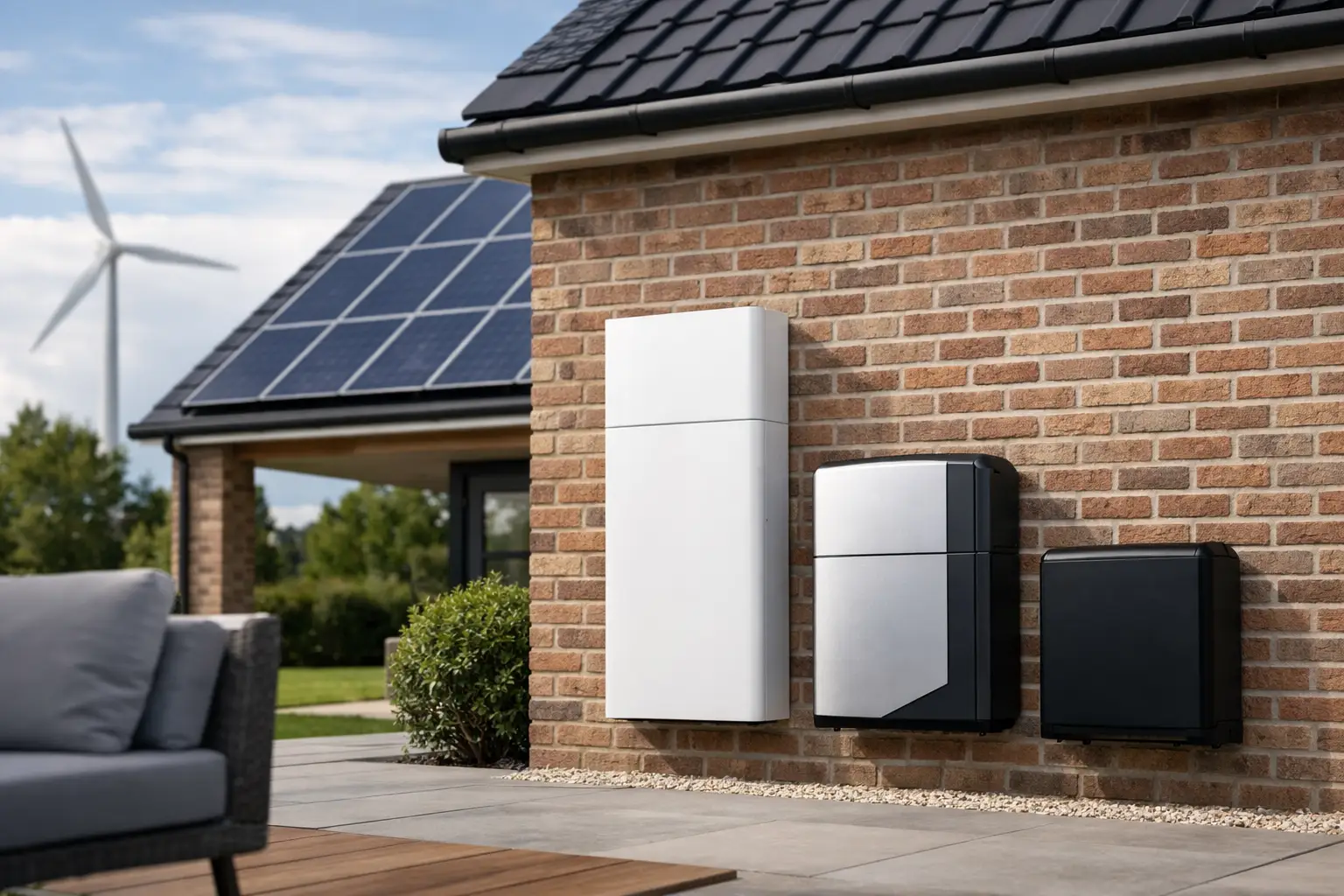
If you are looking at the best home battery storage options, the first question is not which brand has the biggest advert budget. It is whether the system fits the way your property uses electricity. A battery that works well in one home can be poor value in another, especially if your solar output, evening usage and tariff setup are different.
For most UK households, battery storage is about three things: using more of your own solar power, buying less electricity at peak rates, and keeping more control over rising energy costs. The right setup can make a noticeable difference to bills, but only if the battery size, inverter arrangement and charging strategy are matched properly.
What makes the best home battery storage options?
The best home battery storage options are not always the largest or the cheapest. In practice, the right choice usually comes down to usable capacity, power output, warranty, backup capability and how well the battery integrates with your solar PV system and tariff.
Usable capacity tells you how much electricity you can actually store and use. A 5 kWh battery may suit a smaller household that wants to shift some daytime solar into the evening. A larger home with higher overnight demand, an EV, or electric heating support may need 10 kWh or more to see strong returns.
Power output matters just as much as capacity. A battery might store plenty of energy but still struggle if it cannot supply enough power to run several appliances at once. Kettle, oven, washing machine and EV charging all place different demands on the system. That is why headline storage size on its own never tells the full story.
Then there is warranty. Most good-quality home batteries now offer warranties of around 10 years, often with a throughput limit or retained capacity guarantee. A strong warranty is a sign of confidence, but the detail matters. Some products promise 10 years but with usage limits that may affect higher-demand households.
AC-coupled vs hybrid battery systems
Before comparing products, it helps to understand the two common system types.
A hybrid system combines solar and battery management through one inverter. This is often the cleanest option for a new solar installation because the components are designed to work together from the start. It can be efficient, neat and cost-effective if you are installing solar and battery storage at the same time.
An AC-coupled battery is often a practical choice when solar panels are already in place. It allows battery storage to be added without replacing the existing solar inverter in many cases. That can reduce disruption and make retrofit projects more straightforward.
Neither is automatically better. For a new install, a hybrid setup often makes sense. For an existing solar system, AC-coupled can be the more sensible route. The best answer depends on what equipment is already on site and whether it still has useful life left in it.
The main battery types worth considering
For domestic properties, lithium iron phosphate and lithium-ion systems dominate the market. In simple terms, modern lithium-based batteries are now the standard because they offer good efficiency, long cycle life and relatively compact size.
Lithium iron phosphate batteries are widely regarded as a strong option for home use because of their thermal stability and lifespan. Many well-known residential storage systems now use this chemistry. It is often a good fit for homeowners who want a dependable, long-term solution rather than the lowest upfront cost.
Older lead-acid options do still exist, but they are generally bulkier, less efficient and shorter-lived. For most homes, they are no longer the strongest choice unless there is a very specific off-grid or budget-driven reason.
Best home battery storage options by use case
If your goal is simple solar self-consumption, a mid-sized battery is often the sweet spot. Many households generate surplus solar during the day but use most of their electricity in the morning and evening. In that case, a battery in the 5 to 10 kWh range can store excess generation and reduce how much power you import later.
If your aim is tariff arbitrage, where you charge the battery on a cheap overnight rate and use it during more expensive periods, then battery intelligence and software become especially important. A well-controlled system can charge and discharge at the right times automatically. This is where the app, monitoring and inverter logic matter as much as the battery cells themselves.
If backup power is a priority, you need to check whether the system actually supports it. Not every home battery provides backup during a grid outage. Some only work when the mains supply is present. Others can support essential circuits or, with the right design, wider household backup. This needs planning at design stage, including which circuits are protected and how the changeover works.
If you have an EV, heat pump, or particularly high evening demand, it may be worth looking beyond a single small unit. A modular battery system that can expand over time can be a better investment. That gives you room to increase storage if your usage changes.
Features that matter more than brand hype
A lot of battery marketing focuses on sleek casings and app screenshots. Those things are fine, but they are not what determines long-term value.
Round-trip efficiency is worth checking because it shows how much stored energy you get back after charging and discharging losses. Higher efficiency means less waste. The difference between products may not look dramatic on paper, but over years of use it does affect performance.
Scalability is another practical consideration. Some systems let you add extra modules later, which can be useful if you start with a smaller budget or expect your energy use to grow. Others are more fixed.
Monitoring should be clear and useful, not just attractive. You want to see generation, battery charge levels, import, export and household use in a way that helps you make decisions. Good visibility makes it easier to judge whether the system is performing as expected.
Installer support also matters. Even the best equipment can disappoint if it is specified badly or commissioned poorly. A correctly designed system should reflect your consumption patterns, property layout, existing electrical setup and future plans.
How much battery storage do you actually need?
This is where many buying decisions go wrong. Bigger is not always better.
A battery that is too small may empty early in the evening, leaving limited savings. A battery that is too large may regularly sit partly unused, which stretches payback. The ideal size depends on how much surplus solar you have, when you use electricity, and whether you plan to use off-peak charging.
As a rough guide, households with modest daytime generation and average evening demand may do well with around 5 kWh. Homes with larger solar arrays, family-level consumption or more electric appliances may benefit from 8 to 13 kWh. Properties aiming for greater resilience or heavier time-of-use savings may go higher.
The right answer comes from actual usage data, not guesswork. Half-hourly consumption data, solar generation estimates and tariff review usually give a far clearer picture than generic online calculators.
Cost, savings and payback
Battery storage is a long-term investment, so the numbers need to stack up sensibly. Installed cost varies depending on battery size, inverter type, backup features and whether the system is part of a new solar installation or a retrofit.
Cheaper systems can look appealing, but lower upfront price does not always mean better value. If the warranty is weaker, the monitoring is poor, or the battery is undersized for your usage, savings may fall short. Good system design often matters more than chasing the lowest quote.
Payback depends heavily on your tariff and usage pattern. Homes with solar, strong daytime generation and high evening use often see better results. So do properties making good use of off-peak tariffs. If your daytime occupancy is high and you already use most of your solar directly, battery savings may be lower than expected. That does not rule storage out, but it does mean expectations should be realistic.
Choosing the right installer matters as much as the battery
When comparing the best home battery storage options, it is easy to focus on brand names and miss the bigger issue: system design and installation quality. Battery storage has to work with your consumer unit, solar arrangement, property demand and future plans. That is why an experienced electrical and renewable installer is worth more than a simple box-for-box comparison.
For homeowners and businesses in areas such as Lincolnshire, Norfolk, Cambridgeshire, Rutland and Leicestershire, working with one contractor that understands both electrical infrastructure and renewable integration can avoid a lot of costly compromises later.
A good installer should explain what the battery will realistically do, where the savings come from, and where the limits are. If backup is required, that should be specified clearly. If expansion may be needed later, the system should allow for it. Straight answers at the start usually lead to better results over the life of the system.
The strongest battery choice is usually the one that fits your property, your tariff and your goals without overspending on capacity you will not use. If you approach it that way, battery storage becomes less about chasing a popular product and more about building a system that earns its place every day.